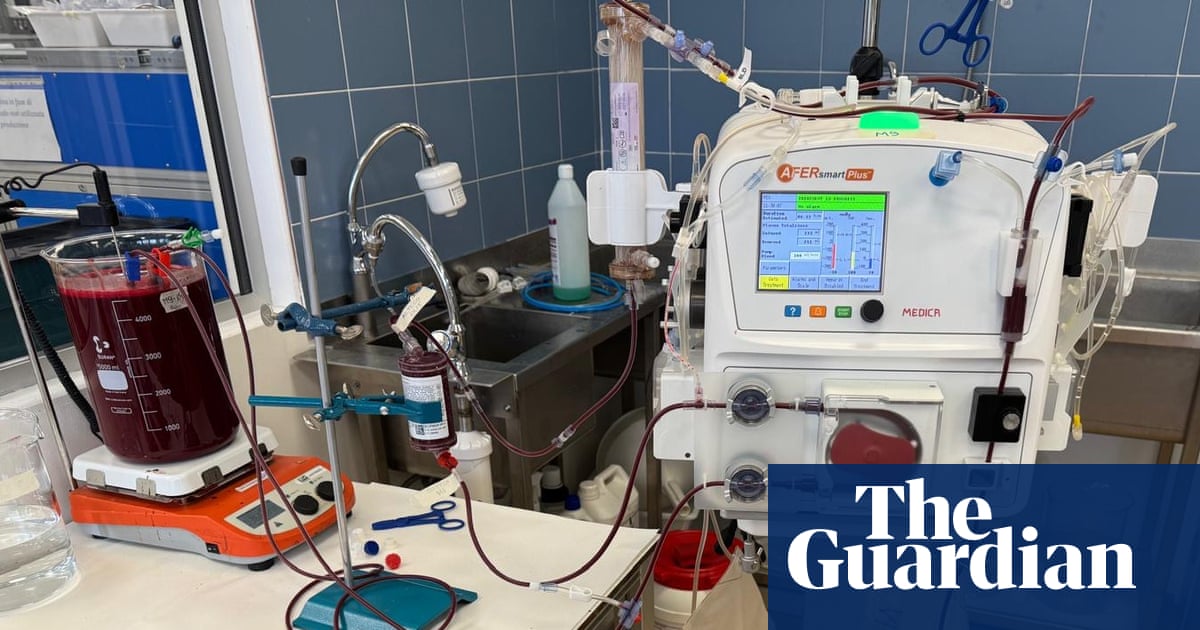
The National Health Service is launching a nationwide randomized trial of the DIALIVE liver‑dialysis device, enrolling up to 70 patients with acute‑on‑chronic liver failure (ACLF) across 13 major UK hospitals. The £2.2 million study, funded by the National Institute for Health and Care Research, will begin recruitment in early 2025 and run for roughly 18 months, with results expected in 2027. [royalfree.nhs.uk](https://www.royalfree.nhs.uk/news/royal-free-hospital-leads-pivotal-trial-novel-liver-dialysis-machine-liver-failure-patients)
What is acute‑on‑chronic liver failure?
ACLF is a severe, life‑threatening syndrome that occurs when a person with chronic liver disease—often due to alcohol misuse, obesity‑related fatty liver, viral hepatitis or autoimmune hepatitis—experiences a sudden deterioration of liver function. The condition triggers multi‑organ failure, with patients frequently requiring intensive‑care support for renal replacement, mechanical ventilation or vasopressor therapy. International data indicate that 40 % to 80 % of patients die within 28 days of onset, and only a minority are eligible for urgent liver transplantation, the sole curative option currently available. [the lancet.com](https://www.thelancet.com/journals/lanepe/article/PIIS2666-7762(24)00234-5/fulltext)
Why a new treatment is needed
In the United Kingdom, an estimated two million people live with some form of liver disease, and around 60 000 have advanced cirrhosis, a condition that predisposes to ACLF. Liver disease accounts for more than 12 000 deaths each year, placing a growing burden on hospitals and the organ‑allocation system. [royalfree.nhs.uk](https://www.royalfree.nhs.uk/news/royal-free-hospital-leads-pivotal-trial-novel-liver-dialysis-machine-liver-failure-patients)
Because donor livers are scarce—only a small fraction of ACLF patients receive a transplant—researchers have pursued extracorporeal therapies that can pause or reverse organ injury while the native liver recovers. DIALIVE, marketed as YAQ002, combines albumin‑dialysis with toxin removal to replace dysfunctional albumin with healthy protein, thereby reducing systemic inflammation and allowing hepatic regeneration.
Trial design and early evidence
The DIALIVE trial will randomize patients with at least two organ failures to receive either standard intensive‑care management or up to seven DIALIVE sessions over a ten‑day period. Participants will be selected by senior hepatologists at the Royal Free Hospital, King’s College Hospital, University College London and the Queen Elizabeth Hospital in Birmingham, among others. [ucl.ac.uk](https://www.ucl.ac.uk/news/2025/mar/clinical-trial-funding-liver-dialysis-device)
Earlier phase‑II work demonstrated promising safety and efficacy. In a 2023 European study, 10 of 15 patients treated with DIALIVE achieved reversal of ACLF, compared with only 5 of 15 receiving standard care, and the DIALIVE group recovered more rapidly. [royalfree.nhs.uk](https://www.royalfree.nhs.uk/news/royal-free-hospital-leads-pivotal-trial-novel-liver-dialysis-machine-liver-failure-patients)
Expert perspective
“Our goal is to demonstrate that we can resolve life‑threatening ACLF more often and faster than standard care, thereby reducing hospital stay and improving survival,” said Prof Rajiv Jalan, co‑principal investigator and professor of hepatology at University College London. [royalfree.nhs.uk](https://www.royalfree.nhs.uk/news/royal-free-hospital-leads-pivotal-trial-novel-liver-dialysis-machine-liver-failure-patients)
Prof Banwari Agarwal, also a co‑principal investigator, added that “these are gravely ill patients with multi‑organ failure and a high risk of death; effective therapies are needed worldwide.” [royalfree.nhs.uk](https://www.royalfree.nhs.uk/news/royal-free-hospital-leads-pivotal-trial-novel-liver-dialysis-machine-liver-failure-patients)
Dr Rohit Saha, a consultant at the Royal Free Hospital, emphasized the unmet clinical need: “Many ACLF patients die because their bodies become trapped in a destructive cycle of inflammation that current treatments cannot reverse.” [royalfree.nhs.uk](https://www.royalfree.nhs.uk/news/royal-free-hospital-leads-pivotal-trial-novel-liver-dialysis-machine-liver-failure-patients)
Public‑health implications
If DIALIVE proves effective, it could reshuffle the treatment pathway for ACLF. By offering a bridge to recovery, the device may reduce the number of patients requiring emergency liver transplantation, easing pressure on the already‑stretched donor pool. Moreover, a bedside therapy that shortens intensive‑care stays would translate into substantial cost savings for the NHS. The NIHR’s investment underscores the trial’s potential to deliver a taxpayer‑funded innovation that benefits patients across the UK and, eventually, globally.
Next steps
The trial will follow participants for at least two years to assess long‑term survival, graft‑free recovery rates and quality‑of‑life outcomes. Pending favorable results, regulators could approve DIALIVE for routine NHS use, making it the first approved liver‑dialysis technology worldwide. [ucl.ac.uk](https://www.ucl.ac.uk/news/2025/mar/clinical-trial-funding-liver-dialysis-device)
For more information on how this research could affect patients with liver disease, read more on Globally Pulse Health. [who.int](https://www.who.int/news-room/fact-sheets/detail/hepatitis-b)
