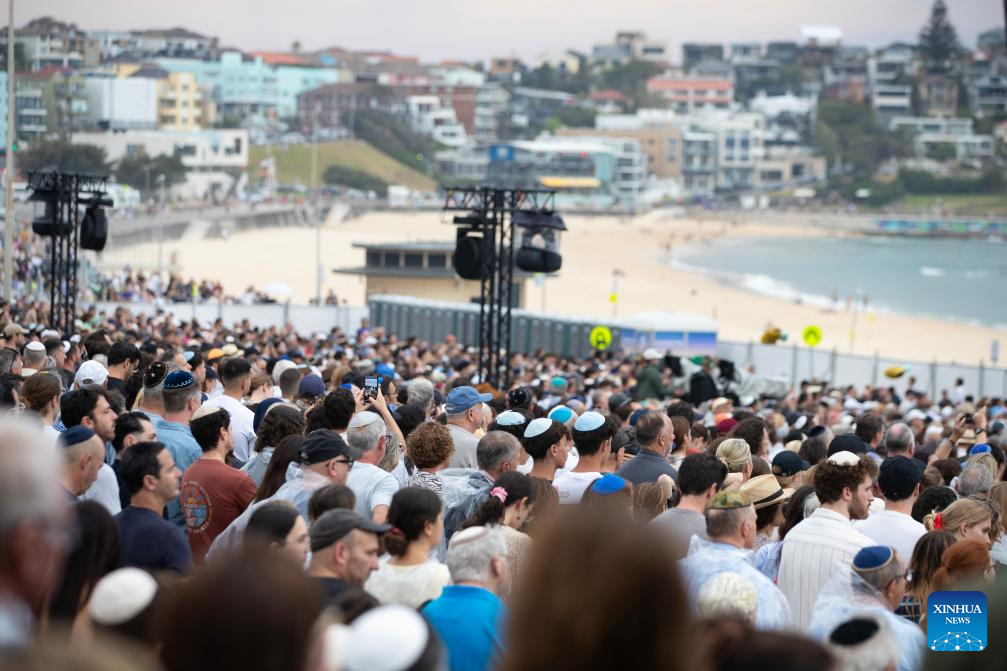
National Day of Reflection marks one week since Bondi Beach terror attack
Thousands gathered on Sydney’s Bondi Beach on Dec. 21, 2025, for a National Day of Reflection honoring the 15 people killed and dozens injured when gunmen opened fire on a Hanukkah celebration on Dec. 14. A minute’s silence began precisely at 6:47 p.m. local time – the moment the first shots were heard – as reported by Australia’s 9News network.
New South Wales Premier Chris Minns opened the ceremony with an apology, saying, “I acknowledge the government’s highest duty is to protect citizens and we did not do that one week ago.” Governor‑General Sam Mostyn read a personal letter from King Charles III that expressed solidarity with Australians in “times of hurt.”
Government launches comprehensive security and intelligence review
Prime Minister Anthony Albanese announced a full review of the nation’s law‑enforcement and intelligence agencies, to be led by former Australian Security Intelligence Organisation chief Dennis Richardson. The inquiry will assess whether federal police and intelligence bodies have the “right powers, structures, processes and sharing arrangements” to safeguard the country, with a deadline to report findings by the end of April.aljazeera.com The review follows criticism that warning signs about the suspects were missed in 2019, a point Albanese raised in a televised interview with the ABC.
In parallel, the government has unveiled a nationwide gun‑buyback scheme intended to close loopholes exposed by the Bondi attack. Gun‑safety experts note that, despite Australia’s historically strict firearms regulations, the 2025 spree revealed gaps in licence assessments and inter‑agency information sharing.sky.com
Details of the attack and ongoing prosecutions
The assault, carried out by a father‑son pair, targeted a community event marking the first day of Hanukkah. According to Australian police, the older attacker, 50‑year‑old Sajid Akram, was shot dead at the scene. His 24‑year‑old son, Naveed Akram, survived after being wounded, later emerging from a coma and now facing 59 charges including murder, terrorism and multiple counts of attempted murder.
Investigators have classified the incident as a terrorist act motivated by extremist ideology. Flags of the Islamic State were reportedly found in the vehicle used by the gunmen, confirming the link to the ISIS‑inspired network that has sought to exploit the heightened tensions following the war in Gaza.aljazeera.com
International reactions underscore global counter‑terrorism stakes
Foreign ministries from the United States, Canada, the United Kingdom and the European Union issued statements condemning the attack and praising Australia’s swift response. In a joint message, the Five Eyes intelligence alliance pledged enhanced collaboration on information sharing, citing the Bondi incident as a reminder of the “transnational nature of radicalization.” The United Nations Office of the High Commissioner for Human Rights also called on governments to protect religious minorities and to counter hate‑driven violence.
Australia’s diplomatic outreach included a meeting between Prime Minister Albanese and the Israeli ambassador, where both leaders affirmed a shared commitment to combat antisemitism and extremist propaganda. The episode is expected to influence upcoming security dialogues at the Indo‑Pacific Economic Framework, where member states will discuss coordinated measures against terrorism financing.
Broader implications for regional stability and domestic policy
The Bondi Beach tragedy reverberates beyond Australia’s borders, highlighting vulnerabilities in liberal democracies confronting homegrown extremism. Analysts from the International Crisis Group note that the attack could reshape Australia’s participation in NATO’s cyber‑defence initiatives, given the suspected online radicalisation pathways used by the perpetrators.
Domestically, the forthcoming security review and gun‑buyback program are poised to test the balance between civil liberties and public safety. If the review recommends expanding powers for intelligence agencies, it may trigger debates within the Commonwealth Parliament and among civil‑society groups concerned about surveillance overreach.
For a deeper look at how Australia’s gun‑law reforms are evolving, see our ongoing coverage of Australia’s gun law review.
