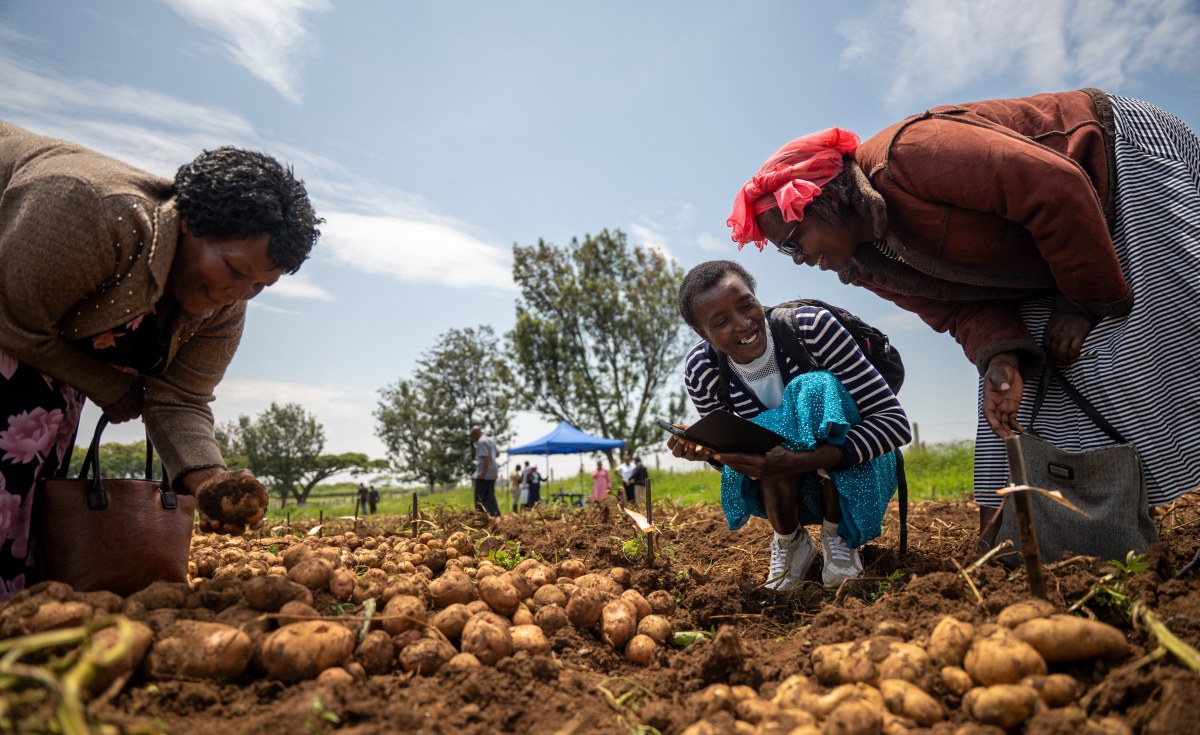
Genebanks and global cooperation deliver versatile, climate-resilient solutions for farmers.
Lima, Peru (06 November 2025) – Nearly two centuries after the Irish Potato Famine, late blight continues to threaten global potato production, causing annual economic losses estimated at up to $14 billion according to recent agricultural studies. Climate change is exacerbating the problem by expanding the disease’s reach into higher altitudes of the Andes, jeopardizing the livelihoods of smallholder farmers who depend on potato, a staple food for over a billion people worldwide. Ahead of the COP30 UN Climate Change Conference in Brazil, scientists and local communities have developed a new disease-resistant potato variety that offers a sustainable model for adaptation in a warming world.
Innovation Born from Collaboration and Genetic Diversity
The International Potato Center (CIP) in Lima, Peru, working closely with Indigenous farmers, unveiled the new variety, CIP-Asiryq. Pronounced “asir-eek,” CIP-Asiryq exhibits strong resistance to late blight (Phytophthora infestans), the pathogen responsible for historic and contemporary crop devastation. This variety requires significantly fewer fungicide applications, reducing both input costs and environmental damage. It also cooks 25% faster than Peru’s widely cultivated Yungay variety and holds considerable promise for fresh consumption and industrial processing, including potato chip production, thereby widening market opportunities for farmers.
Dr. Stefan Schmitz, executive director of the Crop Trust, emphasized the significance of this development: “Late blight costs billions annually in lost production worldwide. The resistance offered by CIP-Asiryq provides potato farmers with a viable tool to mitigate losses, improve economic resilience, and reinforce food security globally.” This variety owes its resilience to genetic material sourced from Solanum cajamarquense, a wild potato species conserved in the CIP’s genebank — the largest repository of potato diversity worldwide.
From Genebanks to Fields: The Role of International Cooperation
The breakthrough emerged through the Crop Wild Relatives project and the Biodiversity for Opportunities, Livelihoods and Development (BOLD) initiative, both led by the Crop Trust with Norwegian government funding. These programs highlight the strategic value of conserving crop wild relatives as vital sources of genetic traits for breeding resilient food crops in the face of climate change.
Dr. Thiago Mendes, lead scientist for the BOLD potato pre-breeding project at CIP, described CIP-Asiryq’s versatility: “It is a significant advancement for food systems in the Andes and other regions affected by late blight. Local farmers in Huánuco have reported its suitability for both fresh market and processing use, giving producers the flexibility to meet diverse consumer demands.”
Addressing a Persistent Global Threat with Local Solutions
Late blight remains the most destructive disease of potatoes worldwide, capable of reducing yields by 50 to 100 percent in Peru — with losses estimated at $3 to $14 billion annually on a global scale. The pathogen thrives where environmental conditions are cool and moist, increasingly encroaching into Andean highlands previously less affected. The disease’s rapid spread via infected seed, wind-borne spores, and water emphasizes the difficulty of control.
Traditionally, farmers rely on frequent fungicide sprays to protect their crops; in the humid Andean valleys, this can amount to up to six applications per month during the growing season. Such intensive use inflates production costs (ranging from 10 to 25% of the total harvest value) and raises concerns about environmental and human health risks. The introduction of late blight-resistant varieties like CIP-Asiryq can dramatically reduce fungicide dependence, improve profitability, and promote sustainable agricultural practices.
Raul Ccanto, coordinator of agrobiodiversity at the Yanapai Group, which partnered in CIP-Asiryq’s development, noted, “Although this variety was primarily bred for fresh consumption, its processing qualities unlock new markets for small-scale farmers, benefitting the entire value chain from producers to processors.” The collaborative model of development integrating genebanks, breeders, and farming communities exemplifies how inclusive partnerships can generate practical solutions to climate-driven agricultural challenges.
Expanding Impact Beyond Peru
CIP-Asiryq also serves as a foundation for breeding programs beyond Peru. Dr. Mendes, now operating from Kenya, is adapting this variety to the East African highlands, where late blight has hampered potato production and farmers’ livelihoods. This work is part of the ongoing BOLD project’s portfolio, which has delivered resilient varieties of key crops such as alfalfa in Kazakhstan, durum wheat in Morocco, and rice in Vietnam.
“This new variety derived from wild relatives demonstrates the critical importance of global cooperation and crop diversity for developing climate-resilient solutions,” remarked Dr. Benjamin Kilian, BOLD project coordinator at Crop Trust. “Conserving and utilizing genetic resources is essential for addressing evolving threats to food security worldwide.”
As agriculture faces escalating pressures from climate change, diseases like late blight require integrated approaches combining genetic innovation, sustainable management, and international treaties such as the International Treaty on Plant Genetic Resources for Food and Agriculture. These frameworks facilitate sharing of genetic materials needed for breeding breakthroughs like CIP-Asiryq, ensuring farmers globally can benefit from advances that protect productivity and livelihoods.
Efforts to combat late blight remain a priority for countries heavily reliant on potato farming, underscored by initiatives like the 2025 Fight Against Blight campaign in the UK, which is integrating data-driven tools to monitor pathogen resistance and support farmers’ decision-making. As disease pressures intensify worldwide, innovations such as CIP-Asiryq provide hope that science, tradition, and cooperation can together secure the future of this vital crop.
For more on ongoing agricultural innovations and climate adaptation strategies, visit Globally Pulse’s coverage on sustainable farming, including expert analysis and regional impacts.
