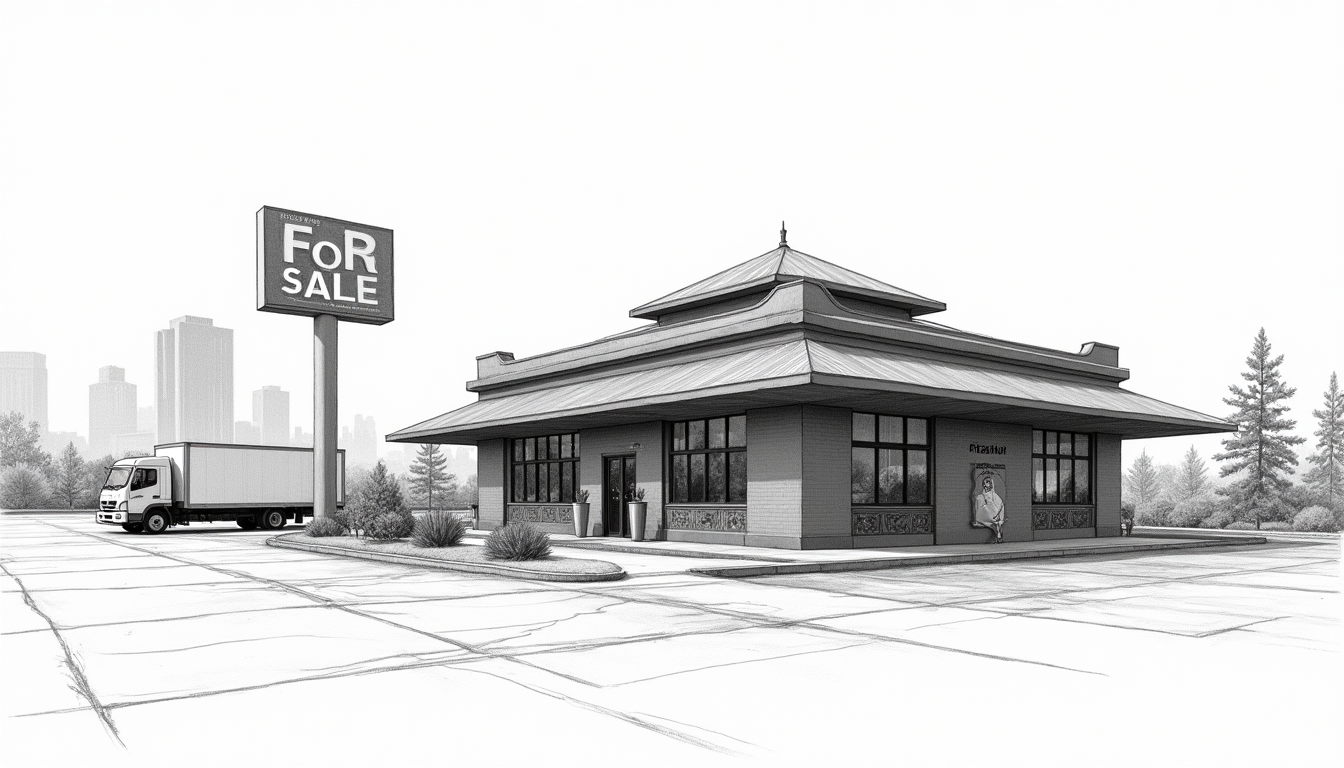
Yum Brands is accelerating its exit from Pizza Hut, closing 250 U.S. locations in the first half of 2026 as it evaluates whether to sell the entire brand—a move that would reshape the fast-food landscape and signal the end of an era for a chain that once dominated American dinner tables.
Pizza Hut’s struggles are now so severe that its parent company is weighing a potential sale to private-equity firms while simultaneously shuttering underperforming locations at a pace that outstrips even its rivals. The brand’s system sales have plunged from $3.61 billion in 2024 to $3.47 billion this year, a decline so steep that Yum Brands CEO Chris Turner launched a formal strategic review last November. What began as a cost-cutting exercise has evolved into a existential question: Can Pizza Hut be saved, or is it time to sell?
Why Pizza Hut Is on the Block
Pizza Hut’s financials tell the story. The brand’s global unit count dropped from 20,225 locations in 2024 to 19,974 this year, even as Yum Brands opened 1,200 new Pizza Huts across 65 countries. That math doesn’t add up—when a chain is opening aggressively yet still shrinking, it means closures are outpacing growth. The franchise model is under pressure from both ends: existing operators can’t sustain their units, while new operators are being brought in to replace them, creating a vicious cycle.
According to Smith Allen Group, the 250 U.S. closures announced this year represent less than 4% of Pizza Hut’s domestic footprint—but the ripple effects will be felt far beyond the shuttered locations. The company’s unit volumes average $790,000 per restaurant, more than $600,000 less than Domino’s, which operates about 800 more shops. At this rate, Pizza Hut could soon be smaller than Little Caesars, the third-largest pizza chain in the U.S.
The closures are part of Yum Brands’ “Hut Forward” initiative, a modernization push that includes updated marketing, new restaurant models, and refreshed franchise agreements. But the strategic review announced by Turner in November goes deeper: Yum is evaluating whether Pizza Hut belongs in its portfolio at all. With KFC and Taco Bell performing well, the question isn’t just about cost-cutting—it’s about whether Pizza Hut can ever regain its footing.
The Private-Equity Race for Pizza Hut
Pizza Hut isn’t the only major pizza chain in play. According to Restaurant Business Online, both Pizza Hut and Papa Johns are reportedly nearing private-equity deals. For Papa Johns, Irth Capital and Brookfield Asset Management have been conducting due diligence for the past month, though a deal is “not guaranteed,” as Reuters noted. The caveat is telling—Papa Johns has been the subject of repeated takeover speculation for years, with offers often falling through.
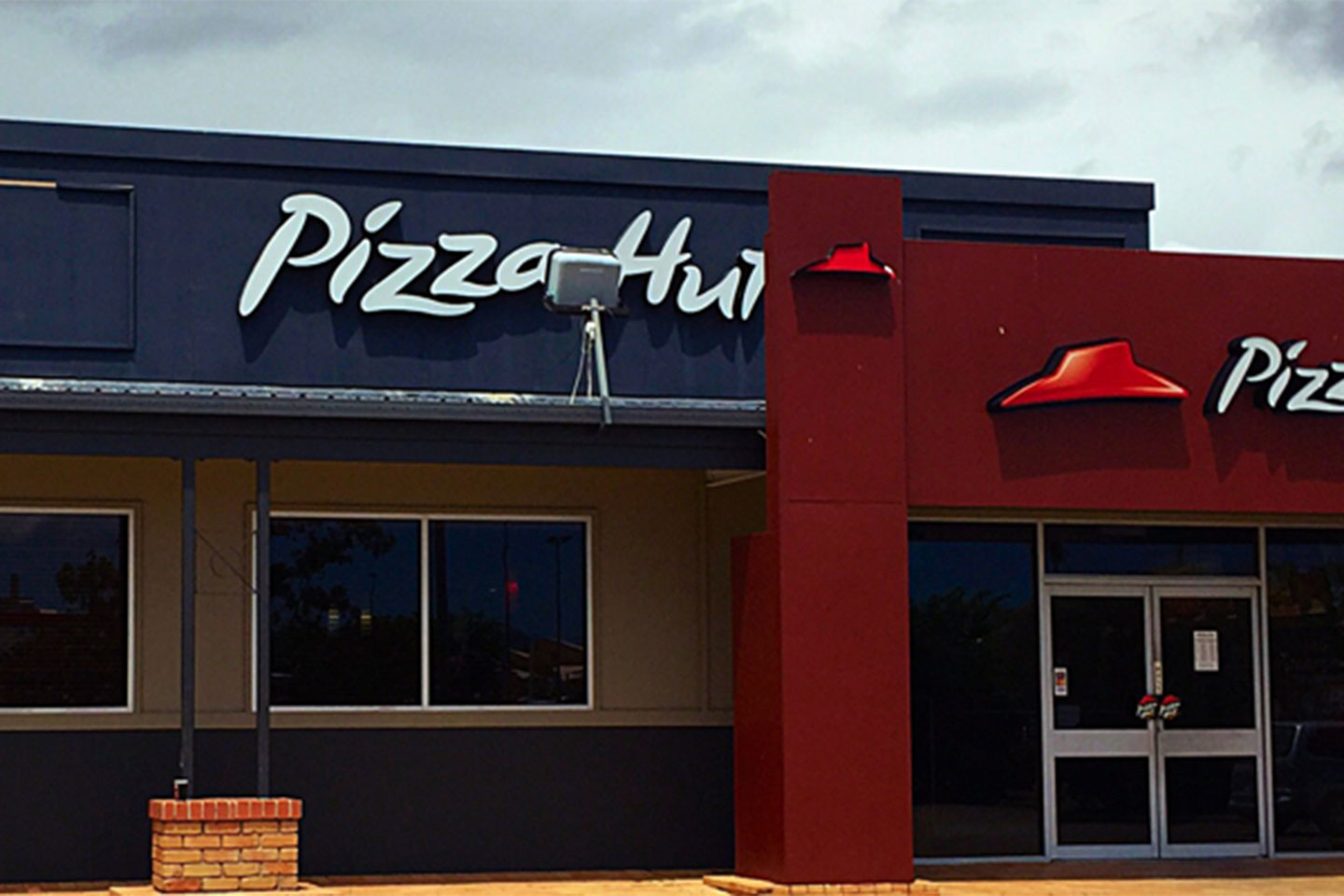
Pizza Hut’s situation is more dire. Yum Brands has been in talks with three private-equity firms: Sycamore Partners, Apollo Global Management, and LongRange Capital. Apollo’s involvement is particularly notable—it’s one of the most aggressive players in the restaurant sector, known for financial engineering and profit-taking. If Pizza Hut goes private, the brand could face aggressive cost cuts and dividend payments rather than the kind of reinvestment it desperately needs.
Technomic data cited by Restaurant Business Online shows Pizza Hut’s same-store sales declined more than 8% last year, while Papa Johns’ system sales dropped 1%—a smaller decline, but still a trend. The question is whether private equity can turn these brands around or if they’ll become another cautionary tale, like Blockbuster or Toys “R” Us, where financial restructuring led to further decline.
What a Sale Means for Franchisees and the Industry
The 250 closures will create a wave of distressed restaurant assets, from underperforming locations to used commercial kitchen equipment. Franchise operators caught in the crossfire will either close permanently or try to sell their units, creating a flood of available inventory in a compressed timeframe. This isn’t the first time Pizza Hut has triggered such a cascade—when its largest U.S. franchisee filed for bankruptcy a few years ago, the real estate fallout took months to resolve.

Smith Allen Group warns that the current wave is broader geographically, meaning more markets will feel the impact. Landlords with vacant spaces will become more aggressive in their lease terms, and buyers in the restaurant acquisition space will have a rare opportunity to snap up assets at a discount. But the quality of these opportunities will vary—some locations may be prime real estate, while others could be financial black holes.
The bigger question is what this means for the pizza industry as a whole. If two of the four largest pizza chains in the U.S. are actively considering private-equity deals, it suggests the sector is in deeper trouble than many realize. Domino’s, the clear leader, has maintained its dominance, but even it faces challenges from delivery apps and changing consumer habits. A Pizza Hut sale wouldn’t just be a corporate move—it would be a signal that the fast-food industry is undergoing a reckoning.
The Domino’s Effect: Who Wins and Who Loses?
Domino’s is the obvious winner in this scenario. The chain has already pulled ahead in unit volume, same-store sales, and delivery speed. If Pizza Hut’s footprint continues to shrink, Domino’s will only widen its lead. Little Caesars, meanwhile, could benefit from Pizza Hut’s struggles—its hot-and-ready model has resonated with cost-conscious consumers, and a smaller Pizza Hut would make it the third-largest chain by unit count.
For franchisees, the outlook is grim. Those who can’t sell their locations will be forced to close, while those who do may find themselves with a brand that’s no longer viable. Private-equity ownership could mean aggressive cost-cutting, which might stabilize the business in the short term but could also lead to further decline if the brand loses its identity. The risk is that Pizza Hut becomes another example of a legacy brand gutted by financial engineering.
Yum Brands, meanwhile, stands to gain from a sale—even if it means walking away from a brand it has owned for decades. The company’s focus on KFC and Taco Bell makes sense; both have stronger growth trajectories. But selling Pizza Hut would send a message: even the biggest players in the restaurant industry are willing to shed legacy brands when the growth story stalls.
What Happens Next?
The next 30 days will be critical. Yum Brands will likely finalize its strategic review, deciding whether to sell Pizza Hut, spin it off, or attempt one last push to revive the brand. Private-equity firms are already in advanced talks, but deals in this space often fall through—especially when the target brand is as troubled as Pizza Hut.
If a sale does go through, it could happen as early as the second half of 2026. The buyer—likely one of the private-equity firms—would then face the challenge of turning around a brand that has lost its way. The question is whether they can do it without alienating customers or further damaging the franchise model.
One thing is certain: the pizza industry will never be the same. If Pizza Hut disappears from the landscape, it won’t just be a loss for franchisees—it will be a loss for the American dinner table. But for now, the focus is on the numbers, the deals, and the hard questions: Can Pizza Hut be saved, or is it finally time to say goodbye?
