_(Disc_1)-1.jpg "53849-Serial_Experiments_Lain_(Japan)_(Disc_1)-1.jpg")
The World Health Organization declared the current Ebola outbreak in the Democratic Republic of Congo and Uganda a public health emergency of international concern on May 17, 2026, as cases surged to over 500 suspected infections and 136 deaths, with modeling suggesting substantial underreporting and potential transmission exceeding 1,000 cases. The Bundibugyo virus strain, now spreading across nine health zones in Ituri Province, has triggered global travel advisories and heightened fears among local communities.
A Crisis of Scale and Speed: The Outbreak’s Growing Threat
The latest Ebola epidemic in the DRC is unfolding with alarming speed. As of May 18, 2026, the WHO confirmed eight laboratory-confirmed cases of the Bundibugyo virus strain, but 246 suspected cases and 80 suspected deaths in Ituri Province alone, with one fatality reported in neighboring Uganda. Modeling by the MRC Centre for Global Infectious Disease Analysis suggests the true number of infections could exceed 1,000, indicating substantial under-detection
—a pattern seen in past outbreaks where stigma, limited healthcare access, and logistical challenges obscured the full scope of transmission.
Dr. Anne Ancia, a WHO official, warned that the more we investigate, the clearer it becomes that cases have spread to other areas
, underscoring the outbreak’s rapid geographic expansion. The Bundibugyo strain, though less deadly than the Zaire ebolavirus (with mortality rates typically ranging from 25% to 50%), shares the same transmission pathways: direct contact with bodily fluids, contaminated surfaces, or infected animals. The CDC’s latest situation summary highlights its presence in nine health zones across Ituri, a region already strained by conflict and displacement.
Local testimonies paint a grim picture of fear and uncertainty. In Ituri Province, residents described infected individuals dying very fast
, with one man telling the BBC, Ebola has tortured us
. Communities are taking basic precautions—handwashing with clean water, though access to protective gear like face masks remains limited. The WHO’s declaration of a global health emergency on May 17 reflects the outbreak’s cross-border risk, particularly after Uganda’s first confirmed case. Yet, the true scale remains obscured by underreporting and the challenges of testing in remote, conflict-affected zones.
The Virus: Bundibugyo Strain and Why This Outbreak Differs
The current epidemic is caused by the Bundibugyo ebolavirus, one of four strains known to infect humans. Unlike the Zaire strain—responsible for the 2014–2016 West Africa outbreak, which killed over 11,000 people—the Bundibugyo virus has historically been less lethal, with mortality rates clustering around 25% to 50%, according to the CDC. However, early data from this outbreak suggest wet symptoms
—vomiting, diarrhea, and internal bleeding—are progressing rapidly, mirroring patterns seen in the Zaire strain.
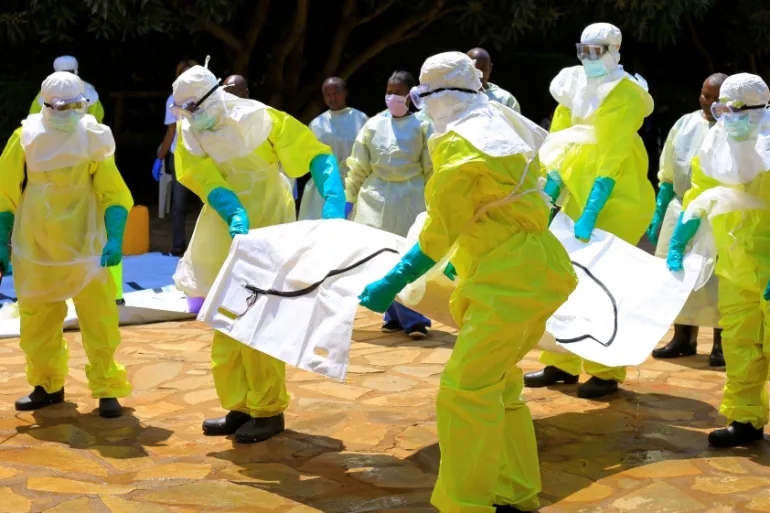
The virus’s reservoir remains bats, with fruit bats in sub-Saharan Africa serving as the primary carriers. Human transmission occurs through contact with infected bodily fluids, contaminated objects, or bushmeat consumption. The CDC emphasizes that early symptoms may include fever, aches, pains, and fatigue,
followed by more severe manifestations as the disease progresses. Diagnostic challenges persist: the WHO’s May 17 statement noted that only eight cases have been laboratory-confirmed, while hundreds remain suspected—a gap that hampers containment efforts.
Treatment options are limited to supportive care, though the FDA-approved cocktail INMAZEB (atoltivimab/maftivimab/odesivimab) has shown promise in reducing mortality for the Zaire strain. Its efficacy against Bundibugyo remains untested in clinical trials, leaving healthcare workers reliant on fluid management and symptom control. Vaccination efforts are underway, with the WHO coordinating the deployment of the Ervebo vaccine, which targets the Zaire strain but may offer partial cross-protection.
Global Response: Emergency Declarations and Travel Restrictions
The WHO’s declaration of a public health emergency of international concern (PHEIC) on May 17 marked the first time the agency has invoked this level of alert for an Ebola outbreak since 2014.
- CDC travel advisories: The U.S. Centers for Disease Control and Prevention issued Level 3 warnings for Ituri Province, advising against nonessential travel and mandating screening for returning travelers.
- Cross-border coordination: Uganda’s Ministry of Health confirmed one death and activated its Ebola task force, while Rwanda and South Sudan have reinforced surveillance at shared borders.
- Medical supply surge: The WHO is mobilizing protective gear, testing kits, and treatment centers, though logistical delays persist due to insecurity in the region.
The declaration also prompted the CDC to confirm an Ebola case in a U.S. doctor who had recently returned from the DRC, though no community transmission has been detected. This case underscores the global risk as travelers and aid workers move between affected regions. Meanwhile, the MRC’s modeling suggests the outbreak’s true magnitude could be larger than currently ascertained,
with transmission dynamics resembling those of the 2018–2020 DRC epidemic, which saw over 2,200 cases and 1,500 deaths.
Local Realities: Fear, Stigma, and the Challenge of Containment
On the ground, the outbreak is met with real fear,
according to local residents interviewed by the BBC. In Ituri, communities are implementing rudimentary protections—washing hands with soap, avoiding sick individuals, and isolating the deceased—but face critical shortages of masks, gloves, and disinfectants. Alfred Giza, a community leader, acknowledged awareness of Ebola’s dangers but expressed helplessness: We wait for face masks, but if a family member gets sick, we won’t know what to do.

Stigma remains a formidable barrier. Past outbreaks in the DRC have shown that survivors and their families are often shunned, discouraging early reporting. Healthcare workers, already in short supply, are at heightened risk due to unsafe burial practices and delayed diagnosis. The WHO’s emergency committee cited weak health infrastructure
and community resistance
as key obstacles, noting that only 30% of suspected cases are being tested due to limited laboratory capacity.
The outbreak’s spread into Uganda—where the first confirmed death occurred on May 16—has intensified regional alarms. The country’s health ministry reported that the patient had traveled from the DRC, highlighting the virus’s mobility along trade and migration routes. Experts warn that without aggressive contact tracing and vaccination campaigns, the epidemic could follow the trajectory of the 2018–2020 DRC outbreak, which persisted for over two years.
What Comes Next: Uncertainties and the Path Forward
The WHO’s emergency declaration signals a race against time.
- Transmission dynamics: Modeling suggests underreporting, but the true reproduction number (R0) of the Bundibugyo strain in this context is unknown. Past outbreaks indicate R0 values between 1.5 and 2.0, but conflict and displacement could elevate this.
- Vaccine efficacy: Ervebo’s cross-protection against Bundibugyo is unproven. Clinical trials are underway, but deployment will depend on supply chains and community acceptance.
- Global solidarity: The CDC’s travel restrictions and the U.S. doctor case demonstrate the outbreak’s international reach, but funding for response efforts remains uneven. The WHO has appealed for $100 million to scale up interventions, though only 30% has been pledged as of May 19.
The DRC’s experience with Ebola—including the 2018–2020 epidemic, which killed over 2,200 people—offers a grim precedent.
- Rapid testing: Expanding laboratory capacity to confirm cases and break chains of transmission.
- Community engagement: Countering stigma through education and involving local leaders in response efforts.
- Regional cooperation: Strengthening cross-border surveillance with Uganda, Rwanda, and South Sudan.
- Treatment access: Ensuring INMAZEB and supportive care reach affected zones, despite logistical hurdles.
For now, the outbreak’s trajectory remains uncertain. The WHO’s declaration underscores the stakes: without immediate, coordinated action, the Bundibugyo strain could become the next major global health crisis. The question is no longer if
this will spread further, but how far—and how fast.
Consult your healthcare provider for personalized advice on travel or exposure risks.
