Neil the elephant seal causes chaos during annual return to Tasmania
A subadult southern elephant seal named Neil has returned to Tasmania, where his habit of body-slamming cars and blocking traffic has made him an internet celebrity.
- Headline Dispatch: Neil the elephant seal causes chaos during annual return to Tasmania
- Core Takeaway: A subadult southern elephant seal named Neil has returned to Tasmania, where his habit of body-slamming cars and blocking traffic has made him an internet celebrity.
- Source Synthesis: Continuous live monitoring aggregated across major news wires and independent bureaus.
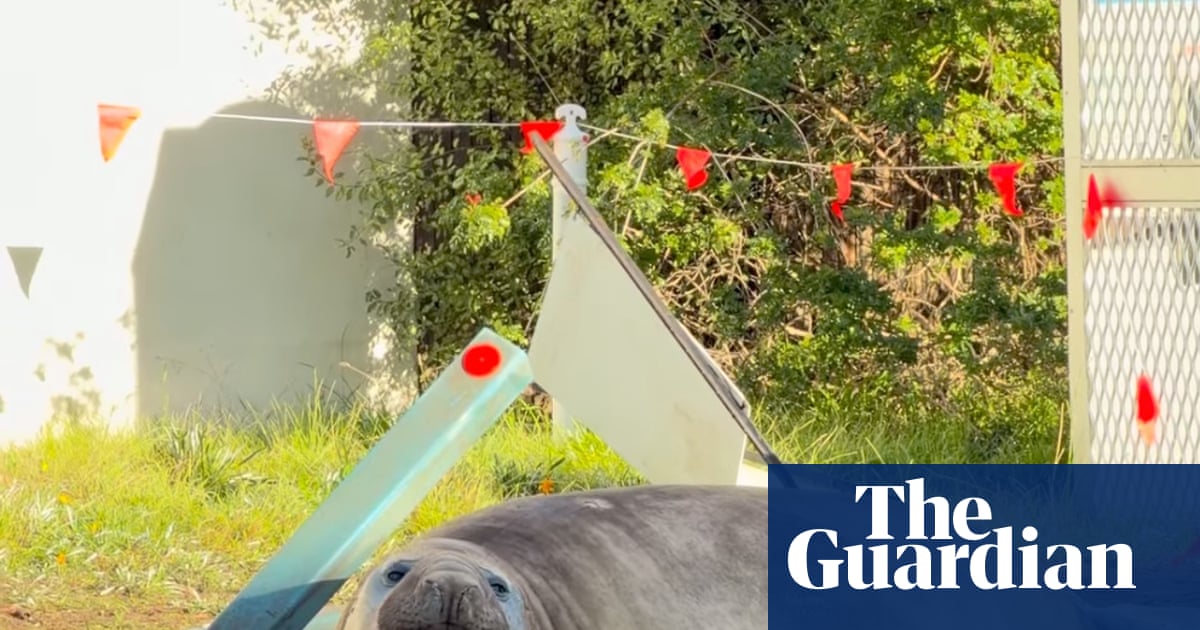
Neil the elephant seal causes chaos during annual return to Tasmania
A five-year-old southern elephant seal known as Neil has returned to the shores of southern Tasmania, bringing with him a documented history of obstructing roads and damaging public property. The mammal, who currently weighs about 1,000kg, has become a local celebrity and an internet sensation with more than 1.4 million followers on TikTok.
Neil's 2026 visit began with the seal emerging from the Southern Ocean to engage in an annual "haul out" for rest and moulting. During this period, he has been observed dismantling roadside bollards, blocking traffic, and body-slamming a parked Toyota Land Cruiser. Video footage from June 24 showed wildlife officers using a padded pole and a board to move Neil off a road to ensure his safety and that of motorists. The state’s Department of Natural Resources and Environment defended these techniques as safe, internationally recognised methods used by experts to prioritise the animal's wellbeing.
While some residents view him as a nuisance, others have embraced the chaos. Independent Tasmanian senator Jacqui Lambie described him as the only bloke in Tasmania who can stop traffic, ignore everyone, and still be loved for it
.
The science of a "hooligan"
Experts say Neil's disruptive behavior is rooted in natural development. Born in 2020 at Salem Bay on the Tasman Peninsula, Neil is a subadult. Dr Jane Younger, a senior lecturer and seal expert at the University of Tasmania, stated that Neil's tendency to harass cars and break fences is just a function of his size
as he grows. She noted that while he is 1,000kg now, adult males can reach between 2 tonnes and 3.5 tonnes.
The lack of a local colony in Tasmania has forced Neil to adapt his social learning. Dr Clive McMahon, a marine ecologist and science and operations manager at the Sydney Institute of Marine Science, explained that young males typically spar with each other to prepare for adulthood. In the absence of other young males, Neil has substituted infrastructure for companions. McMahon suggests that when Neil is seen squished against a fence while sleeping, it is likely because he wants to feel something else there.
Iain Field, an elephant seal researcher, compared juvenile males to teenage boys
who test boundaries. Because Neil lacks suitable companions, he has expanded his definition of fellow seals to include wheelie bins, traffic cones, and motor vehicles.
Public safety and conservation
Despite his popularity, authorities warn that Neil is a wild animal and can be unpredictable. Wildlife officials have issued strict guidelines for the public:
- Maintain a distance of at least 20 metres at all times, including when the seal is sleeping.
- Keep dogs at least 50 metres away.
- Edge away slowly if the seal begins to move toward a person.
Rod Macdonald, the mayor of Tasman council, noted that while Neil is a celebrity, his size makes him a danger to property. Residents are generally encouraged to find ways to avoid getting into trouble with the animal.
The broader context for the species is concerning. The International Union for the Conservation of Nature (IUCN) recently upgraded the southern elephant seal to vulnerable
after bird flu impacted four of five major populations. This outbreak resulted in the death of more than 90% of seal pups in some colonies, including 13,000 on Heard Island.
Some authorities are monitoring Neil closely and considering management options, including relocation, though a spokesperson for the department noted that relocating large marine mammals is often unsuccessful and complex.
Neil is expected to remain on shore for approximately six weeks before returning to the sea, where he will likely spend the coming months growing in weight and confidence before his next appearance.
How significant is this development?
Participate in our community survey on the trajectory and real-world impact of this news.