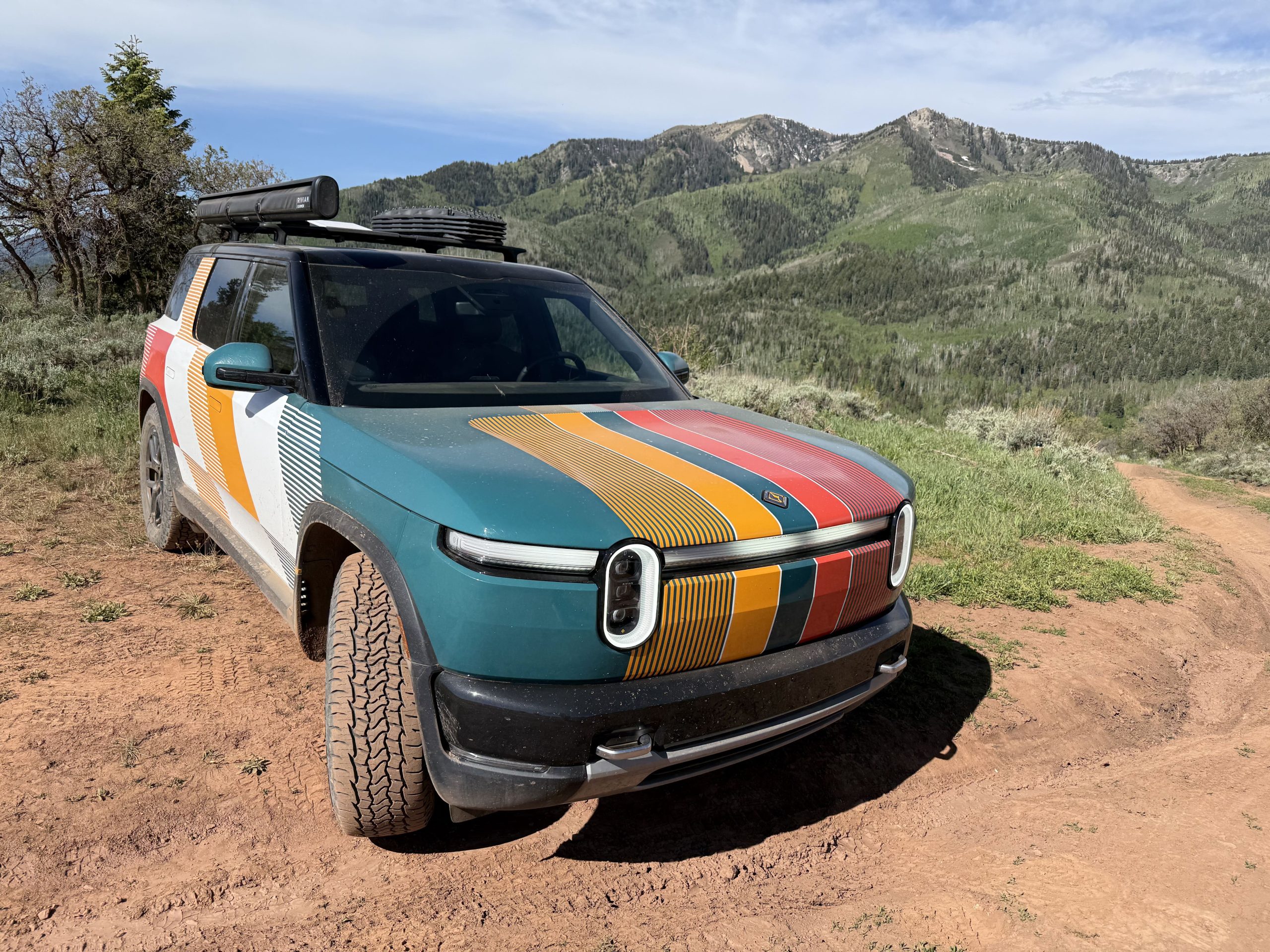
Rivian’s $45,000 R2 SUV launches June 2026, marking its Tesla Model 3 moment—with a $3.6 billion loss and a Georgia plant bet on volume. The electric vehicle maker’s new midsize SUV, designed to compete with Tesla’s Model Y and mainstream brands like Jeep, arrives with a $45,000 entry-level price—six months ahead of schedule. But profitability remains elusive, with Rivian losing $6,000 per vehicle in Q1 2026, and its future hinges on a $5 billion Georgia plant set to ramp up in late 2028.
Why Rivian’s R2 Is Its ‘Make-or-Break’ Play
Rivian CEO RJ Scaringe called the R2 SUV “make or break” during its launch event in Park City, Utah, on June 2, 2026—a framing Wall Street analysts have echoed. The company’s survival depends on whether the R2 can replicate Tesla’s Model 3 and Model Y success by cracking the mainstream EV market, not just the niche luxury segment where Rivian’s R1T and R1S currently dominate. “When you build a company from scratch, everything is make or break,” Scaringe told CNBC. “There is no company if things don’t work.”
The stakes couldn’t be higher. Rivian’s $22 billion market cap masks a $3.6 billion loss in 2025, with only 42,247 vehicles delivered—a fraction of Tesla’s 1.8 million. The R2, priced from $45,000 to $58,000, is Rivian’s shot at volume. But even its first models—starting with the $59,485 R2 Performance—are far from cheap. The $45,000 entry-level variant, originally slated for late 2027, is now arriving in summer 2026, a sign of urgency. “Its goal is for it to be a high-volume product,” Scaringe said, acknowledging the challenge: “Certainly, we’re going to draw on some Tesla customers, but the market of non-Tesla customers is many, many times larger.”

Analysts compare Rivian’s bet to Tesla’s pivot from the Roadster to the Model 3—a move that saved the company. Rivian’s path is riskier. Unlike Tesla, which had years to refine its supply chain, Rivian is scaling up while still burning cash. Its automotive segment lost $6,000 per vehicle in Q1 2026, and profitability—once promised by 2027—has no new timeline. The Georgia plant, a $5 billion gamble, won’t open until late 2028. “Georgia brings the volume to generate the gross margin for the vehicle sales that covers everything,” Scaringe told CNBC. “The good news is we start to really reduce our burn rate. That’s the beauty of volume.”
How the R2 Compares to Tesla—and Where It Falls Short
On paper, the R2 checks boxes Tesla buyers care about: rugged styling, off-road capability, and a 330-mile range in the Performance model. But early reviews suggest Rivian’s advantage may lie in execution over specs. Motor1.com called the R2 “arguably better than Tesla ever could be” in its first-drive review, praising its retractable rear glass (a feature missing on the R1S due to packaging constraints) and simpler side-profile design. “The R2 simplifies things,” the outlet noted, pointing to a single illuminated marker behind the front tires—no logos or badges cluttering the look.
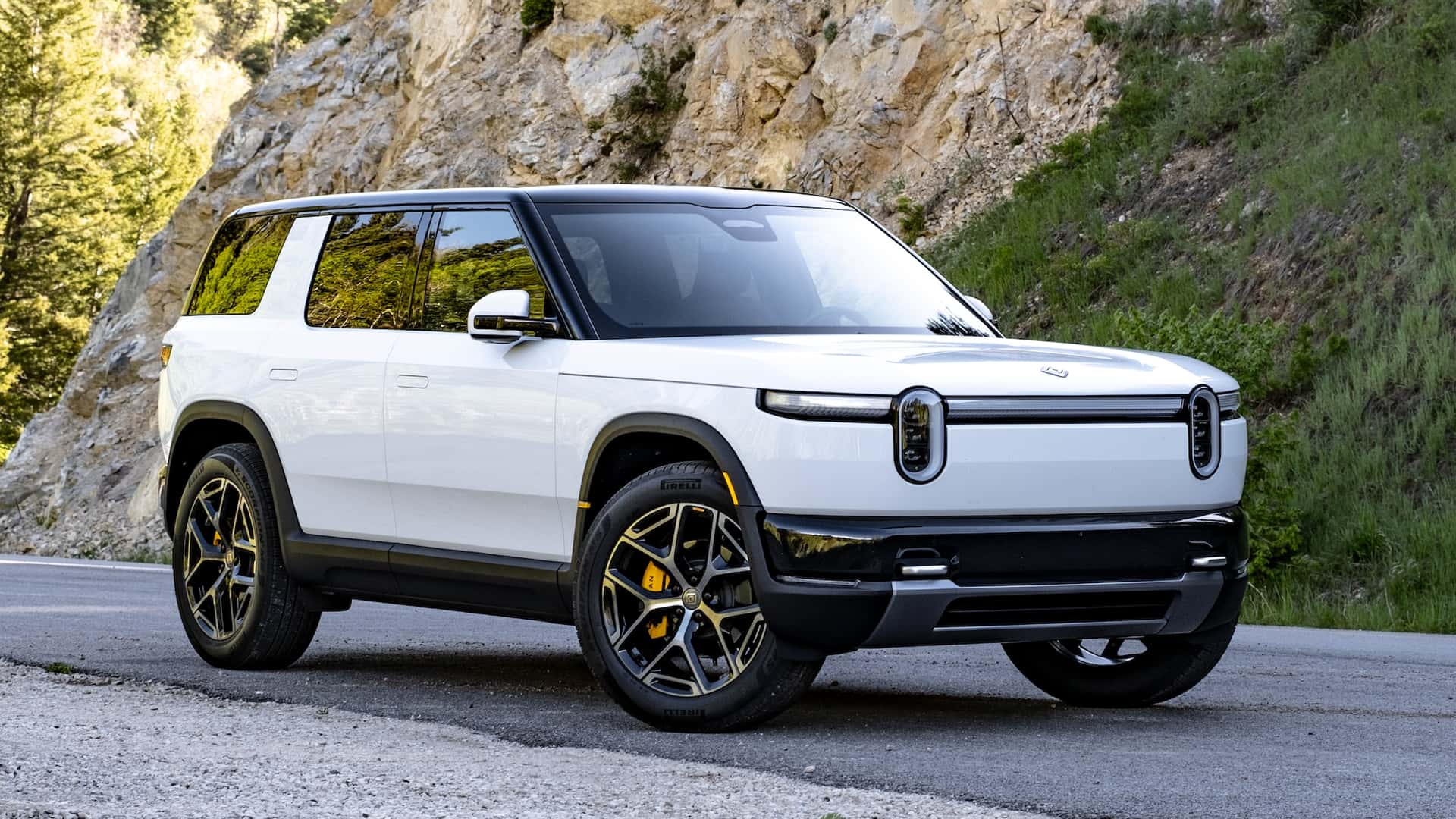
Yet Tesla’s Model Y remains the gold standard for affordability and scale. The R2’s starting $45,000 price—while lower than Rivian’s R1S ($80,000)—still sits above the Model Y’s $47,000 base price. Rivian’s strategy hinges on volume: the R2’s $45,000 model is “gross margin positive,” Scaringe said, but profitability at scale requires selling far more units than Rivian has moved to date. The company’s customer satisfaction scores—highest in Consumer Reports despite reliability issues—suggest brand loyalty, but loyalty doesn’t pay the bills when losses mount.
A deeper dive into the R2’s specs reveals trade-offs. The $59,485 Performance model delivers 656 horsepower and a 3.6-second 0-60 mph time, but its $55,485 Premium sibling drops to 450 horsepower—still outpacing the Model Y’s 384 hp. Range remains consistent at 330 miles across both, but the $49,985 Standard model (arriving in 2027) cuts to 350 hp and 345 miles, with a $46,485 variant offering 275 miles of range. Rivian’s pricing strategy mirrors Tesla’s: start high, trickle down. But unlike Tesla, Rivian lacks the manufacturing scale to absorb early losses. “This is a requirement,” Scaringe said. “Every single vehicle is gross margin positive.”
Georgia Plant: The $5 Billion Gamble
Rivian’s survival depends on Georgia. The $5 billion plant, under construction near Atlanta, is slated to begin production in late 2028 and reach full capacity by the end of the decade. Its success will hinge on two factors: volume and cost control. “Georgia brings the volume to generate the gross margin for the vehicle sales that covers everything,” Scaringe told CNBC. But the timeline is aggressive. Rivian’s current Illinois plant is already struggling to meet demand, and the Georgia facility won’t open until after the R2’s launch.

The plant’s location in Georgia—home to Tesla’s Gigafactory—is strategic. Rivian’s bet mirrors Tesla’s playbook: leverage state incentives, tap into a skilled workforce, and scale production. But Rivian’s path is riskier. Tesla had years to refine its supply chain; Rivian is scaling up while still burning cash. The R2’s launch is a test of whether Rivian can execute before the Georgia plant arrives. “The good news is we start to really reduce our burn rate,” Scaringe said. “That’s the beauty of volume.”
Yet volume alone won’t save Rivian if costs aren’t controlled. The company’s $6,000 per-vehicle loss in Q1 2026 is a red flag. Even with the R2’s gross margin positivity, scaling to Tesla-like volumes requires efficiency gains. Rivian’s stock dropped 5% on June 9, 2026, as analysts questioned whether the R2 could deliver on its promises. The Georgia plant is Rivian’s last chance to prove it can compete.
What’s Next: The R2’s Roadmap and Rivian’s Future
The R2’s rollout is phased. The $59,485 Performance and $55,485 Premium models arrive first, with the $49,985 Standard model following in 2027. The $46,485 variant, offering 275 miles of range, is slated for summer 2027. But the real test is whether Rivian can sell enough units to turn a profit. The company’s adjusted profitability target—once set for 2027—has no new timeline, raising questions about its financial health.
Rivian’s strategy hinges on three pillars: volume, cost control, and the Georgia plant. The R2 is the volume play; the plant is the cost-control lever. But time is running out. Rivian’s $3.6 billion loss in 2025 and $6,000 per-vehicle loss in Q1 2026 show the company is still far from sustainable. The R2’s success—or failure—will determine whether Rivian becomes a Tesla competitor or another EV startup casualty.
One thing is clear: Rivian’s future is no longer about building niche luxury vehicles. It’s about selling enough R2s to survive. “Certainly, we’re going to draw on some Tesla customers, but the market of non-Tesla customers is many, many times larger,” Scaringe said. Whether Rivian can tap into that market remains to be seen. The R2’s launch is its best shot.
Sources: CNBC, Motor1.com, Car and Driver, <a href="https://www.ajc.
<!– /wp:paragraph Whether the company can effectively scale production and capture a broad consumer base will ultimately decide if this critical pivot secures its long-term viability in an increasingly competitive electric market.