First Antarctic dinosaur bone identified as Titanosaur after 40 years
A dinosaur tail vertebra forgotten in a storage drawer for 40 years has been identified as the first dinosaur bone ever discovered in Antarctica.
- Headline Dispatch: First Antarctic dinosaur bone identified as Titanosaur after 40 years
- Core Takeaway: A dinosaur tail vertebra forgotten in a storage drawer for 40 years has been identified as the first dinosaur bone ever discovered in Antarctica.
- Source Synthesis: Continuous live monitoring aggregated across major news wires and independent bureaus.
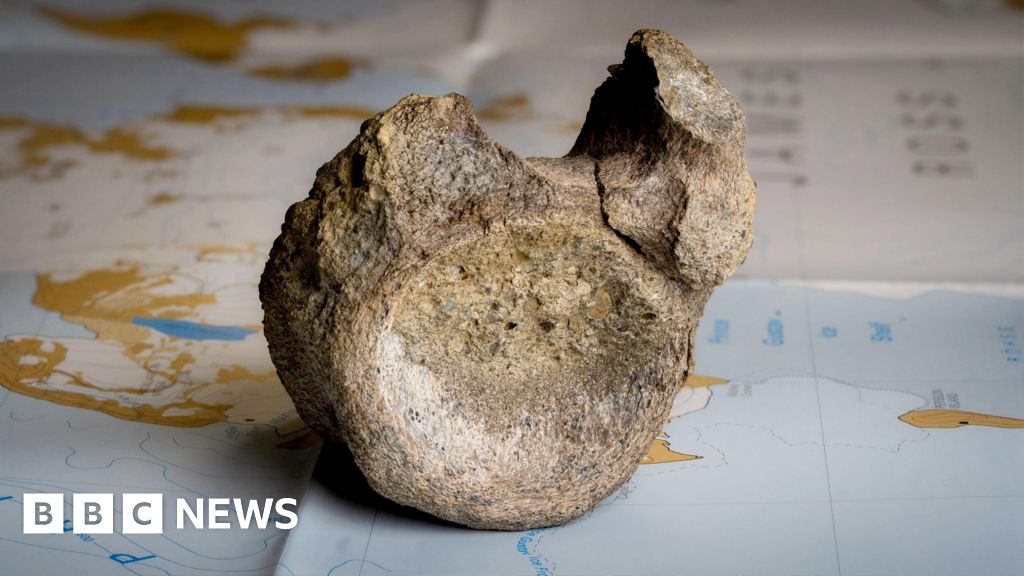
First Antarctic dinosaur bone identified as Titanosaur after 40 years
A fossil that spent 40 years forgotten in a storage drawer has been identified as the first dinosaur bone ever discovered in Antarctica. The specimen, a tail vertebra, was unearthed in 1985 but remained unnoticed in the geology collection of the British Antarctic Survey (BAS) in Cambridge until recently.
The bone was originally collected on James Ross Island. According to records in a field notebook kept by geologist Dr Mike Thomson, the specimen was discovered on 9 December 1985. Beside a small sketch of the bone, which measured about 10cm wide, Thomson had written vertebra of large reptile
.
Dr Mark Evans, the collections manager at BAS, spotted the fossil while reviewing thousands of specimens brought back from various Antarctic expeditions. Evans believes the original team likely assumed the bone belonged to a marine reptile. However, upon seeing it, Evans recognized the vertebra looked dinosaur-like and realized the date of its discovery would make it the first of its kind found on the continent.
To confirm the identification, Evans contacted Prof Paul Barrett from the Natural History Museum (NHM). Barrett identified the specimen as a Titanosaur, a group of four-legged plant eaters that included the largest dinosaurs to ever walk the Earth. The identification was based on a specific ball-and-socket joint structure created by a hollow on one end of the bone and a rounded bump on the other.
"As soon as I saw it, I knew what we were dealing with… it was a dead cert we were dealing with a Titanosaur,"
Prof Paul Barrett, Natural History Museum, via BBC
More than 100 species of Titanosaur have been identified globally. These herbivores typically possessed long necks to reach trees and long tails for counterbalance. While the largest of these creatures could weigh about 60 tonnes and exceed 115ft (35m) in length, this specific Antarctic specimen was smaller.
Based on the size of the tail bone, scientists estimate this Titanosaur was about 23ft (7m) long. Barrett suggests the animal may have been a juvenile or a species that was naturally smaller than the group's average.
The dinosaur lived 82 million years ago during the Late Cretaceous Period. At that time, the environment was vastly different from the modern frozen continent. According to the researchers, Antarctica was then covered in lush forest, which provided ample food for plant-eating beasts.
The discovery provides critical context for a region where the fossil record is sparse. Palaeontologists find Antarctica challenging to work in because ice conceals the prehistoric records kept within the rock. While other dinosaur fossils have been found on the continent since 1985, they remain rare.
Barrett noted that the find helps researchers understand how these animals fit into broader ecosystems at the bottom of the world about 80 million years ago.
"It shows that an area that we now think is really uninhabitable was once actually very habitable and had this huge cast of characters living on it,"
Prof Paul Barrett, Natural History Museum, via BBC
How significant is this development?
Participate in our community survey on the trajectory and real-world impact of this news.