Reflect Orbital gets FCC approval to launch first solar reflector satellite
California startup Reflect Orbital will launch a demonstration satellite to beam sunlight to Earth, sparking a debate between innovation and astronomical preservation.
- Headline Dispatch: Reflect Orbital gets FCC approval to launch first solar reflector satellite
- Core Takeaway: California startup Reflect Orbital will launch a demonstration satellite to beam sunlight to Earth, sparking a debate between innovation and astronomical preservation.
- Source Synthesis: Continuous live monitoring aggregated across major news wires and independent bureaus.
Reflect Orbital gets FCC approval to launch first solar reflector satellite
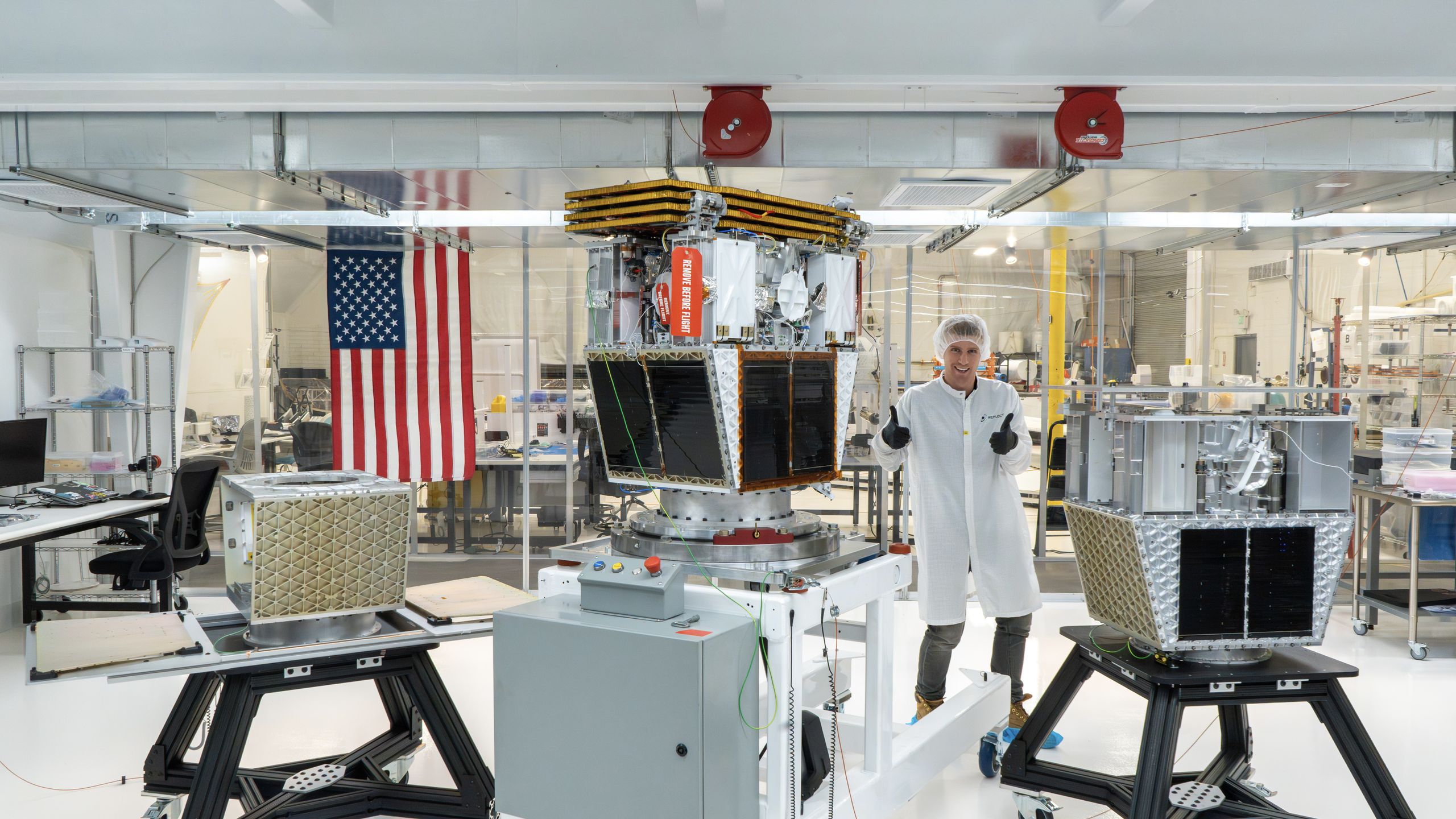
The U.S. Federal Communications Commission (FCC) granted approval on July 9, 2026, for California-based startup Reflect Orbital to launch a demonstration satellite designed to redirect sunlight to specific locations on Earth. The spacecraft, named Eärendil-1, will test the viability of using orbital mirrors to provide illumination during nighttime hours.
The satellite is scheduled to launch later in 2026 aboard a SpaceX Falcon 9. Weighing 142 kilograms and roughly the size of a dormitory refrigerator, the craft will operate at an altitude between 600 and 650 kilometers. Once in low Earth orbit, it will unfurl a deployable, highly specular thin-film square reflector measuring 18 meters by 18 meters.
Reflect Orbital intends to use the steerable mirror to beam sunlight down to Earth for several minutes at a time, creating an illuminated circle roughly 5 kilometers (3 miles) wide. The company previously tested this concept using a balloon-based mirror.
Commercial and Civil Applications
Reflect Orbital describes its technology as a new category of space-enabled infrastructure. The company suggests that on-demand sunlight could be used for several purposes:
- Energy Generation: Boosting the productivity of solar arrays on Earth by reflecting light before sunrise or after sunset, which the company claims could reduce reliance on fossil fuels during peak demand spikes at sunset.
- Emergency Services: Assisting search-and-rescue teams in locating missing persons.
- Infrastructure: Lighting construction projects to allow teams to work safely through the night and improving city street lighting without carbon emissions.
- Other uses: Supporting agriculture, disaster response, and defense operations.
The company, which raised $20 million in a Series A round last year, envisions a future where customers request temporary illumination via an application-based service.
Scientific and Environmental Opposition
The FCC's decision follows an application process that drew nearly 1,900 public comments, the majority of which were critical. Opponents include the American Astronomical Society, the Royal Astronomical Society, and the advocacy group DarkSky International.
Astronomers warn that the mirrors could interfere with terrestrial telescopes. The European Southern Observatory (ESO) stated that a full constellation could increase background sky brightness at its facilities by a factor of three to four. Tony Tyson, chief scientist of the Vera C. Rubin Observatory, described the plans as even crazier
than broadband satellite constellations, suggesting the sky could look full of moons
if light is scattered over wide areas.
Environmentalists and researchers have raised concerns about the disruption of diurnal cycles for plants and animals. John Barentine of the Silverado Hills Observatory noted that reflected beams could be four times brighter than the full moon, affecting wildlife through direct illumination and atmospheric scattering.
DarkSky expressed these concerns in an open letter, stating:
"The concept of illuminating Earth from orbit represents a new category of artificial light at night with global ecological, cultural and regulatory consequences,"
DarkSky, via CNET
Regulatory Stance and Future Scale
The FCC dismissed many of the objections, arguing that the current license is for a single, short-duration test satellite rather than a full constellation. The commission stated that concerns regarding astronomy and the environment fell outside its jurisdiction, as its review was limited to the authorization of radiofrequency spectrum and communications systems.
The FCC's order noted that approving the test is in the public interest to promote American innovation and economic growth. The license allows the operation of the satellite's radio communications for a two-year period.
While only one satellite is currently approved, Reflect Orbital has proposed a massive expansion. The company's roadmap includes:
- Launching up to 1,000 larger satellites between 2026 and 2028.
- Expanding to approximately 5,000 satellites by 2030.
- Deploying 50,000 or more mirror-craft in low Earth orbit by 2035.
Such a constellation would place 16.2 million square meters of mirrors in orbit. To mitigate risks, Reflect Orbital says its mirrors can be turned off quickly, and the company can avoid sensitive habitats or observatories. Ben Nowack, co-founder and CEO of Reflect Orbital, stated the license is the first step toward rigorously testing our technology's efficacy and the safeguards we have developed
.
The company is currently commissioning third-party research on its environmental impact and is working to develop a coordination agreement with the National Science Foundation.
How significant is this development?
Participate in our community survey on the trajectory and real-world impact of this news.