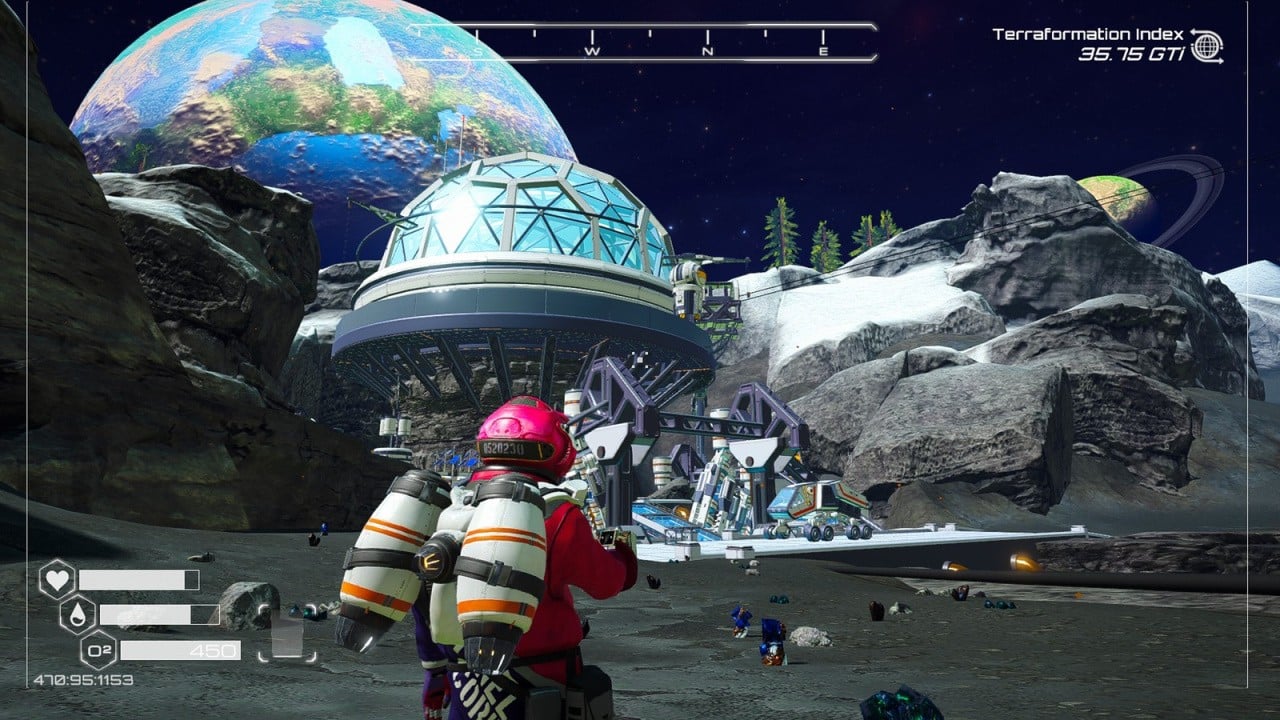
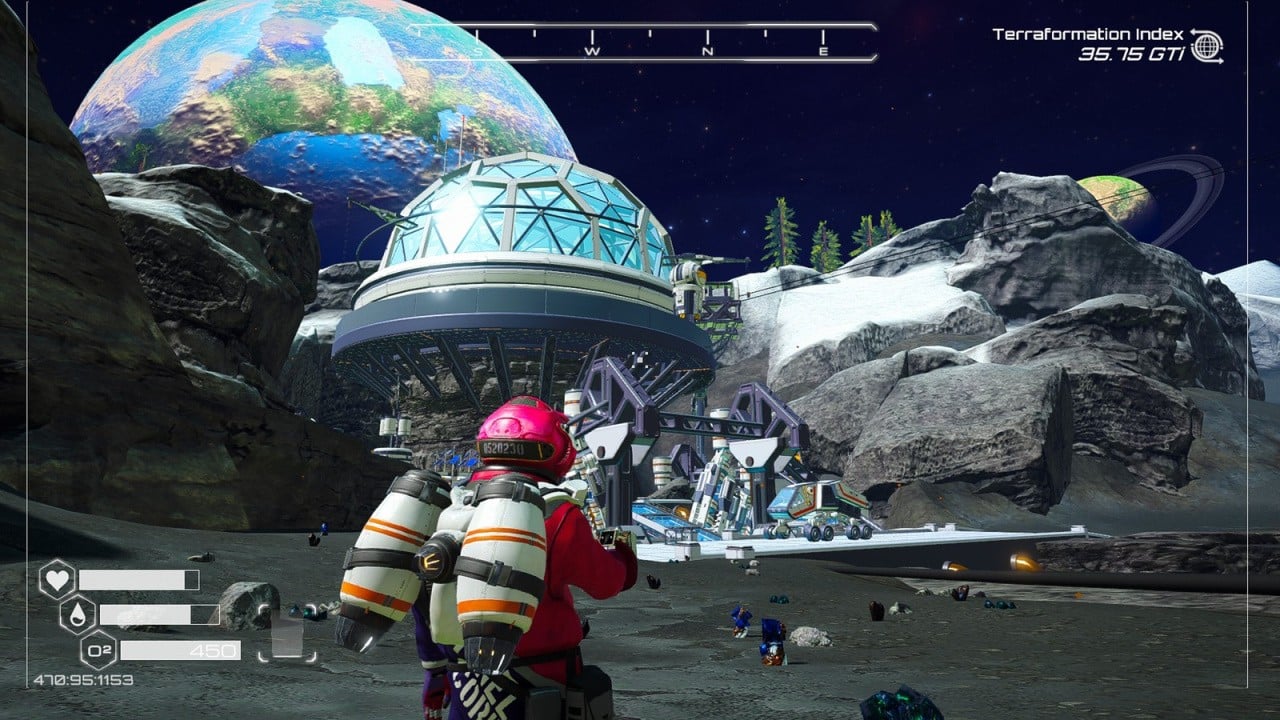
Miju Games’ The Planet Crafter—a sci-fi sandbox survival title with over 36,000 Steam reviews and an “overwhelmingly positive” rating—debuts on Xbox Series X|S and PS5 next month, marking its first console appearance after years of PC dominance. The game blends open-world exploration with terraforming mechanics, offering a “chill experience” where players transform hostile planets into habitable worlds through base-building and environmental engineering. Unlike traditional survival games, The Planet Crafter emphasizes non-violent progression, with developers describing it as inspired by idle-game aesthetics, where terraforming machines continue operating even when players explore or craft. With up to eight-player co-op, it arrives as a rare console-exclusive for Game Pass subscribers, joining Fogpiercer—a sci-fi roguelike deckbuilder launching July 17—as Microsoft’s latest July 2026 additions.
Design Philosophy: A Meta-Game of Ecological Transformation
The Planet Crafter isn’t just another survival title—it’s a meta-game about ecological transformation. While competitors like No Man’s Sky focus on exploration or combat, Miju Games’ approach centers on systemic change: players don’t just survive; they reshape entire planets. The game’s procedural generation means no two terraforming journeys are identical, and its co-op mode (up to eight players) turns solo survival into a collaborative puzzle. Developers emphasize the “wonder” of discovery—melting glaciers reveal new valleys, and early life forms (moss, insects) evolve into forests and animals as atmospheric conditions improve. This isn’t survival as punishment; it’s survival as creation, with a difficulty curve that adjusts from “chill” to “hardcore.”


The game’s console ports arrive nearly four years after its 2022 PC early access launch, reflecting a deliberate focus on refining its core mechanics. As co-founders Amélie and Brice told reporters, "Today, now with a team of seven, and two million terraformers later, we’re landing on consoles. What an amazing adventure, all thanks to our amazing community!"—a nod to the player-driven demand that pushed the project from PC exclusivity to multiplatform. The shift also signals a broader trend: indie developers leveraging console ports to tap into Game Pass’s subscriber base, where titles like Fogpiercer (a PC-only roguelike) and The Planet Crafter offer niche appeal without requiring dedicated hardware.
Console Launch and Pricing: A Divided Accessibility Model
Microsoft’s July 2026 Game Pass additions highlight a split in survival-game design philosophies. While The Planet Crafter prioritizes long-term ecological impact, Fogpiercer—launching July 17—delivers short, explosive bursts of strategy. The latter, a sci-fi roguelike deckbuilder, pits players against bandit-infested worlds via a train-based combat system where “clever positioning and chain reactions” dictate survival. Both games arrive as “day one” releases, but their mechanics couldn’t be more different: one is a living world; the other is a high-stakes puzzle.
The Planet Crafter’s console debut also raises questions about pricing. While the PC version has been free-to-play (with optional purchases), console ports typically command a premium—though Microsoft hasn’t disclosed Xbox pricing yet. PlayStation’s version, however, will be available via PS Plus, aligning with Sony’s push to bundle indie titles in its subscription service. The contrast underscores how console exclusivity (even within Game Pass) can influence accessibility: Xbox players may face a paywall, while PS Plus subscribers get immediate access.
Core Mechanics: From Basic Heat Pumps to Custom Creature Design
- Terraforming progression: Players start with basic heat pumps and atmospheric regulators, gradually unlocking machines that alter planetary conditions. Early stages focus on oxygen and temperature; later tiers introduce biosphere engineering (e.g., creating oxygen-rich atmospheres or triggering rain cycles).
- Procedural ecosystems: As players terraform, the planet evolves dynamically. A frozen wasteland might thaw into a river valley, or a meteorite crash site could spawn rare minerals—and hidden relics from “lost expeditions.” The game’s DNA-decryption system even lets players design custom creatures.
- Co-op dynamics: With support for up to eight players, The Planet Crafter encourages teamwork. One player might focus on resource gathering while others build defenses or explore shipwrecks. The game’s “chill” difficulty setting makes it accessible for casual groups, though hardcore modes offer punishing challenges.
- Creative mode: For players who want to bypass survival, the game includes a sandbox mode where they can build without constraints, experiment with terraforming, or even design their own planets from scratch.
- Hidden lore: The game’s worlds are littered with environmental storytelling—abandoned ruins, cryptic data logs, and “secrets to uncover.” Developers describe it as a mix of No Man’s Sky’s exploration and Subnautica’s ecological depth, with a focus on discovery over combat.
Indie Innovation and the Future of Survival Games
The Planet Crafter’s console arrival isn’t just about porting a hit PC game—it’s a statement on the future of survival genres. Traditional titles (Subnautica, Valheim) often pit players against hostile environments or monsters. The Planet Crafter flips the script: the planet itself is the antagonist, and the player’s tools (terraforming machines, base-building) are the weapons. This shift aligns with a growing trend in indie games toward systemic design—where player actions have lasting, visible consequences.
For Xbox Game Pass subscribers, the game’s inclusion is a win for niche appeal. While AAA titles dominate the service, Microsoft has increasingly highlighted indie gems like Fogpiercer and The Planet Crafter to diversify its library. The challenge for players will be balancing these deep, time-consuming experiences with the service’s faster-paced offerings. Meanwhile, Sony’s PS Plus bundle strategy suggests consoles are becoming a battleground for indie exclusives—one where accessibility (via subscriptions) competes with Microsoft’s “day one” Game Pass releases.
- July 17: Fogpiercer launches on PC (Game Pass).
- July 21: The Planet Crafter debuts on Xbox Series X|S, PS5, and PC (Game Pass).
- Pricing: Xbox pricing undisclosed; PS5 version available via PS Plus.
- Community buzz: Early Steam reviews describe the game as "overwhelmingly positive," with players praising its “chill” survival mechanics and procedural worlds. Developers have hinted at post-launch updates, including new planets and creature designs.
For fans of survival games, The Planet Crafter offers a refreshing alternative—one where the goal isn’t just to survive, but to reshape the world itself. Whether it becomes a console staple remains to be seen, but its arrival signals a moment where indie innovation is reshaping even the most established genres.
Find more reporting in our Technology section.
