Indian police detain 'cockroach' movement founder Abhijeet Dipke ahead of rally
Indian authorities detained Cockroach Janta Party founder Abhijeet Dipke and protesters in New Delhi amid a strict lockdown over voter list revisions.
- Headline Dispatch: Indian police detain 'cockroach' movement founder Abhijeet Dipke ahead of rally
- Core Takeaway: Indian authorities detained Cockroach Janta Party founder Abhijeet Dipke and protesters in New Delhi amid a strict lockdown over voter list revisions.
- Source Synthesis: Continuous live monitoring aggregated across major news wires and independent bureaus.
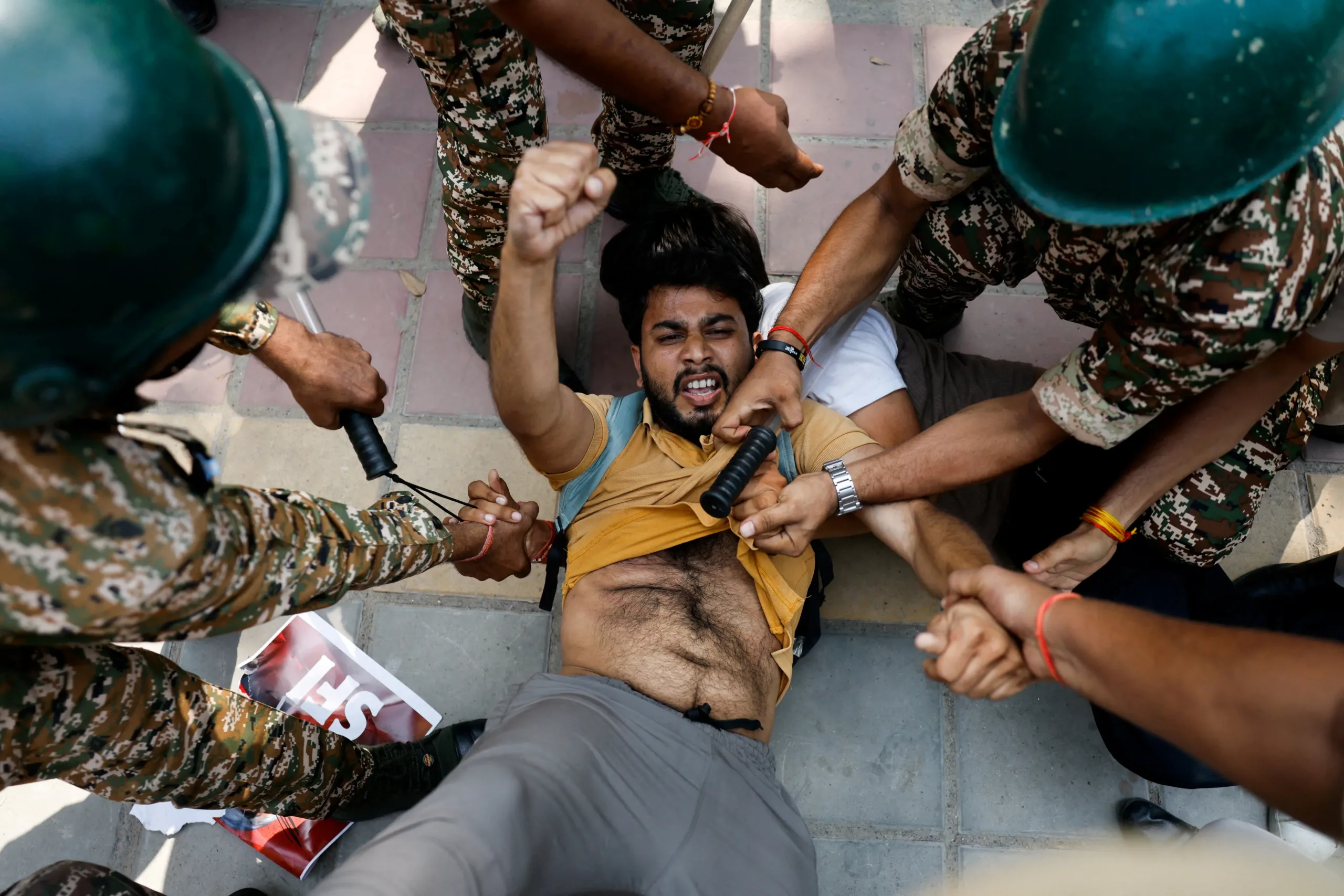
Indian police detained scores of protesters and youth movement leaders in New Delhi amid a sweeping security lockdown aimed at halting a rally demanding the resignation of Chief Election Commissioner Gyanesh Kumar. The demonstrations, organized by the "Cockroach" youth movement and the Cockroach Janta Party (CJP), centered on widespread anger over controversial revisions to the country's voter lists.
Capital Lockdown and Security Crackdown
Authorities imposed extensive restrictions across the capital. Security forces shut 45 metro stations and local markets while suspending mobile internet services in the central business district. Thousands of security personnel patrolled New Delhi, erecting barricades and concrete blocks along major routes, while anti-riot vehicles equipped with tear gas launchers were stationed at key junctions. Police also stopped vehicles at entry points and searched buses and cars.
The restrictions severely disrupted travel schedules for the planned demonstration, which was scheduled to take place at Jantar Mantar, an officially designated protest site in central New Delhi. Before leaving Mumbai, CJP founder Abhijeet Dipke questioned the scale of the measures, asking why the prime minister appeared so fearful of the country's youth and citizens.
Delhi Police stated on Friday that permission for the rally had not been granted and warned that anyone violating the restrictions would face legal action. The CJP maintained that the demonstration was an exercise of a fundamental right.
Detentions of Leaders and Journalists
CJP founder Abhijeet Dipke and senior party members Saurav Das and Ashutosh Ranka were taken into custody directly aboard an aircraft arriving in Delhi from Mumbai, according to a party statement. Television footage captured Dipke challenging officers who approached the group inside the plane.
"I have come to be arrested, arrest me … I am not afraid of you guys,"
Abhijeet Dipke, CJP founder, via Reuters and Arise TV
An officer responded that he was not being arrested and asked him to cooperate. The CJP condemned the move as an "authoritarian detention" intended to cripple the leadership of the protest, demanding their immediate release.
Meanwhile, small groups of demonstrators who reached central Delhi were chased by officers and loaded into police buses. Some young protesters chanted revolutionary slogans as more participants arrived. Protester Yogendra Solanki criticized the police action while being pushed into a bus.
"This is violating the rights of the people and the country will not tolerate this anymore,"
Yogendra Solanki, protester, via Reuters and Arise TV
The crackdown extended beyond political activists. Representatives of two digital media outlets reported on X that police detained four of their reporters while covering the demonstration. Additionally, lawyers protesting outside the Supreme Court were taken into custody, according to a post by the Supreme Court bar association president. Other prominent protest figures were reportedly detained while trying to reach Jantar Mantar or prevented from leaving their homes.
Electoral Roll Controversy and Statistics
The protests stem from opposition and civil society outrage over the Special Intensive Revision (SIR) of electoral rolls, a process launched in mid-2025. Critics argue that the revisions favor Prime Minister Narendra Modi’s ruling Bharatiya Janata Party (BJP). The controversy intensified after media reports revealed that deputies of Chief Election Commissioner Gyanesh Kumar questioned and disagreed with changes that removed approximately 130 million names from electoral rolls—a figure exceeding the population of Japan.
| Voter Deletion Category | Reported Figures |
|---|---|
| Total Names Removed from Electoral Rolls | 130 million |
| Relocated Voters | 63 million |
| Untraced Individuals | 30 million |
| Deceased Individuals | 28 million |
Opposition parties accuse the government of manipulating voter registration to strengthen the BJP's electoral prospects, alleging that the deletions affected outcomes in recent state elections. The Election Commission defended the process, stating that the figures included entries flagged during the draft revision phase and that wrongly removed voters could register again. The commission provided a breakdown of the deletions, noting that 63 million people had relocated, 30 million could not be traced, and 28 million had died.
The BJP has denied wrongdoing and attributed its electoral success to Modi's popularity and India's economic growth, accusing opposition parties of misleading the public. A BJP spokesman asserted that the protesting groups and the opposition Congress Party were attempting to destabilize the country with the backing of foreign powers.
Broader Unrest and Next Steps
The recurring demonstrations present a significant political challenge for Modi's administration, following earlier protests over examination paper leaks that forced the resignation of his education minister. Beyond Delhi, parallel protests by opposition parties, student groups, and civil society organizations occurred in Mumbai, Ahmedabad, and Srinagar, where police attempted to block supporters of the opposition INDIA bloc.
The latest unrest unfolds ahead of a series of important state elections scheduled to begin in early 2027.
How significant is this development?
Participate in our community survey on the trajectory and real-world impact of this news.