China sparks regional tension with nuclear-capable missile test in Pacific
A Chinese nuclear-powered submarine's long-range missile test in the South Pacific has triggered diplomatic fallout and concerns over Beijing's nuclear capabilities.
- Headline Dispatch: China sparks regional tension with nuclear-capable missile test in Pacific
- Core Takeaway: A Chinese nuclear-powered submarine's long-range missile test in the South Pacific has triggered diplomatic fallout and concerns over Beijing's nuclear capabilities.
- Source Synthesis: Continuous live monitoring aggregated across major news wires and independent bureaus.
China sparks regional tension with nuclear-capable missile test in Pacific
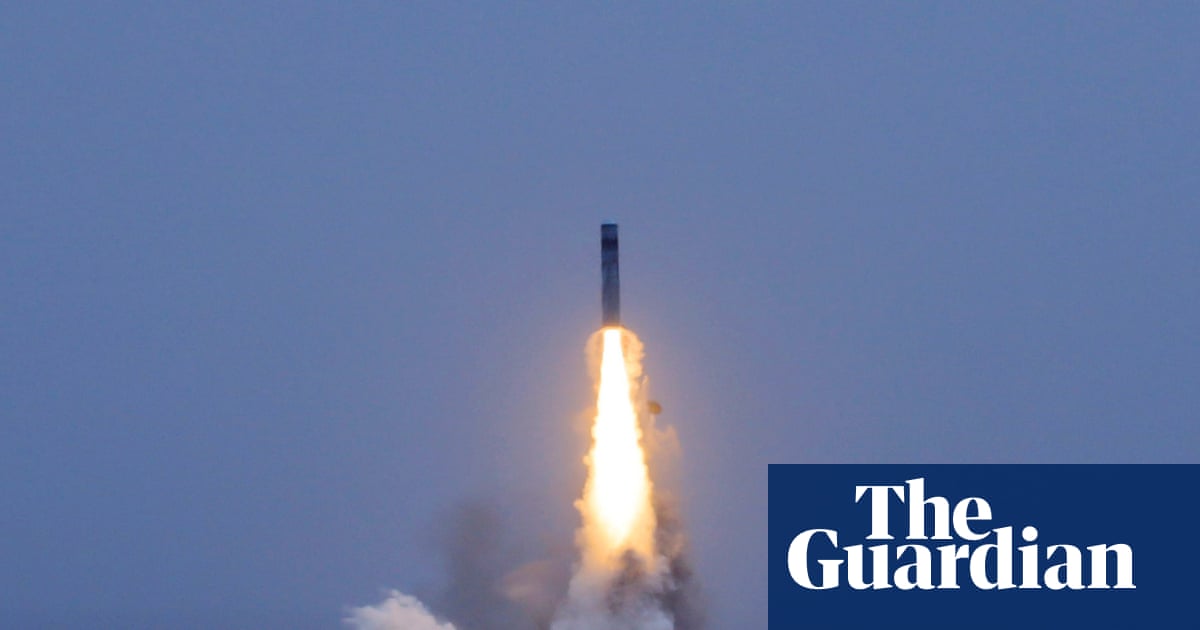
China’s navy test-launched a nuclear-capable, long-range ballistic missile from a nuclear-powered submarine in the South Pacific on Monday, July 6, 2026. The launch, which carried a dummy warhead, has triggered swift condemnation from the United States, Australia, New Zealand, and Japan, with regional leaders accusing Beijing of destabilizing the area.
The missile was launched at 12.01 p.m. Local time. According to a Chinese navy statement, the projectile accurately landed within the predetermined sea area
. While Beijing described the exercise as a routine part of China’s annual military training
that complies with international law, neighboring nations expressed alarm over the lack of transparency and the short notice provided.
Diplomatic Fallout and Regional Tensions
The test occurred just hours after Australia and Fiji signed the "Ocean of Peace" defense alliance, a mutual defense treaty committing both nations to aid one another in the event of an attack. Prime Minister Anthony Albanese described the launch as a provocative act by China which does destabilize the region
.
New Zealand Foreign Minister Winston Peters called the development unwelcome and concerning
, noting that the missile was fired into the South Pacific Nuclear Free Zone. This zone was established by the 1986 Treaty of Rarotonga, which prohibits nuclear weapons in the region. Peters stated that Pacific nations have no interest in China using the South Pacific as a testing site for missile capability
.
Even close partners of Beijing expressed dismay. Matthew Wale, the prime minister of the Solomon Islands, told reporters,
"China is a good friend of Solomon Islands, but this is not something a friend does. This is not … good in our region."
Matthew Wale, prime minister of the Solomon Islands, via theguardian.com
Japan’s Chief Cabinet Secretary Minoru Kihara cited concerns over Beijing’s rapidly expanding nuclear capabilities and increasing defense spending. Japan's government urged China to rethink such launches to ensure projectiles do not fly over Japanese territory.
Strategic Implications and Capabilities
Military experts suggest the test was a demonstration of the sea-based leg of China's nuclear triad—the ability to launch nuclear weapons from land, sea, and air. Dominic Meagher, a research fellow at the Crawford School of Public Policy in Australia, noted this confirms a "second-strike capability," meaning China can retaliate even if attacked first.
There is disagreement regarding the specific hardware used. Joseph Wu, secretary-general of Taiwan’s national security council, indicated the missile was a JL-2 launched from waters off Guangdong. However, Chinese state media and military expert Song Zhongping suggested it was likely a JL-3. Unveiled in September 2025, the JL-3 has a range exceeding 10,000 kilometres. Su Tzu-yun of Taiwan’s Institute for National Defence and Security Research stated the JL-3 allows submarines to threaten targets in the central United States without leaving Chinese coastal waters.
The launch follows a similar intercontinental ballistic missile (ICBM) test in September 2024, where a missile travelled approximately 11,500 kilometres to land in the exclusive economic zone of French Polynesia. This marks the second publicly acknowledged long-range launch into the Pacific in less than two years.
Surveillance and Notification Controversy
While China’s foreign ministry spokesperson Mao Ning stated that relevant countries were notified in advance
, other officials disputed the timing. Winston Peters reported that New Zealand was informed only hours before the launch. Lyle Morris, a senior fellow at the Asia Society Policy Institute, noted that while Japan, New Zealand, and Australia received notifications, the U.S. Did not.
Maritime surveillance company Starboard identified two Chinese satellite tracking ships, the Yuan Wang 3 and Yuan Wang 6, near the Federated States of Micronesia’s exclusive economic zone during the test. A third ship, the Yuan Wang 5, was berthed in Suva, Fiji, arriving on July 3. Mark Douglas of Starboard stated the presence of the Yuan Wang 5 in Fiji's capital during the same week Fiji signed its defense alliance with Australia was unlikely to be coincidental
.
Nuclear Outlook
The U.S. State Department emphasized that Beijing is pursuing a rapid and opaque nuclear weapons buildup
. According to a late 2025 Pentagon report, China had an estimated 600 nuclear warheads in 2024 and is on track to field more than 1,000 by 2030. Additionally, the Nuclear Threat Initiative reported that as of November 2025, China possessed 59 nuclear-powered attack submarines and six ballistic-missile submarines.
As of July 7, the Nato summit has begun in Turkey, which some analysts believe served as additional timing for the signal. The U.S. Continues to urge Beijing to engage in meaningful arms control discussions and establish regularized notification arrangements for future ICBM and space launches.
How significant is this development?
Participate in our community survey on the trajectory and real-world impact of this news.


