New monkey species discovered in Democratic Republic of the Congo
Researchers have identified a rare new primate in the Democratic Republic of the Congo, marking only the fifth discovery of a new African monkey species in 75 years.
- Headline Dispatch: New monkey species discovered in Democratic Republic of the Congo
- Core Takeaway: Researchers have identified a rare new primate in the Democratic Republic of the Congo, marking only the fifth discovery of a new African monkey species in 75 years.
- Source Synthesis: Continuous live monitoring aggregated across major news wires and independent bureaus.
New monkey species discovered in Democratic Republic of the Congo
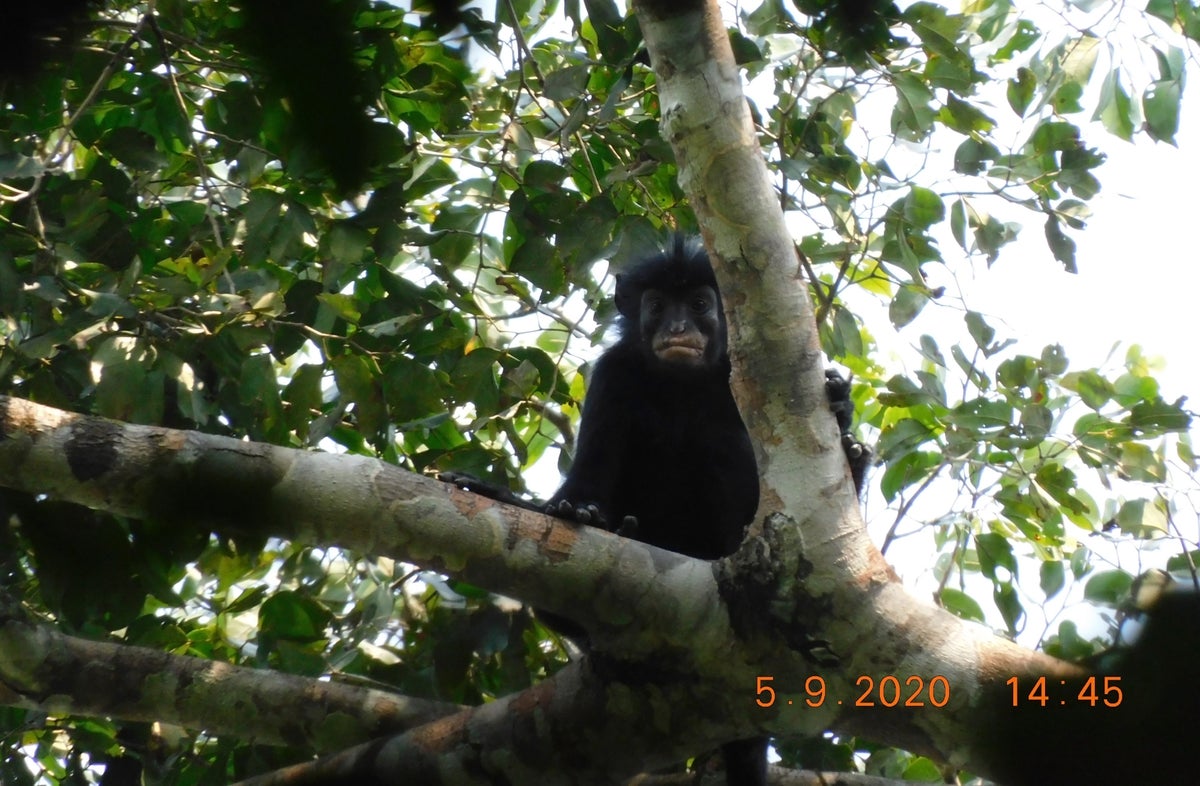
Researchers have identified a new species of monkey in the rainforests of the Democratic Republic of the Congo (DRC), marking only the fifth discovery of a new African monkey species in 75 years. The primate, officially named Colobus congoensis and known to some local communities as Likweli
, is distinguished by a striking orange-cream patch around its mouth and nose. When the monkey emits its characteristic croaky roar—described as sounding like a pig snorting or a frog—its lips form a pale orange O.
The discovery was the result of a process spanning nearly two decades. The search began in 2008 when a research crew captured a blurry photograph of a monkey with an unusual face. Because the image lacked clarity, scientists were initially unable to determine if the animal was a new species. Subsequent photos provided a critical clue: the monkey lacked thumbs, a trait characteristic of Colobus monkeys. However, researchers remained uncertain whether the animal was a distinct species or merely a subspecies.
The monkey vanished from researchers' view until 2018, when it was spotted again near the site of the original 2008 sighting. Junior Amboko, a PhD student at Florida Atlantic University and field conservationist from the DRC, noted that these clearer images confirmed the animal was unusual. In 2020, Amboko and his colleagues launched the Likweli Project to formally classify the primate.
A breakthrough occurred in 2021. While the team had previously relied on fecal samples for genetic analysis, they obtained tissue samples from monkeys confiscated from illegal hunters within the park. This allowed for a DNA comparison with all known Colobus genomes. Kate Detwiler, an associate professor at Florida Atlantic University and senior author of the study, said the genetic data revealed a deep divergence
.
Based on fossil evidence and mitochondrial DNA, researchers estimate that C. Congoensis split from its closest relative, the black colobus (C. Satanas), between 4.3 million and 5.8 million years ago. This represents one of the oldest evolutionary splits known within the Colobus lineage. Today, the two species live approximately 750 miles apart.
The new species is physically smaller than other colobus monkeys, with adults typically weighing about 15 pounds. Beyond the orange facial patch, they possess a thatch of fine white hair on their rear ends. Behaviorally, Detwiler described the monkeys as quiet and watchful. She noted that instead of fleeing when encountered, the monkeys often climb higher into the canopy to observe humans, sometimes remaining in place for more than an hour.
The monkey occupies a remarkably small range for Colobus primates. Between 2018 and 2022, researchers recorded 114 sightings across an estimated area of 650 to 660 square miles of forest between the Lilo and Lomami rivers in Lomami National Park. The species is so rare that it was unknown to many local residents. After speaking with people across 52 villages in the park's buffer zone, researchers found that only eight villages recognized the monkey. While some called it Likweli
, another community referred to it as kasaba nkoni
, meaning the branch shaker
.
Due to its limited range, small population size, and threats from human population growth and hunting, the researchers have proposed that the International Union for Conservation of Nature (IUCN) list C. Congoensis as Endangered. The study authors state that the most critical actions for the species' survival are the protection of Lomami National Park and engaging local communities to stop hunting.
Findings from the study were published in the journal PLOS One. Following the confirmation of the species, researchers plan to use additional funding for fieldwork to investigate the monkeys' reproductive biology and which parts of the forest canopy they primarily occupy.
How significant is this development?
Participate in our community survey on the trajectory and real-world impact of this news.