European heatwave causes 1,000 excess deaths in France
A severe heatwave has caused a mortality spike in France and infrastructure damage in Germany. Scientists attribute these extreme conditions to man-made climate change.
- Headline Dispatch: European heatwave causes 1,000 excess deaths in France
- Core Takeaway: A severe heatwave has caused a mortality spike in France and infrastructure damage in Germany. Scientists attribute these extreme conditions to man-made climate change.
- Source Synthesis: Continuous live monitoring aggregated across major news wires and independent bureaus.
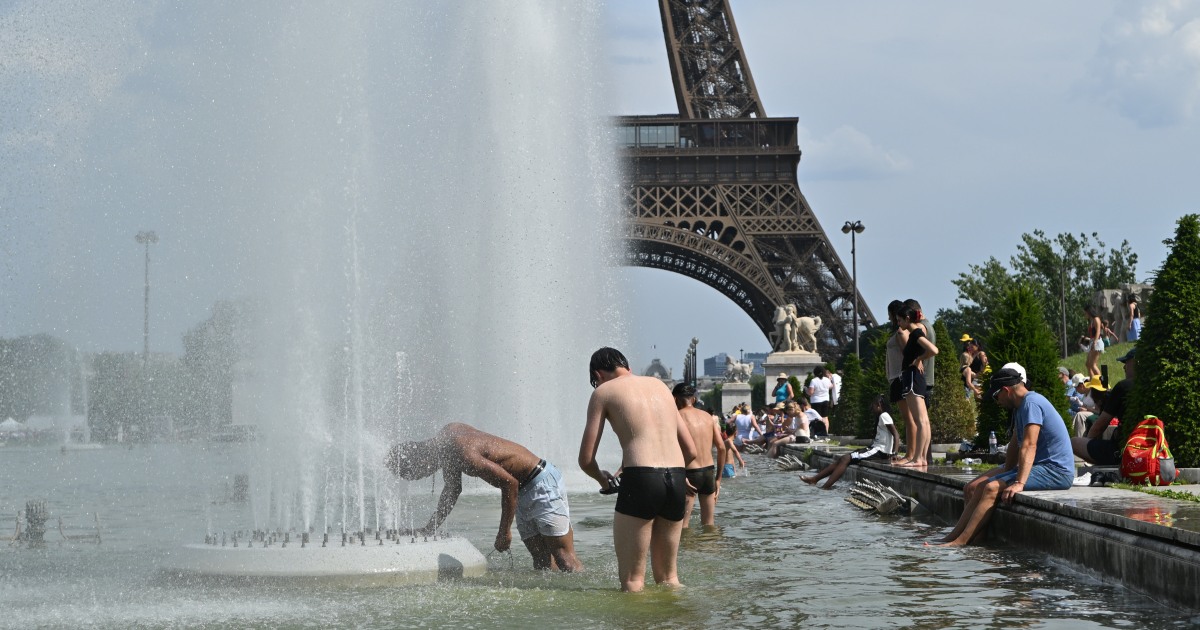
European heatwave causes 1,000 excess deaths in France
France recorded at least 1,000 additional deaths during a three-day window last week as a record-smashing heatwave swept across Europe, according to the national public health agency, Public Health France. The agency reported on Sunday, June 28, 2026, that the surge was most pronounced in the Paris region and areas under red warnings of extreme heat, which covered about three-quarters of the country at the peak of the event.
The mortality spike was most severe on Wednesday, when deaths exceeded 1,200, and grew to more than 1,400 on each of the two subsequent days. For comparison, the daily death rate in April and May was between 900 and 1,000. Public Health France noted that 85% of these deaths involved people aged 65 and above. Health officials cautioned that the current estimate will likely increase as more data is collected regarding deaths in private homes and residential care facilities.
French Health Minister Stéphanie Rist warned that the public health crisis is not over, stating The episode is not finished
and noting that delayed medical complications can cause heat-related deaths to rise for up to 10 days after temperatures drop.
Continental Records and Climate Attribution
The heatwave, which began around June 20, has pushed temperatures to historic highs across the continent. Germany saw a record 41.7 degrees Celsius (107 degrees Fahrenheit) in Neißemünde. In the east, Kubschuetz recorded its warmest night in nearly 150 years, with temperatures never dropping below 29.4C. The Czech Republic experienced its hottest day ever, with temperatures reaching 41.9 C (107.4 F).
Scientists from the World Weather Attribution reported Friday that such heat and humidity would have been virtually impossible five decades ago and are now 200 times more likely than they were 20 years ago. They attributed the extreme conditions to man-made climate change, though some of the intensity was caused by an omega block
, a weather pattern that traps hot air over specific regions.
WHO Director-General Tedros Adhanom Ghebreyesus described Europe as the fastest-warming continent on Earth, heating at twice the global average. On X, he stated:
"Right now 150 million people are living under extreme heat, hundreds have died, schools are shut, grids are buckling."
Tedros Adhanom Ghebreyesus, WHO Director-General, via X
Tedros added that more than 1,300 excess deaths have been recorded across Europe since June 21. He called the phenomenon a silent killer
, arguing that European schools and workplaces were not built for these temperatures.
Infrastructure Failure and Civil Emergencies
The extreme heat has caused widespread damage to critical infrastructure. In Leipzig, Germany, the Leipzig Public Transportation Authority suspended tram service until early Monday morning because high temperatures caused joint sealant in tracks and switches to run and clump. Deutsche Bahn issued a weekend warning for passengers to avoid unnecessary train travel as concrete surfaces on highways broke up.
In Brandenburg, more than 600 passengers were evacuated from a train traveling from Hamburg to Prague after a storm knocked a tree onto a power line. The train lost power, causing air conditioners to fail and doors to lock; two people were hospitalized for heat-related problems.
Emergency services have struggled with secondary disasters. In Germany, forest fires broke out in Gohrischheide and near Traisen. Both areas were contaminated with unexploded ordnance and ammunition from World War II, forcing firefighters to stop work during explosions. In Traisen, 650 people were evacuated on Sunday afternoon.
Widespread Impact and Aftermath
As the heatwave moves toward Eastern Europe, it is expected to affect Slovakia, Serbia, Croatia, Italy, Austria, and western Ukraine. Estimates from AFP suggest at least 191 million people in Europe were forecast to experience temperatures of at least 35 degrees Celsius (95 Fahrenheit) on Sunday.
The extreme heat has been followed by severe thunderstorms. Denmark recorded 1,156 lightning strikes by Sunday morning. In Sweden, lightning struck the Tosselilla Sommarland amusement park, sending three adults to the hospital, including one woman with serious injuries.
In Germany, at least seven people died in swimming accidents over the weekend. Berlin police reported 500 additional ambulance dispatches on Saturday for heat-related illnesses. To assist the public, Berlin police deployed water cannons, typically used for dispersing protesters, to spray crowds at the Brandenburg Gate.
French health authorities are expected to release updated mortality figures in the coming days as reports from regional agencies and care homes are finalized.
How significant is this development?
Participate in our community survey on the trajectory and real-world impact of this news.