Supreme Court rejects Missouri’s request to use congressional map with extra GOP seat
The Supreme Court has declined Missouri's emergency appeal to implement a Republican-drawn congressional map, upholding a state court block for November.
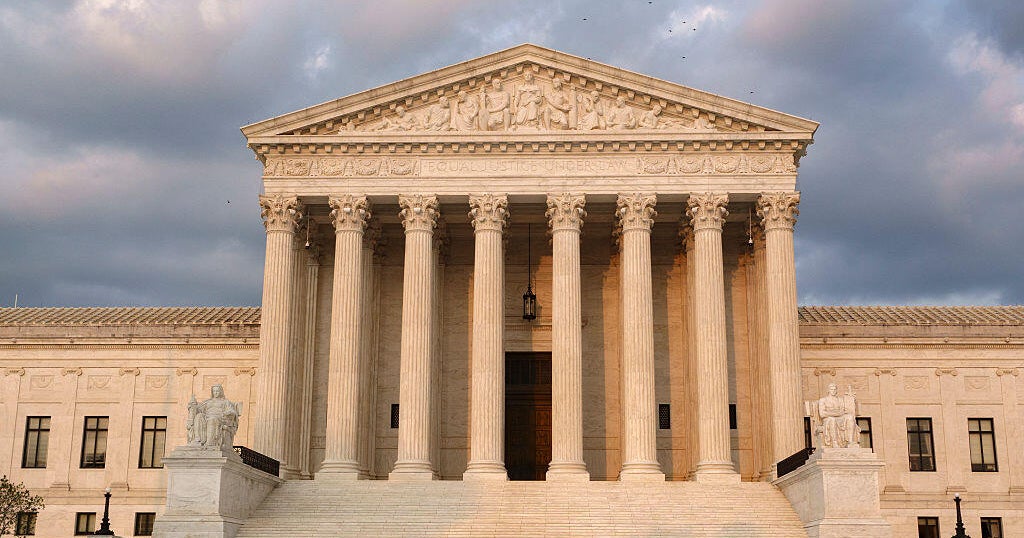
The United States Supreme Court declined an emergency appeal from Missouri state leaders seeking to implement a newly drawn congressional map for the upcoming November midterm elections. The action leaves intact a ruling from Missouri's top court, marking a significant hurdle for Republicans aiming to protect their slim majority in the U.S. House of Representatives.
The legal battle centers on House Bill 1, which the Missouri legislature approved in September 2025 and which was subsequently signed into law by Republican Governor Michael Kehoe. Developed at the urging of President Donald Trump, the map sought to redraw boundaries to the advantage of the GOP. The most notable change targeted the 5th Congressional District, held by longtime Democratic Representative Emanuel Cleaver of Kansas City. Under the revised boundaries, parts of Kansas City were reassigned to neighboring districts held by Republicans, while the remainder of Cleaver's district stretched far eastward into rural, Republican-leaning territory.
Legal Battles and Competing Arguments
The dispute intensified when activist group People Not Politicians, led by executive director Richard von Glahn, launched a referendum campaign. The group gathered petition signatures to force a statewide vote on the redistricting plan. Although Republican Secretary of State Denny Hoskins initially rejected the petition — arguing that Missouri's constitution does not permit referendums on congressional redistricting — the Missouri Supreme Court reversed that decision. The state's highest court ruled that a constitutional provision allowing a referendum on "any act" of the legislature encompasses redistricting legislation, retroactively freezing the new districts when petition signatures were submitted in December 2025.
Following the state court's September 2026 injunction requiring Missouri to revert to the congressional map adopted after the 2022 census, state officials turned to federal courts. Republican State Attorney General Catherine L. Hanaway filed an emergency application asking the U.S. Supreme Court to put the ruling on hold. Hanaway argued that switching district boundaries between the primary and general elections violated federal rights, created an administrative disaster, and rendered the August primaries, which saw approximately 1.2 million voters cast ballots under the new map, utterly pointless.
"A federal-election-administration disaster is unfolding in Missouri," Hanaway wrote in her appeal, warning of unprecedented chaos.
Supporters of the state court ruling defended the referendum process. Abha Khanna, an Elias Law Group partner and counsel on the case, praised the outcome.
"The state constitution is clear that Missourians should get the final word on whether their congressional map can undergo an extreme mid-decade gerrymander at President Donald Trump’s request, and now they will. This is a win for democracy and for the hundreds of thousands of Missourians who signed a petition to make sure they would have a chance to weigh in on the gerrymandered HB 1 map."
Abha Khanna, Elias Law Group Partner, via Newsweek
On Tuesday, Justice Brett Kavanaugh denied the state's bid for emergency relief without providing a reason, leaving the Missouri Supreme Court's order in effect. Moments later, U.S. District Judge Stephen Clark issued a temporary restraining order prohibiting Missouri from using anything other than the new districts, highlighting the deeply tangled legal landscape.
National Implications and Redistricting Context
The conflict in Missouri reflects a broader nationwide redistricting battle. Last year, President Trump urged Republicans to launch efforts to redraw congressional boundaries across multiple states. Republicans hoped to capture as many as 16 additional seats from new House maps enacted in eight states. Conversely, Democrats pursued counterattacks in states such as California and Utah.
Election-law experts note that the case touches upon the Purcell principle, which cautions courts against altering election rules close to voting dates due to potential voter confusion. While the Supreme Court's denial of emergency relief does not constitute a definitive ruling on the ultimate merits, it leaves election administrators scrambling.
Next Steps
Secretary of State Denny Hoskins assigned the redistricting referendum as Proposition A on the November ballot, in compliance with the state court order. Voters across Missouri will decide the fate of the contested map this November, while candidates, election officials, and legal experts monitor how the unresolved federal and state questions will impact the administration of the general election.