US military destroys five Iranian oil tankers after warship attacks
The US military destroyed five Iranian oil tankers in response to repeated missile attacks on a Navy warship, prompting Iranian retaliation in Jordan.

Global hostilities escalated sharply on Tuesday, as the United States military destroyed five Iranian oil tankers following repeated missile attacks on a U.S. Navy warship. According to statements released by U.S. Central Command, the naval vessel successfully evaded twin ballistic missile strikes launched by Iran’s Islamic Revolutionary Guards over a two-day period. American forces suffered no casualties during the engagements and continued patrolling regional waters.
The latest maritime strikes represent a significant escalation in a conflict that has persisted for more than half a year. Secretary of State Marco Rubio, speaking to reporters in Colombia on Tuesday, made clear that Washington intends to match every Iranian provocation at sea with the destruction of additional vessels. Iran continues to try to hit U.S. naval ships. And for every time they do that or try to do that, they’re going to lose tankers,
Rubio said.
Maritime Operations and Targeted Vessels
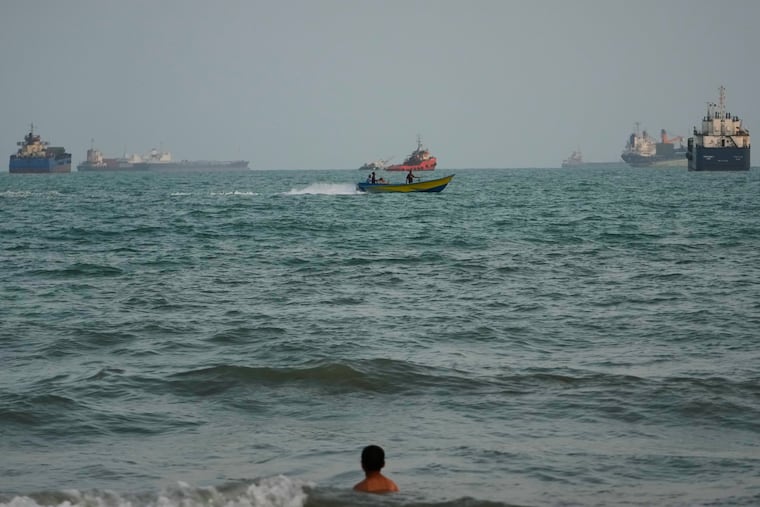
American forces executed the retaliatory strikes against vessels linked directly to the Islamic Revolutionary Guard Corps. According to U.S. Central Command and monitoring reports, the targeted ships included four crude oil carriers located in the Gulf of Oman—specifically identified as the Kivik, the Charminar, the Horizon 1, and the Riesco—alongside the cargo-empty National Iranian Tanker Company VLCC supertanker Derya positioned near Kharg Island in the Strait of Hormuz.
Iranian state media and regional reporting corroborated the locations of the strikes, noting that operations occurred near the southern port of Jask and the Kharg Island anchorage area. Military authorities confirmed that crews aboard all five targeted vessels were instructed to abandon ship prior to the operations, and Iranian state television reported that the personnel successfully evacuated.
The Saturday prior to these strikes, U.S. Forces similarly destroyed three Iranian oil tankers after a failed Revolutionary Guards attack directed against a U.S. Aircraft carrier and guided-missile destroyer. In the wake of those weekend actions, Tehran announced plans to establish a new exclusion zone near the Strait of Hormuz affecting transiting vessels.
Retaliation Against Regional Bases
Iran swiftly answered the maritime losses by launching ballistic missile strikes targeting American military assets stationed in Jordan. Iranian state-run media and the Islamic Revolutionary Guard Corps claimed responsibility for the barrage, stating that solid- and liquid-fuel ballistic missiles struck maintenance, preparation, and deployment hangars used for F-35, F-16, and F-15 fighter jets, as well as aircraft shelters.
Jordanian military authorities confirmed that their air defense systems engaged incoming threats, successfully intercepting and destroying 18 ballistic missiles out of a total launched toward the kingdom's territory on Tuesday. Two remaining missiles landed in unpopulated areas away from population centers, and the Jordanian army reported no casualties. Jordan remains a staunch U.S. Ally hosting American forces, making its military installations a recurring target for regional strikes.
Further compounding regional anxieties, the Revolutionary Guard Navy issued evacuation warnings to oil tanker crews near ports in Kuwait and Bahrain, accusing both nations of hosting U.S. Forces and assisting in the American operations against Iranian shipping.
Economic Strains and Sanctions
The conflict continues to disrupt vital energy transit corridors. Prior to the war, approximately one-fifth of the world’s global oil supply transited the Strait of Hormuz. Both Washington and Tehran are currently vying for control over the passage, with the U.S. Military escorting a limited number of commercial vessels along designated routes off Oman, while Tehran demands that ships utilize alternative pathways.
| Indicator / Event | Details Reported |
|---|---|
| U.S. Tanker Strikes (Tuesday) | Five vessels destroyed (Kivik, Charminar, Horizon 1, Riesco, Derya) |
| U.S. Tanker Strikes (Saturday) | Three vessels destroyed following attacks on carrier and destroyer |
| Jordanian Air Defenses | Intercepted 18 of 20 ballistic missiles; zero casualties reported |
| Brent Crude Peak Price | Reached $99.46 per barrel on Tuesday |
The economic pressure extends beyond maritime clashes. The administration of President Donald Trump introduced a fresh package of sanctions on Tuesday, targeting more than two dozen commercial and private airlines within Iran’s aviation sector, alongside foreign cargo service providers, in an effort to sever Tehran's remaining trade links.
Rising energy costs tied to the disruptions have created political complications for the White House and the Republican Party as the November midterm elections approach. On Tuesday, international standard Brent crude prices surged briefly to $99.46 per barrel.
Expert Analysis and Next Steps
Independent analysts warn that the continuous cycle of retaliation leaves little room for de-escalation. Danny Citrinowicz, an Iran expert at Israel’s Institute for National Security Studies, cautioned via social media that military force offers no permanent fix to the maritime crisis. There is no kinetic solution to the Strait of Hormuz problem,
Citrinowicz stated, adding that each counterstrike edges Washington and Tehran closer to an unmanageable level of escalation.
As state media in Iran continues to report ongoing missile launches from multiple cities including Isfahan, Yazd, Khomein, Tabriz, Khorramabad, and Shahrekord toward perceived U.S. Targets, regional commanders have vowed further responses to any future American attacks on Iranian shipping. Washington maintains its dual military and economic campaign, with officials signaling that naval patrols and maritime interdictions will persist in the days ahead.