Trump accuses China of election interference in national address
Donald Trump alleges a massive Chinese data breach of U.S. election infrastructure to push for the SAVE America Act, despite contradictions from intelligence agencies.
- Headline Dispatch: Trump accuses China of election interference in national address
- Core Takeaway: Donald Trump alleges a massive Chinese data breach of U.S. election infrastructure to push for the SAVE America Act, despite contradictions from intelligence agencies.
- Source Synthesis: Continuous live monitoring aggregated across major news wires and independent bureaus.

Trump accuses China of election interference in national address
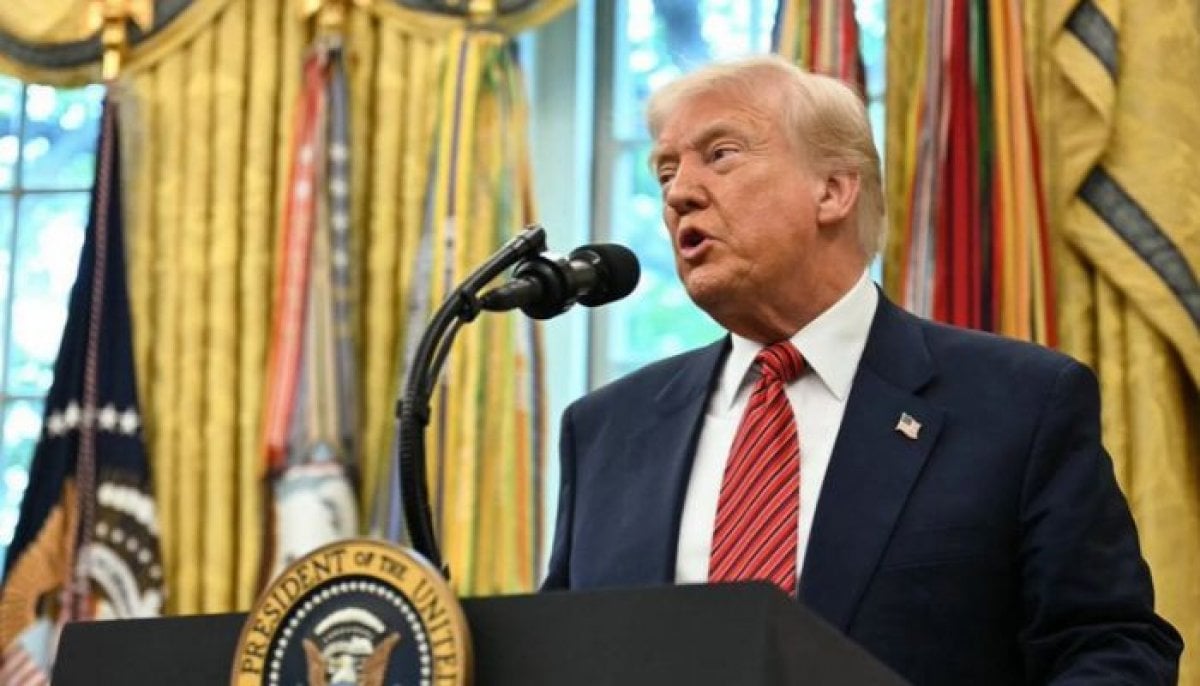
President Donald Trump used a 25-minute prime-time address on Thursday to accuse China of carrying out the largest compromise of election data in history
, alleging that Beijing illicitly acquired 220 million U.S. Voter files. The president announced the immediate declassification of intelligence that he claims reveals shocking vulnerabilities
in U.S. Election infrastructure, including hacking and foreign interference.
According to the president, this data—which includes names, addresses, phone numbers, and political party preferences—presents an unprecedented election security nightmare
. Trump asserted that China assigned a specific data exploitation unit to the project and claimed that data from tens of millions of voters in 18 states was bought, stolen, or hacked
.
The address occurred as Republicans seek to defend slim congressional majorities ahead of November's midterm elections. Trump used the platform to pressure Congress to pass the SAVE America Act, a bill that would require photo identification to vote, proof of U.S. Citizenship to register, and would significantly curtail mail-in voting. While the bill has passed the Republican-controlled House several times, it has stalled in the Senate. Senate Majority Leader John Thune, R-S.D., stated his caucus is not even close
to having the 60 votes needed to overcome a Democratic filibuster.
Intelligence and Official Disputes
The president's claims contradict a 2021 U.S. Intelligence community assessment conducted under then-Director of National Intelligence John Ratcliffe, who now serves as CIA director. That assessment found no indications that any foreign actor successfully altered any technical aspect of the 2020 vote, including ballots or tabulations. The 2021 report noted that China had pursued efforts since at least 2008 to collect information on voters and candidates to predict results, but concluded China did not view either candidate's victory as advantageous enough to risk the meddling.
Democratic Senator Mark Warner, vice-chair of the Senate Intelligence Committee, described the president's bombshells
as totally bogus
, stating that intelligence agencies unanimously agreed China did not try to change a single vote in 2020.
Other officials disputed the severity of the data breach. Ann Jacobs, former chair of the Wisconsin Elections Commission, stated on X that the Chinese government did not steal Wisconsin voter data and noted that voter data is public and can be purchased by anyone. Similarly, Republican Stephen Richer, former recorder of Maricopa County in Arizona, argued that the use of auditable paper ballots would reveal any manipulation, regardless of whether tabulation machines were vulnerable.
Michigan Secretary of State Jocelyn Benson, a Democrat, accused Trump of rehashing debunked and baseless conspiracy theories
about the election he lost nearly six years ago.
Broadened Allegations and Domestic Context
Beyond China, Trump claimed the CIA obtained reporting of a plot by the Maduro regime in Venezuela to manipulate its own election. However, an intelligence community report stated there was no information suggesting
Venezuelan regimes were involved in attempts to compromise U.S. Election infrastructure.
The president also cited Department of Homeland Security findings that approximately 278,000 non-citizens are registered to vote in federal elections, though he suggested the actual number is higher because some states refuse to share voter files. He further alleged that the deep state
within the federal government deliberately suppressed evidence of China's activities.
The address followed a brief mention of the war in Iran, which Trump said the U.S. Was winning big
, and a list of domestic achievements including immigration crackdowns and tax cuts. These remarks come amid a political climate where opinion polls show majorities of voters are unhappy with Trump's stewardship of the economy and oppose the Iran war. Inflation, which was 2.9% when Trump took office in January 2025, currently stands at 3.5%.
White House Response and Next Steps
The speech was attended by a small crowd of approximately 55 people in the White House East Room, including Vice President JD Vance, Secretary of State Marco Rubio, and FBI Director Kash Patel. Two of the three major U.S. Television networks and CNN opted not to broadcast the address on their primary platforms.
In response to the allegations, Liu Chang, a spokesperson for the Chinese embassy, stated:
"China has never and will never interfere in the presidential elections of the U.S."
The White House has launched a new website titled election integrity
to host the declassified documents. Further developments are expected on Friday, when Homeland Security Secretary Markwayne Mullin is scheduled to hold a briefing to outline cyber-vulnerabilities in electronic voting systems.
How significant is this development?
Participate in our community survey on the trajectory and real-world impact of this news.