Trump urges Syria to fight Hezbollah, sparking alarm in Israel and Lebanon
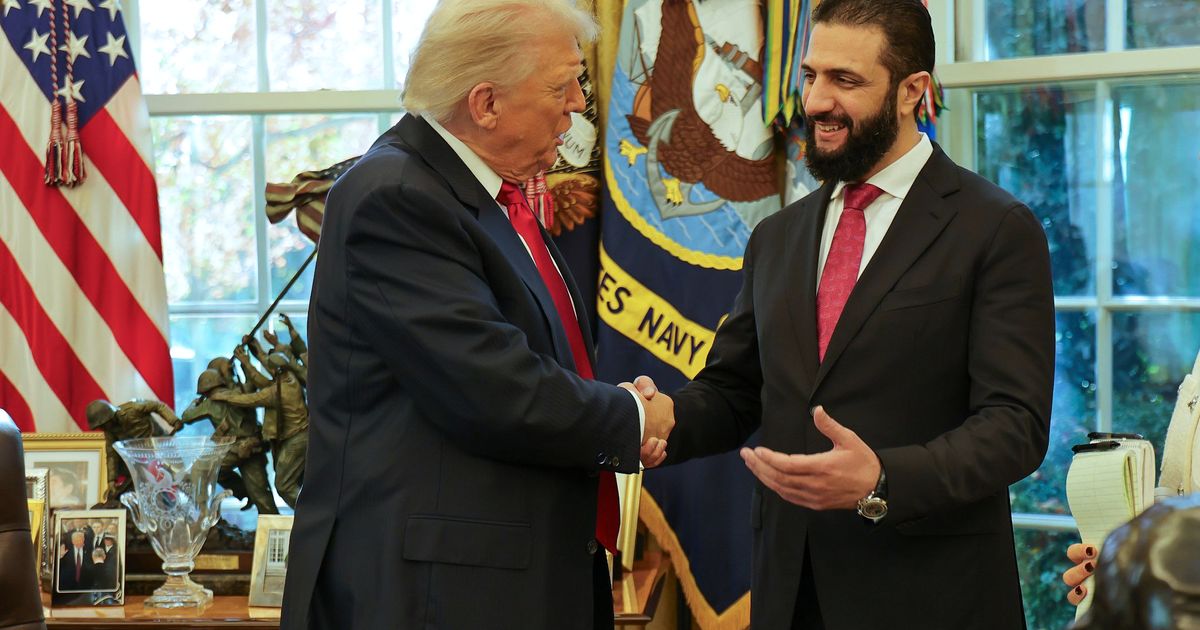
President Trump has proposed that Syria's new government root out Hezbollah, a move rejected by Syrian President Ahmad al-Sharaa.
- Headline Dispatch: Trump urges Syria to fight Hezbollah, sparking alarm in Israel and Lebanon
- Core Takeaway: President Trump has proposed that Syria's new government root out Hezbollah, a move rejected by Syrian President Ahmad al-Sharaa.
- Source Synthesis: Continuous live monitoring aggregated across major news wires and independent bureaus.
Trump urges Syria to fight Hezbollah, sparking alarm in Israel and Lebanon
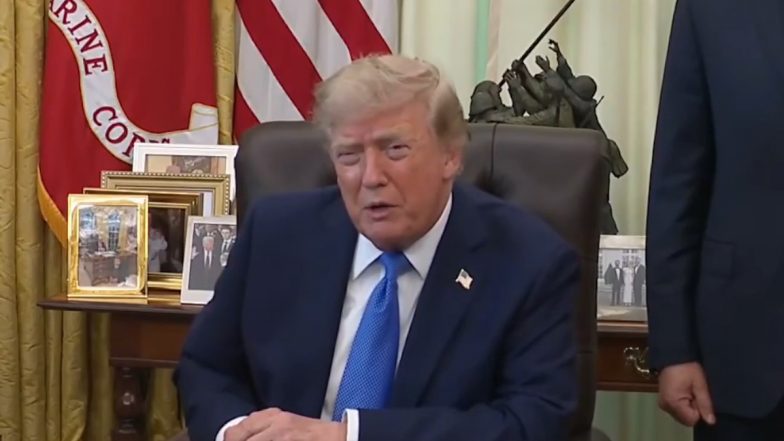
U.S. President Donald Trump has proposed that Syria take over the fight against the Iran-backed militant group Hezbollah, suggesting the new Syrian government would be more effective at rooting out the group than the Israeli army. The proposal comes as the White House has soured on Israel's ongoing war with Hezbollah in Lebanon.
The President’s suggestion centers on the Islamist-led insurgents who overthrew Syria's autocratic President Bashar Assad a year and a half ago. Trump expressed disappointment that Israel cannot put Hezbollah away
and stated he is close to giving it to Syria
because he believes Syrian President Ahmad al-Sharaa would be more precise.
On the sidelines of the G7 summit earlier this month, Trump criticized the duration of the war and noted that too many people are being killed
. He argued against the Israeli tactic of destroying apartment buildings to find targets, noting that not everyone in those buildings is Hezbollah.
Regional Resistance and Alarm
President al-Sharaa has rejected the idea. In a June 13 speech in Damascus, he stated,
"There are people spreading rumors that Syria will intervene in Lebanon. This is not true. We are calling for a permanent end to the war and the strengthening of institutions and for there to be economic ties and a calming of the situation in Lebanon."Ahmad al-Sharaa, Syrian President, via Damascus speech
In a June 21 interview with the network Al Mashhad, al-Sharaa asserted that Trump's remarks were misunderstood and misinterpreted as an imminent invasion. He stated that Syria has presented a vision to the United States focused on stopping the war and addressing negative effects on both Lebanon and Syria through political and social solutions.
Despite these denials, the prospect of a Syrian invasion has caused alarm in Lebanon and Israel. Israel currently maintains control over a strip of southern Syria and views al-Sharaa's government with suspicion. According to an anonymous official, top Israeli security officials met on Wednesday to discuss the matter. While Israel's primary concern remains Hezbollah, officials are also monitoring signs that Syria might resume its historical role in Lebanese politics.
A Fragile Security Environment
The proposal ignores deep-seated historical and sectarian tensions. Lebanon retains memories of decades of Syrian occupation that ended in 2005. Furthermore, the months following Assad's fall saw sectarian revenge attacks by Sunni Islamist fighters affiliated with al-Sharaa's government against Alawite and Druze civilians, raising fears of cross-border violence among Lebanon's Shiite, Christian, and Druze populations.
Randa Slim, director of the Middle East Program at the Stimson Center, described the proposal as being driven by a profound ignorance of the dynamics on the ground
. Slim noted that Syrian forces are not a coherent military institution and include thousands of foreign jihadi fighters with uncertain discipline.
Syria has attempted to remain on the sidelines of the wider regional conflict. Although the Syrian military sent reinforcements to the Lebanese border in the first weeks of the war to prevent weapons smuggling, they have avoided escalation. In March, Turkish Foreign Minister Hakan Fidan stated that Turkey, a main backer of al-Sharaa, interceded to defuse tensions after Syria accused Hezbollah of launching artillery shells across the border.
Ongoing Hostilities and Diplomacy
The regional environment remains volatile. Since Hezbollah joined the Iran war with a March 2 attack on Israel, more than 4,000 people have been killed by Israeli strikes in Lebanon.
Recent developments include:
- On June 26, 2026, President Trump warned on Truth Social that the Islamic Republic of Iran
will no longer exist
if the U.S. Is forced to militarily complete its job. - On June 27, 2026, the U.S. Military struck 10 targets in Iran, including drone storage and radar sites.
- On June 28, 2026, Iran's Revolutionary Guards retaliated with strikes against Kuwait and Bahrain.
While U.S. Envoy to Syria Tom Barrack denied in March that Washington had floated a Syrian intervention, Trump has continued to double down on the idea.
How significant is this development?
Participate in our community survey on the trajectory and real-world impact of this news.