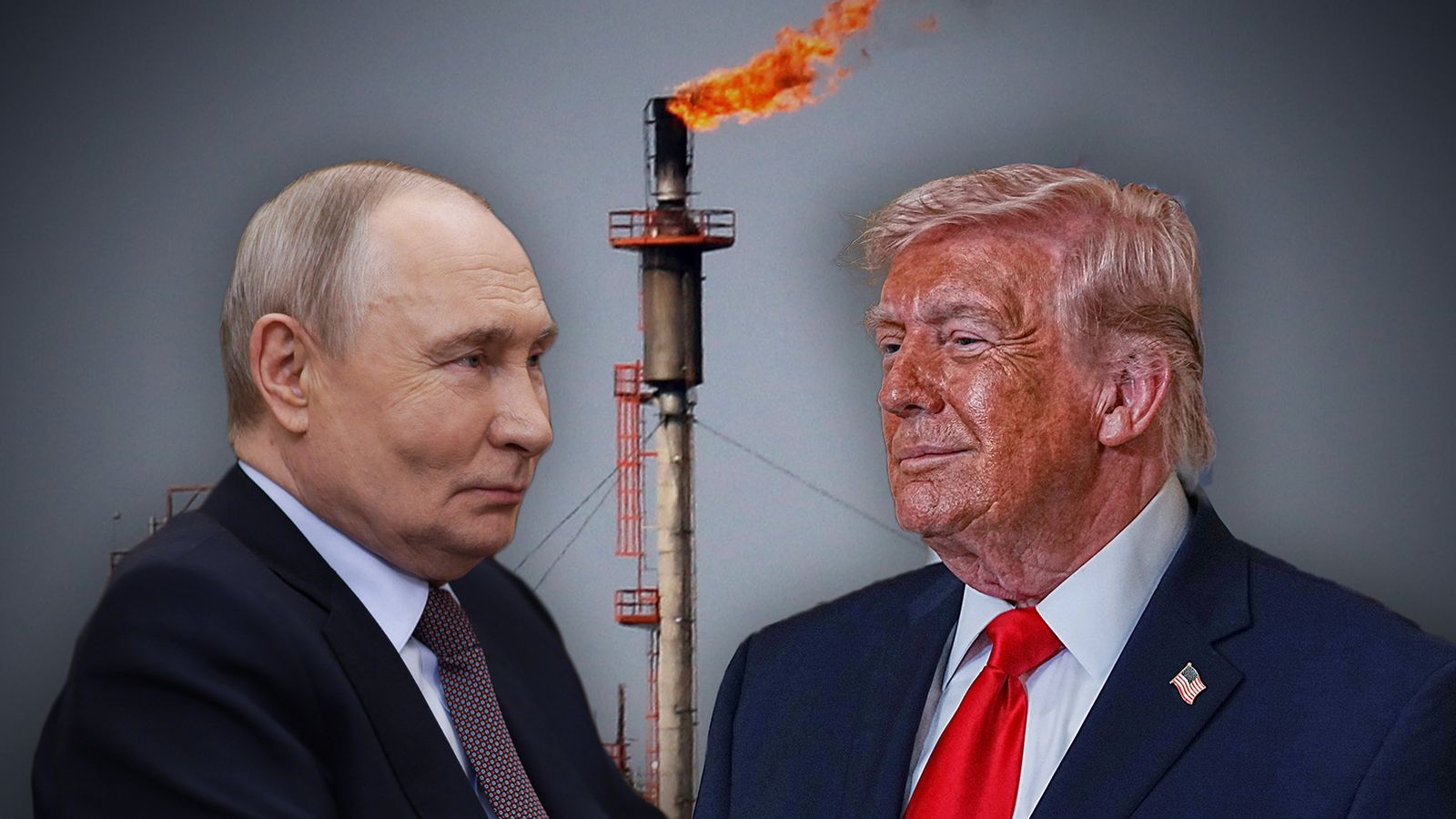
The United Kingdom issued two new sanctions waivers on May 19, 2026, allowing imports of Russian diesel and jet fuel processed abroad, as well as the maritime transport of liquefied natural gas (LNG) from Russia’s Sakhalin-2 and Yamal terminals. The moves, framed as efforts to stabilize fuel markets amid the U.S.-Israeli war against Iran, risk signaling weakness to Moscow, experts warn.
A Strategic Loophole in the Sanctions Regime
The U.K. government’s decision to quietly ease restrictions on Russian oil products comes as Western allies grapple with the dual pressures of sustaining Ukraine’s war effort and preventing global energy market chaos. The first waiver permits imports of diesel and jet fuel derived from sanctioned Russian oil, provided the products have undergone processing in a third country. The second license, effective until January 1, 2027, covers the maritime transport of LNG from Russia’s Sakhalin-2 and Yamal terminals—two of the country’s largest export hubs.
Officials emphasized the measures were designed to protect critical supply chains and maintain market stability
, according to a statement to the BBC. Yet the timing—just days after the U.S. extended its own sanctions waiver on Russian oil—has raised eyebrows. The U.S. move followed a surge in fuel prices triggered by the escalating conflict in the Middle East, where Iranian-backed attacks on Israeli and Red Sea shipping routes have disrupted global trade routes.
The U.K.’s actions, while legally distinct from broader sanctions relief, create a de facto exception that could undermine the bloc’s united front. In March 2026, British ministers had explicitly ruled out following the U.S. in loosening sanctions, insisting the U.K. would not be following the US by loosening sanctions on some Russian oil
, per the BBC. The reversal reflects the growing tension between economic pragmatism and geopolitical signaling.
Moscow’s Calculus: Weakness or Necessity?
John Foreman CBE, an associate fellow at Chatham House and former U.K. defense attaché to Kyiv and Moscow, dismissed the waivers as cynical but understandable
. However, he warned that the Kremlin would interpret the moves as a concession, particularly given the U.K.’s historical role as a leader in the sanctions coalition.
But it is hard to pose as the leader of the ‘coalition of the willing’ when doing dirty deals.John Foreman, Associate Fellow, Chatham House
The risk extends beyond optics. By allowing Russian oil to flow indirectly into European markets—even if processed abroad—the U.K. is effectively subsidizing Moscow’s war economy. Sanctions were designed to deprive Russia of revenue to fund its invasion of Ukraine, but the waivers create a backdoor for revenue generation. The European Union, which has maintained stricter enforcement, may now face pressure to align—or risk accusations of hypocrisy.
Russia’s energy exports have been a lifeline since Western sanctions first targeted its oil and gas sector in 2022. Despite price caps and bans on direct imports, Moscow has redirected shipments to Asia and now, through loopholes, back into Europe. The U.K.’s waivers could accelerate this trend, emboldening other nations to seek similar exemptions under the guise of energy security.
The Middle East Factor: Fuel Prices and Geopolitical Dominoes
The immediate catalyst for the U.K.’s decision was the spike in fuel prices following the U.S.-Israeli campaign against Iranian-backed militias in the Middle East. The conflict has disrupted shipping lanes in the Red Sea, forcing reroutes that have sent oil prices soaring. With no end to the violence in sight, Western governments are caught between two imperatives: sustaining military support for Israel and avoiding a global energy crisis that could destabilize their own economies.
The U.S. extension of its sanctions waiver on May 18, 2026, was framed as a temporary measure to stabilize skyrocketing fuel costs
, according to reporting. The U.K.’s move, while not identical, aligns with this rationale. Yet the lack of public fanfare—both licenses were issued without major announcements—suggests an acknowledgment of political sensitivity. The U.K. government’s spokesperson noted that the measures were indefinite but revocable
, leaving open the possibility of reversal if conditions change.
What remains unclear is whether the waivers will have the intended effect. Energy analysts suggest that Russian diesel and jet fuel already find their way into European markets through third countries like Turkey and the UAE. The U.K.’s move may therefore be more symbolic than substantive—yet the symbolism carries weight. If other European nations interpret the waivers as a green light for their own exemptions, the sanctions regime could unravel further.
The Sanctions Regime Under Strain
The U.K.’s actions come at a moment of growing fragmentation in the Western sanctions strategy. While the U.S. and its allies have largely maintained unity on restricting Russian oil, cracks are appearing. The European Union, for instance, has struggled with internal divisions over how strictly to enforce the price cap on Russian crude. Some member states, particularly those dependent on Russian gas, have quietly sought waivers for humanitarian or economic reasons.
Russia, meanwhile, has been adept at exploiting these divisions. By flooding global markets with discounted oil and gas, Moscow has kept its revenue streams open while isolating Western firms from its energy sector. The U.K.’s waivers may not significantly boost Russian exports, but they send a message: the sanctions are not as impenetrable as they once seemed.
For Ukraine, the implications are dire. Kyiv has long argued that maintaining sanctions pressure is essential to starving Russia’s war machine. The U.K.’s moves, while framed as temporary, risk normalizing the idea that sanctions can be selectively applied. If Moscow perceives that Western resolve is waning, it may redouble efforts to negotiate from a position of strength—whether at the negotiating table or on the battlefield.
What Comes Next?
The U.K.’s sanctions waivers are unlikely to be the last of their kind. As long as the Middle East conflict persists, and with it the threat of energy market disruptions, other Western nations may follow suit. The question is whether these measures will be presented as exceptions or the beginning of a broader rollback.
For now, the focus remains on the short term: keeping fuel prices stable and avoiding a backlash from voters concerned about rising costs. But the long-term consequences for Ukraine—and for the credibility of Western sanctions—are far more uncertain. The Kremlin’s calculus is simple: every waiver, every exception, is a crack in the wall. The challenge for the U.K. and its allies is to walk the tightrope between economic necessity and geopolitical principle without letting Moscow dictate the terms.
One thing is clear: the sanctions regime is no longer a monolith. It is a patchwork of national interests, energy dependencies, and shifting alliances—and in the high-stakes game of Ukraine’s survival, every stitch matters.
