Ukrainian open-source analysts and the Institute for the Study of War (ISW) have uncovered a leaked Russian Ministry of Defense (MoD) map showing claims of territorial gains in western Zaporizhia Oblast, but independent verification suggests these assertions are exaggerated, according to a May 28, 2026, assessment by Understanding War. Meanwhile, RBC-Ukraine reports that Russia’s offensive in the Donbas region has slowed dramatically, with analysts questioning President Vladimir Putin’s confidence in achieving a 2026 victory. Simultaneously, ACLED documents ongoing escalation, including failed ceasefire efforts and intensified drone and missile strikes.
Leaked Map Reveals Pattern of Russian Exaggeration
The leaked Russian MoD map, dated April 9, 2026, claims advances in western Zaporizhia Oblast, including areas like Prymorske, Veselyanka, and Zaporozhets. However, ISW has found no evidence of sustained Russian control in these locations as of May 28. The report highlights a recurring pattern: senior Russian officials, including Chief of the General Staff Army General Valery Gerasimov, have repeatedly overestimated territorial gains. For example, Gerasimov’s April 21 claim that Russian forces had seized Veselyanka and entered Zaporozhets aligns with the map but contradicts independent observations. ISW noted that Russian forces have not captured Orikhiv, a key operational objective since 2022, and remain no closer than three kilometers to the town.
This inflation of progress mirrors earlier claims in the Kupyansk area. In late 2025, Gerasimov asserted that Russian forces had seized half of Kupyansk, while Putin later claimed two-thirds of the region was under control. ISW’s analysis suggests these statements were part of a broader strategy to mislead both domestic and international audiences, potentially to justify prolonged conflict and suppress dissent.
Slowed Offensive Raises Doubts About Putin’s 2026 Victory Timeline
RBC-Ukraine reports that Putin remains convinced of a 2026 victory in Donbas, despite starkly lower territorial gains. Since January 2026, Russian forces have captured just 104 square kilometers in the Donetsk region, a drop from 1,619 square kilometers in the same period in 2025. Even accounting for areas captured and later lost, the total remains far below 2025’s figures. Analysts argue that the Russian military’s “distorted picture” of the front is designed to conceal the slowdown, enabling Putin to maintain unrealistic demands and delay diplomatic negotiations.
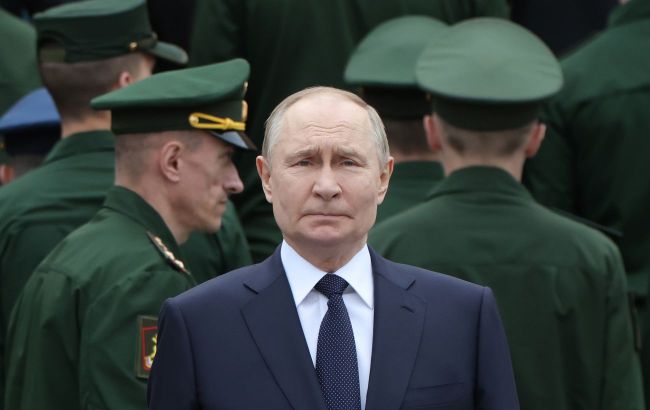
The discrepancy between official claims and battlefield reality underscores the challenges of modern warfare, where information control is as critical as military might. RBC-Ukraine cites Western sources suggesting Putin is prepared to prolong the conflict for “up to two more years” to secure full control of Donbas, a stance that risks further destabilizing the region and straining Russia’s resources.
Victory Day Ceasefire Fails as Attacks Intensify
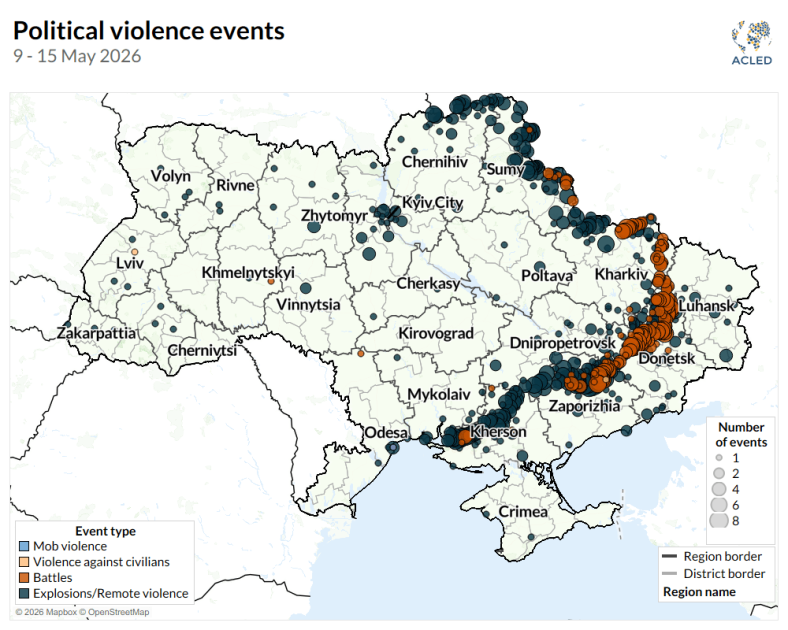
ACLED documents that Russia’s May 9 Victory Day ceasefire collapsed within hours, with both sides resuming long-range strikes. The reduced parade in Moscow, shortened to 45 minutes due to security concerns, coincided with widespread internet shutdowns across 38 Russian regions. Ukrainian forces retaliated by targeting three major Russian energy facilities, including the Tamanneftegaz oil terminal and Yaroslavl oil refinery, on May 13. ACLED’s data also shows a 14% decline in violent events compared to the previous week, but this masks a shift toward more lethal attacks, such as the May 13 drone strike that killed 14 people in western Ukraine and the May 14 bombardment of Kyiv’s Darnytskyi district, which killed 24 civilians.
The failed ceasefire highlights the tactical nature of Russia’s truce offers, which analysts describe as “political theatre” rather than genuine de-escalation. As both sides prepare for a potential summer offensive, the humanitarian toll continues to rise, with civilians caught in the crossfire of an increasingly brutal conflict.
What Comes Next?
The interplay between Russian military claims and on-the-ground realities will likely shape the next phase of the war. ISW’s findings suggest that Putin’s confidence may be misplaced, but his regime’s control over information could delay acknowledgment of setbacks. Meanwhile, Ukraine’s resilience and international support may determine whether the Donbas offensive stalls further or accelerates. With ACLED noting a shift toward infrastructure targeting, the conflict’s humanitarian and economic dimensions are poised to deepen, complicating prospects for a swift resolution.