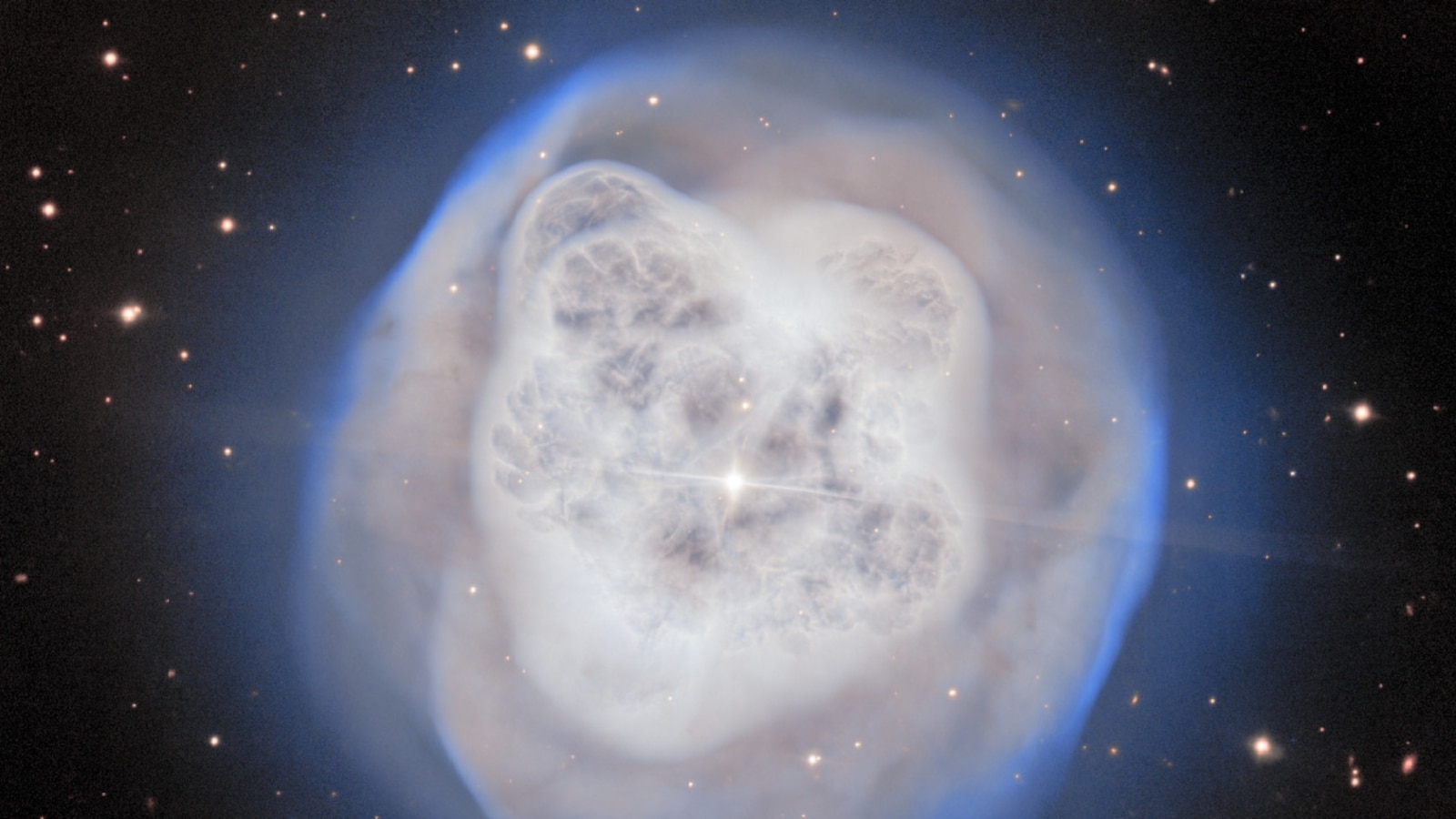
"The Gemini North Telescope atop Mauna Kea has captured a striking image of a dying star, dubbed the Crystal Ball Nebula, 1,500 light-years away. The National Science Foundation’s NOIRLab released the photo, revealing the ethereal glow of a binary star system shedding its outer layers. The image, completed in color last week, highlights the final stages of stellar evolution."
The Crystal Ball Nebula’s Discovery Through the Gemini North Telescope
"A Cosmic Spectacle Unveiled
The Gemini North Telescope’s latest observation of the Crystal Ball Nebula offers a rare glimpse into the final moments of a binary star system. Officially designated NGC 1514, the phenomenon was captured by the telescope, which operates under the National Science Foundation’s NOIRLab. The image, released on May 21, 2026, showcases a milky white, spherical cloud of gas surrounding the remnants of a star that once exceeded the sun’s size. This cosmic display, described as ‘a billowing crystal ball,’ emerges as the star expels its outer layers, leaving behind an exposed core that heats the surrounding gas to tens of thousands of degrees.

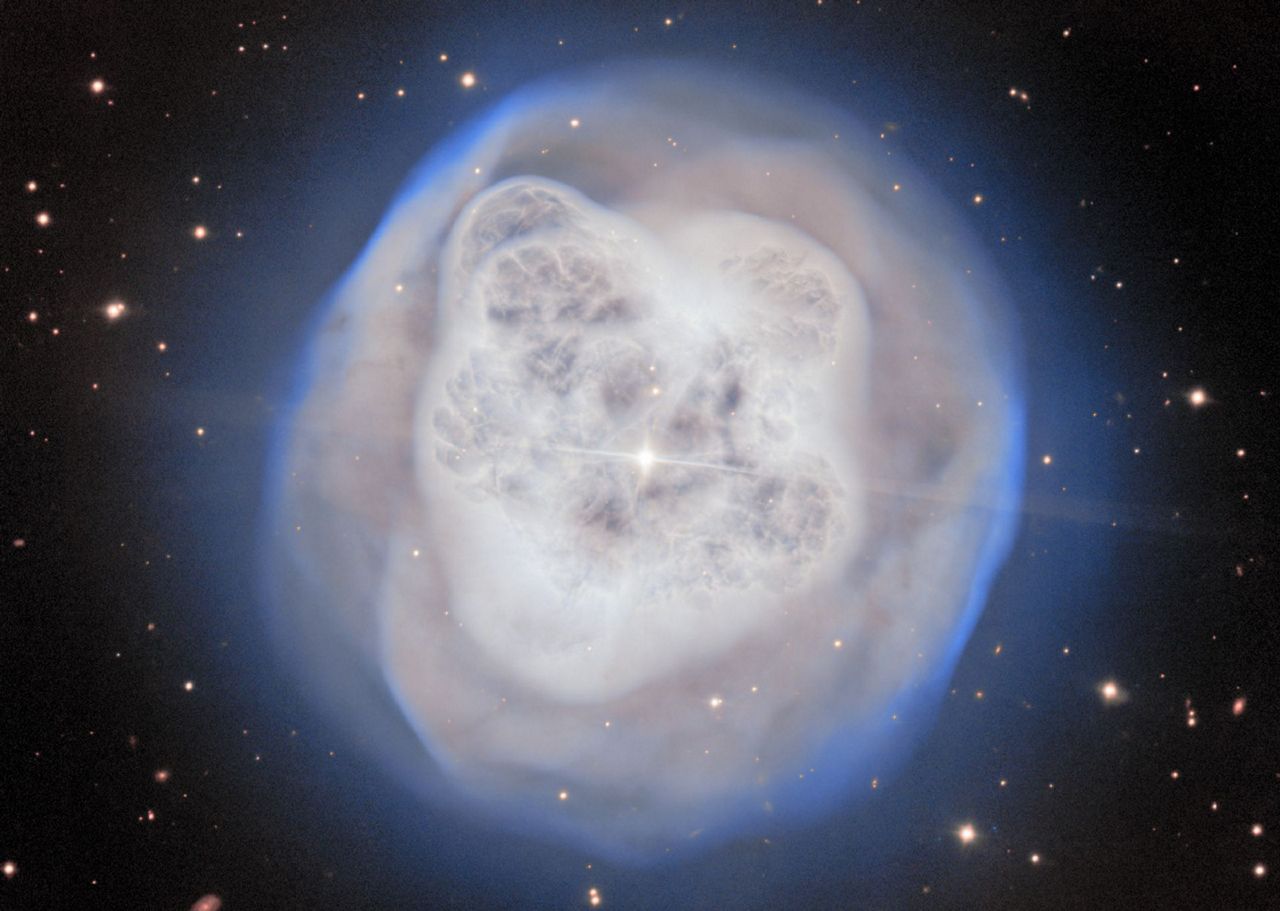
The nebula’s nickname stems from its resemblance to a translucent orb, a visual effect created by the interplay of light and gas. Scientists believe one of the two stars in the system—now defunct—shed its outer layers in the final stages of its life, while the other continues to orbit the core. The image, which took years to complete, was finalized in color just weeks before its release. ‘This is a testament to the precision of modern astrophysics,’ said an official from the National Science Foundation, though no specific name was provided.
How Stellar Death Creates the Nebula’s Ethereal Appearance
The Science Behind the Glow
The process of stellar death that produced the Crystal Ball Nebula is a well-documented phase in astronomical cycles. When a star exhaustes its nuclear fuel, it begins shedding its outer layers, forming a planetary nebula. The remaining core, now a white dwarf, emits ultraviolet radiation that ionizes the surrounding gas, causing it to glow. In this case, the nebula’s distinctive appearance suggests a complex interaction between the two stars in the system.
The Gemini North Telescope, located on Hawaii’s Mauna Kea, has been instrumental in studying such phenomena. Its advanced imaging capabilities allowed researchers to map the nebula’s structure in unprecedented detail. The image released this week includes a vibrant spectrum of colors, with the gas cloud appearing in shades of white and blue. This colorization, completed last week, highlights the nebula’s dynamic nature, as the exposed core continues to influence its surroundings.
Collaborative Efforts Behind the Image’s Release and Public Reception
A Collaborative Achievement
The release of the Crystal Ball Nebula image underscores the collaborative efforts of multiple scientific institutions. The Associated Press, which reported the discovery, noted that the Health and Science Department received support from the Howard Hughes Medical Institute’s Department of Science Education and the Robert Wood Johnson Foundation. While these organizations contributed to the research, the Associated Press emphasized that it alone was responsible for the final content.
The image’s dissemination through outlets like ABC News and ny1.com reflects its broader appeal. Marcia Dunn, an AP aerospace writer, highlighted the ‘loveliness’ of the scene, framing it as a reminder of the universe’s capacity for beauty even in destruction. The nebula’s visual impact has sparked interest among both scientists and the public, with some comparing it to ‘a celestial masterpiece.’
Scientific Insights and Future Observations of the Binary Star System
Implications for Stellar Research
The Crystal Ball Nebula’s unique structure provides valuable insights into the late stages of stellar evolution. By studying such objects, astronomers can better understand how stars like our sun might end their lives. The binary nature of the system also raises questions about the role of companion stars in shaping planetary nebulae.
While the image itself is a static representation, it captures a fleeting moment in the universe’s timeline. The nebula’s glow will eventually fade as the remaining star cools, leaving behind a quiet, darkened core. Yet, for now, it serves as a vivid illustration of the processes that govern the cosmos.
What’s Next?
The National Science Foundation’s NOIRLab has indicated that further observations of the Crystal Ball Nebula are planned. Researchers aim to analyze the nebula’s composition and track changes in its structure over time. Such studies could refine models of stellar evolution and improve predictions about the fate of similar systems.
For now, the image stands as a powerful reminder of the universe’s complexity and the ingenuity of human observation. As one scientist noted, ‘Even in death, stars create beauty.’ The Crystal Ball Nebula, with its shimmering clouds and cosmic dance, embodies that truth."
https://abcnews.com/Technology/wireStory/dying-star-resembles-billowing-crystal-ball-new-telescope-133202414
https://apnews.com/article/star-gemini-observatory-telescope-67746d25c6bb55df3c8a7789690b666b
https://ny1.com/nyc/all-boroughs/ap-top-news/2026/05/21/dying-star-resembles-a-billowing-crystal-ball-in-new-telescope-photo
https://accesswdun.
