Italian financial police have seized over $232 million in assets tied to the late Cosa Nostra boss Matteo Messina Denaro, targeting a vast fortune built on decades of drug trafficking. The operation involved international cooperation to dismantle illicit wealth reinvested into real estate and corporate holdings across Europe and beyond.
A Global Web of Illicit Reinvestment
cluster (priority): 3schools.com
The investigation, led by Italy’s Guardia di Finanza, has exposed how the late Mafia kingpin managed his staggering wealth long after his clandestine operations began in the 1980s. While Messina Denaro was captured in Palermo in 2023 after thirty years as a fugitive, the recent seizure confirms that his influence extended far past the borders of Sicily. According to reporting from CBS News, the illicit funds were laundered into a complex network of international assets, including bank accounts, securities portfolios, and corporate holding companies.
Authorities identified holdings in Andorra, the Cayman Islands, Gibraltar, Lebanon, Luxembourg, Monaco, Switzerland, and Spain. By funneling drug money into the legal economy, the organization sought to mask the origins of its capital. The scale of this operation is significant, with officials noting that the assets seized represent only a portion of the wealth accumulated through the parasitic exploitation of Sicilian territory.
Luxury Resorts and Thermal Surveillance
cluster (priority): ikihow.com
The investigation relied on high-tech surveillance to pierce the veil of the Mafia’s financial operations. Investigators utilized airplanes, drones, and specialized thermal scanners to uncover assets that had been carefully hidden from public view. As noted in official police statements, these thermal scanners were used specifically “to detect concealed spaces and hidden cavities.”
The search for these hidden cavities led authorities to some of the most exclusive real estate in Europe. Among the 22 properties seized are “genuine luxury resorts located between Marbella, Benahavis and Puerto Banus, in some of the most exclusive areas of the Costa del Sol,” according to the financial police. This high-end portfolio highlights the syndicate’s shift toward sophisticated real estate investment as a means to solidify their presence within the legal economic structure of European vacation hubs.
Strategic Implications for the Cosa Nostra
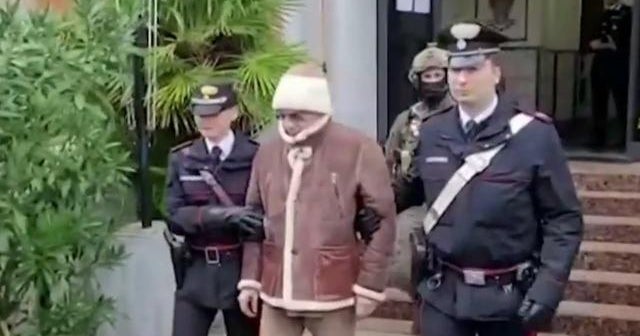
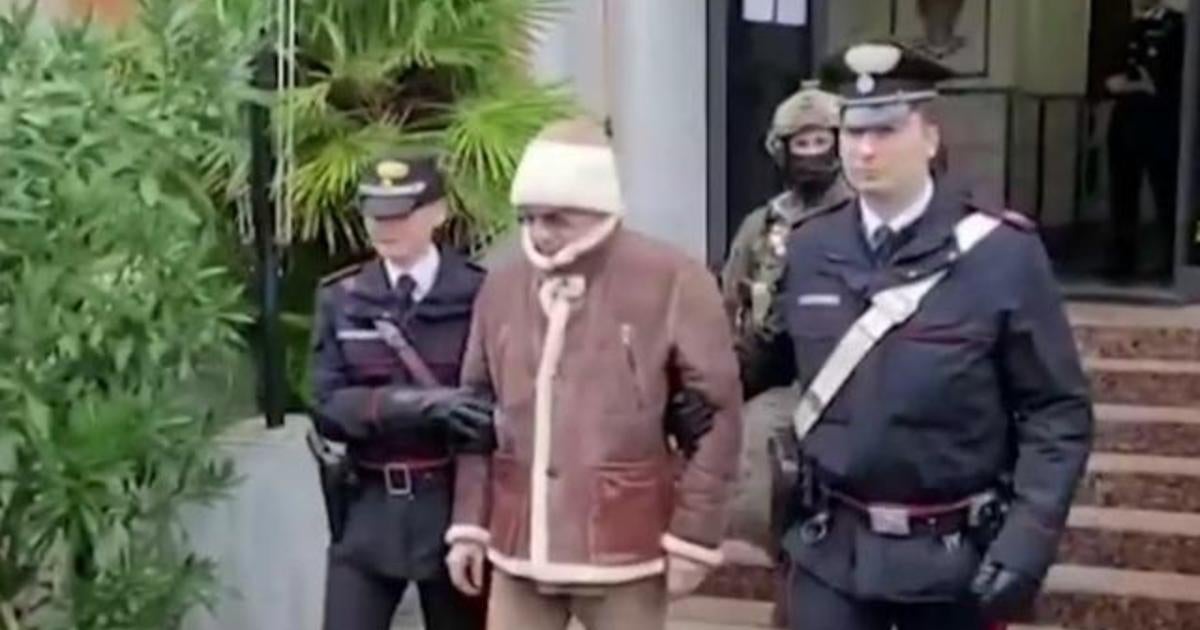
Matteo Messina Denaro Walking Into the Clinic Where He Was Arrested
Italy’s top anti-Mafia prosecutor, Giovanni Melillo, emphasized that this operation serves a purpose beyond simple asset recovery. By targeting the financial infrastructure that sustained Messina Denaro, authorities aim to prevent the organization from regrouping. Melillo described the operation as being of “great strategic importance.”
“It is not simply a matter of identifying and seizing a significant portion of the illicit wealth accumulated over decades of related trafficking and parasitic exploitation of the territory — Sicily in particular — from an organization as powerful as the Cosa Nostra,” Giovanni Melillo, Italy’s top anti-Mafia prosecutor
Melillo noted that the seizure is specifically intended to “delay and hinder” the Cosa Nostra’s current attempts to rebuild its leadership structure. With the death of Messina Denaro—who passed away in prison at age 61 shortly after his 2023 arrest—the organization has been left in a state of transition. The loss of these “vast sums of money derived from drug trafficking reinvested in numerous European and non-European countries” strikes directly at the syndicate’s ability to fund its ongoing operations and maintain control.
The End of an Era for Mafia Nobility
cluster (priority): news.google.com
Messina Denaro was the last of a generation of Mafia bosses who defined the brutal era of the late 20th century. Often referred to as “Mafia nobility,” he followed in the footsteps of Salvatore “Toto” Riina and Bernardo Provenzano. Both Riina and Provenzano managed to evade capture for decades, living clandestine lives in Sicily before their respective arrests in 1993 and 2006.
The current investigation has already led to three arrests, signaling that the pressure on the syndicate remains high. While the financial assets are now under state control, the broader investigation into the network of foreign companies—primarily used for real estate investment and asset management—continues. As CBS News reports, these companies were integral to how the Mafia “reintroduced into the legal economy” the proceeds of its crimes. For now, the seizure represents a tangible blow to the legacy of a boss who, like his predecessors, spent his life attempting to outrun the reach of the law.
Rafael Moreno directs international correspondents from London to Singapore. A multilingual journalist born in Madrid, he spent 12 years covering diplomacy and conflict for Global Affairs Review. His background in political science strengthens Globally Pulse’s depth in world reporting.