Intel officially entered the competitive handheld gaming PC market today, May 28, 2026, unveiling its new Arc G3 and Arc G3 Extreme processors. Designed specifically for portable devices, the Panther Lake-based silicon aims to challenge AMD’s current dominance in the space by integrating high-performance CPU, GPU, and NPU components into a single gaming-focused chip.
Intel’s New Silicon Strategy for Handhelds
cluster (priority): Tom's Hardware
For years, the market for handheld gaming PCs has been dominated by AMD’s Ryzen Z-series processors, which power industry staples like the Steam Deck, ROG Ally, and Lenovo Legion Go. While Intel previously attempted to break into this category with the MSI Claw, those earlier efforts largely relied on repurposed laptop processors. The newly announced Arc G3 series, however, marks a significant shift, as Intel is now tailoring silicon specifically for the unique power and thermal constraints of handheld consoles.
The Arc G-series processors encompass the entire chip architecture, including the CPU, GPU, and NPU. According to technical specifications, both the Arc G3 and Arc G3 Extreme utilize a 14-core CPU configuration consisting of two performance cores, eight efficiency cores, and four low-power efficiency cores. The primary differentiator between the two SKUs is the integrated graphics processor: the G3 Extreme features the Arc B390 with 12 Xe3 cores, while the standard G3 utilizes the Arc B370 with 10 Xe3 cores.
The Predator Atlas 8 and Partner Ecosystem
cluster (priority): Engadget
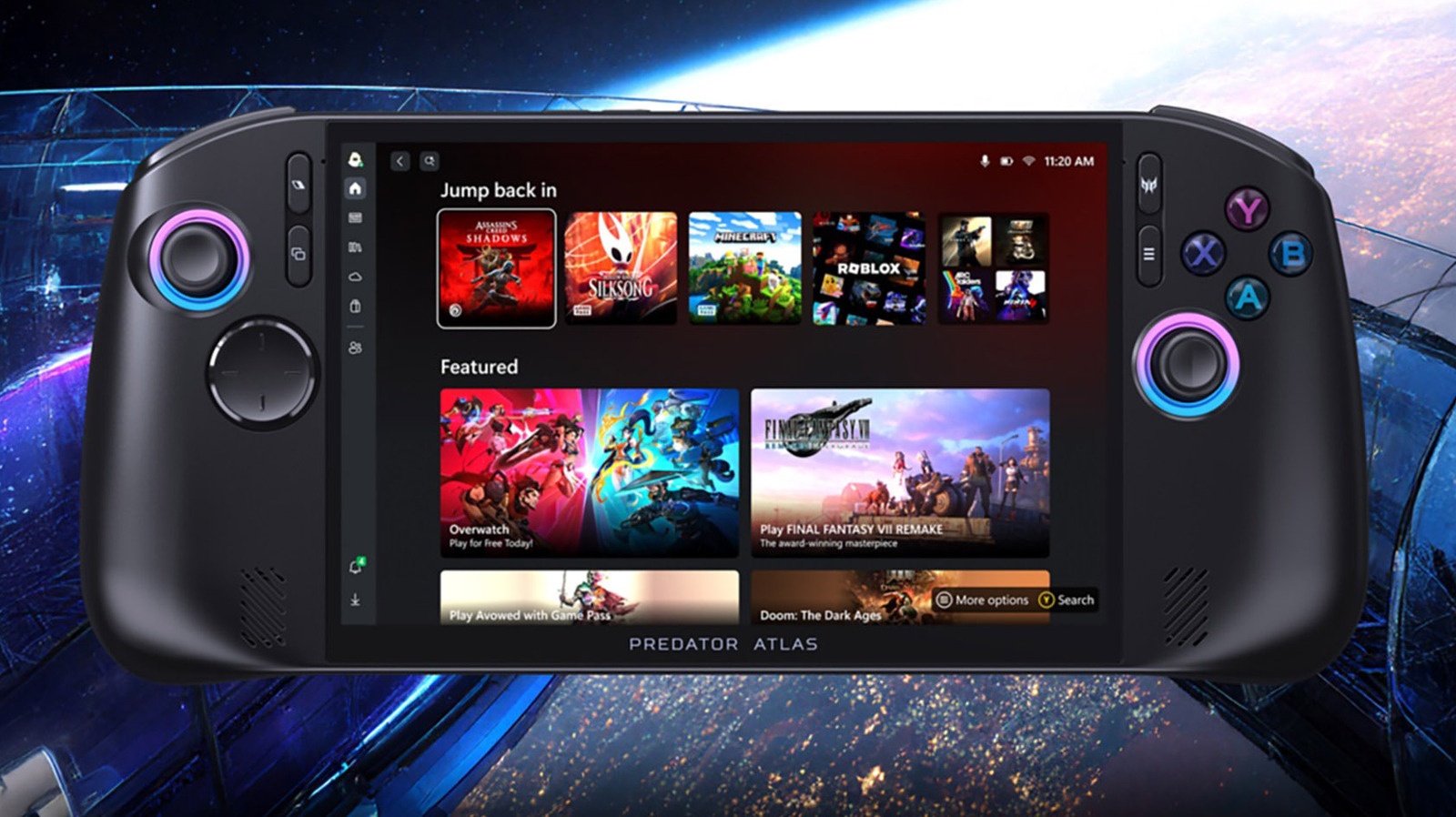
Acer is among the first manufacturers to commit to the platform, announcing the Predator Atlas 8. This device is positioned to leverage the full suite of Intel’s latest technologies, including Intel’s XeSS 3 AI-powered upscaling and ray tracing support. The handheld features an 8-inch WUXGA display with a 120Hz variable refresh rate, housed in a chassis that includes what the company describes as “the first metal fan in a handheld” to manage thermals.
“With the Predator Atlas 8, we are combining the Predator design philosophy with the power of the new Intel Arc G-Series processors to blur the lines between gaming PC and handheld performance.”Jerry Kao, Chief Operating Officer at Acer, via Acer News
In addition to Acer, MSI and OneXPlayer are confirmed to be adopting the new chips. Intel has stated that systems utilizing this hardware will arrive “starting in June 2026, with broader availability throughout the year.” The Predator Atlas 8, specifically, is expected to see a release window later this year in October.
Performance Features and Technical Limitations
AMD fires back after Intel's New CPUs look great | PSSR is essentially INT8 FSR4 | Intel Arc B70
Intel is positioning the Arc G3 series to compete directly with AMD’s Fluid Motion Frames by offering its own suite of performance-enhancing software. This includes support for multi-frame generation, latency reduction, and precompiled shaders, which are intended to reduce stutter and load times. Tom’s Hardware reports that the G3 Extreme series will feature Intel Precompiled Shaders, a feature that allows users to download precompiled sets rather than waiting for the system to compile them during gameplay.
However, comparisons to desktop or laptop performance remain difficult to quantify at this stage. While initial tests of the Arc B390 iGPU in a 16-inch reference laptop showed high frame rates in demanding titles, the thermal constraints of a handheld device will likely impact real-world results. Furthermore, Intel does not currently offer driver-level frame generation comparable to AMD’s technology, meaning users may be limited to game-specific support for certain AI features.
Hardware Specifications and Design Considerations
cluster (priority): news.google.com
The hardware design of the Predator Atlas 8 reflects the high-performance ambitions of the new Intel platform. The device includes 24GB of LPDDR5x RAM and is cooled by a dual-fan airflow system that the manufacturer claims delivers a 10 percent better airflow than previous models. Connectivity is also a priority, with the inclusion of Thunderbolt 4 ports, Wi-Fi 7, and dual Bluetooth 6 support.
The device’s physical design includes Hall effect triggers with adjustable hair-trigger stops and carbon film joysticks. As The Verge noted, the handheld will ship in two weight configurations, with the higher-end model likely housing an 80Wh battery. While official pricing and benchmarks have yet to be disclosed, the shift toward a more robust, Intel-exclusive handheld ecosystem suggests that the company is prepared to invest heavily in software optimizations and day-zero driver support to ensure these devices remain competitive against Team Red’s established handheld lineup.
Leo Andersson covers innovation, AI, and cybersecurity. A former engineer turned journalist from Stockholm, Leo has contributed to major tech outlets across Europe. His analytical style and deep understanding of technology trends define Globally Pulse’s forward-looking reporting.