
The White House has yet to finalize a deal with Iran after President Donald Trump’s two-hour Situation Room meeting on Friday, May 31, 2026, leaving the U.S. military on high alert and Oman caught in a rare diplomatic crossfire over the Strait of Hormuz.
Trump’s blunt warning to Oman—“we’ll have to blow ‘em up” if the Gulf kingdom doesn’t comply with U.S. demands on the strait—exposed fractures in Washington’s long-standing backchannel diplomacy with Tehran. The remarks, delivered during a closed-door Cabinet meeting, were later confirmed by two senior administration officials who requested anonymity to discuss internal deliberations. Meanwhile, Defense Secretary Pete Hegseth’s assertion that the U.S. is “more than capable” of resuming war with Iran underscored the military’s readiness as negotiations stall. With Iran’s Parliament Speaker Bagher Ghalibaf dismissing talks as futile and demanding “actions, not words,” the stage is set for either a fragile ceasefire extension or a return to open conflict.
Oman’s Diplomatic Tightrope: Why Washington Threatened to “Blow Them Up”
Oman, often called the “Switzerland of the Middle East” for its neutrality, finds itself in an unprecedented bind. The tiny Gulf kingdom has for decades served as a discreet bridge between Washington and Tehran, facilitating secret U.S.-Iran talks, brokering the 2024 Red Sea truce with the Houthis, and hosting nuclear negotiations. But Trump’s threat—“Oman will behave just like everybody else, or we’ll have to blow ‘em up”—marks the first time a U.S. president has publicly leveraged military force to pressure Oman over its diplomatic role.
The dispute centers on the Strait of Hormuz, the 21-mile waterway through which an estimated 20% of the world’s oil supply passes, according to U.S. Energy Information Administration data cited in a 2025 Congressional Research Service report. Iran and Oman have reportedly discussed a tolling system or joint management arrangement—a move the Trump administration calls a “threat to freedom of navigation.” Trump’s remarks, delivered during a Cabinet meeting, framed the strait as “international waters” under U.S. oversight, with no room for Tehran’s influence.
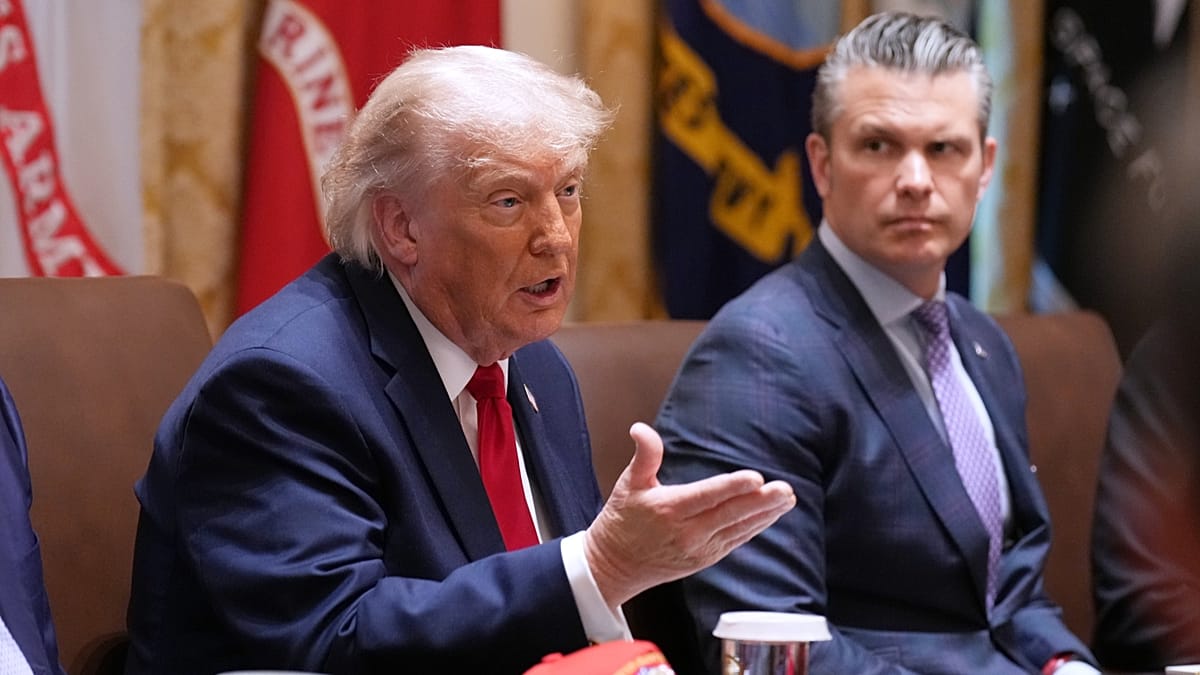
“The strait’s gotta be open to everybody. It’s international waters. Nobody’s going to control it.”
—President Donald Trump, during a Cabinet meeting on May 31, 2026
April Alley, a senior fellow at The Washington Institute, described Oman’s role as “critical” to U.S. interests, noting its ability to “facilitate talks between adversaries” without taking sides. However, Trump’s ultimatum risks undermining that balance. Oman’s foreign ministry did not respond to requests for comment, but the tension reflects broader U.S. frustration: Tehran’s refusal to abandon its nuclear program and Washington’s refusal to accept any Iranian oversight of global shipping lanes.
Behind the scenes, U.S. officials have privately warned Oman that its neutrality could be interpreted as complicity if it does not align with Washington’s demands. A State Department official, speaking on condition of anonymity, told reporters that Oman’s historical role as a mediator “does not shield it from the consequences of Iranian aggression.” The official added that the U.S. is reviewing Oman’s compliance with a 2023 memorandum of understanding on maritime security, which includes provisions against Iranian-backed maritime interference.
For more on this story, see U.S. Prepares for Potential Strikes on Iran Amid Strait of Hormuz Standoff.
The Military’s Red Line: “We Are More Than Capable”
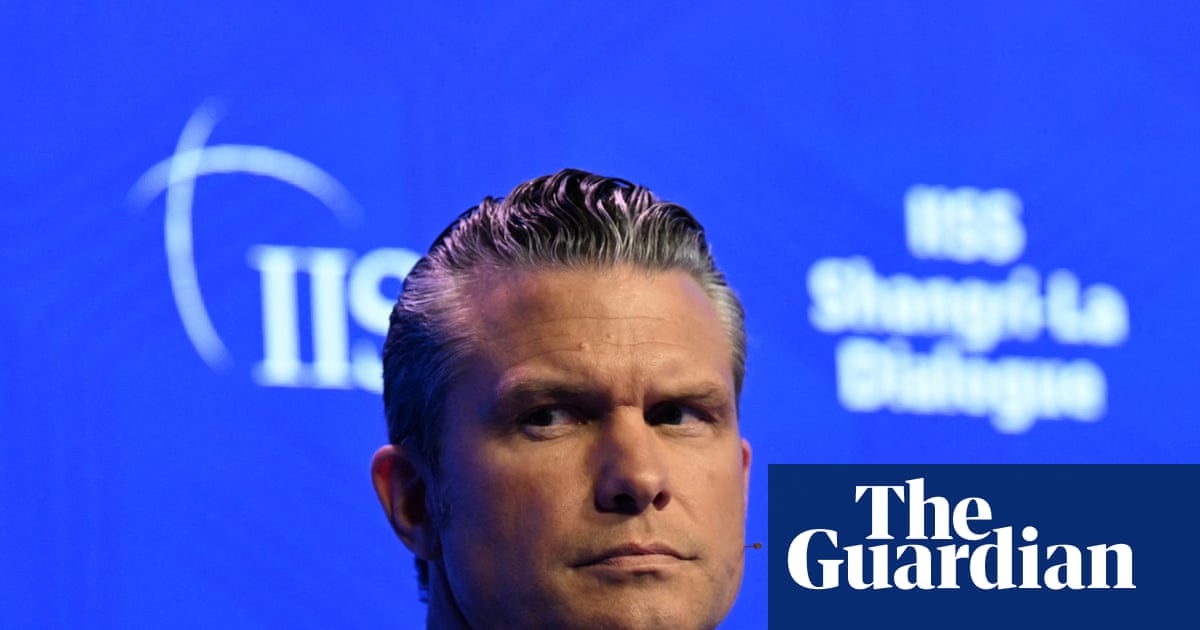
While diplomats squabble, the U.S. military has made its stance clear. Defense Secretary Pete Hegseth, speaking at the Shangri-La Dialogue in Singapore on May 31, left no doubt about America’s military options: “We are more than capable, our stockpiles are more than suited for that, both there and around the globe because of how we balance exquisite and more plentiful munitions.” His remarks were echoed by U.S. Central Command (CENTCOM) in a public statement released the same day, confirming that American forces “remain present and vigilant across the region, with additional assets deployed to the Persian Gulf in response to recent tensions.”
The threat of resumed hostilities comes as Trump’s administration evaluates a tentative 60-day ceasefire extension with Iran, proposed after a framework agreement on May 29. The deal hinges on three non-negotiables from Trump: Iran must never develop nuclear weapons, the Strait of Hormuz must remain toll-free, and any Iranian water mines must be dismantled. Iranian Foreign Ministry spokesperson Esmail Baghaei dismissed the framework as incomplete, telling state media that negotiators were focused only on ending the war—not nuclear talks.
“No step will be taken before the other side acts. We do not gain concessions through talks, but through missiles.”
—Bagher Ghalibaf, Speaker of Iran’s Parliament, via state media
Ghalibaf’s remarks came as Iranian lawmakers voted overwhelmingly to reject any ceasefire extension that does not include sanctions relief and a U.S. withdrawal from the region. The Iranian Parliament’s National Security and Foreign Policy Committee, chaired by Ghalibaf, issued a statement demanding that the Trump administration “stop its bullying tactics” and “recognize Iran’s right to defend its territorial waters.” The committee’s resolution, approved by a 12-5 vote, also called for increased military drills in the Strait of Hormuz and the Gulf of Oman.
In response, the Trump administration has accelerated military drills in the region. The U.S. Navy’s Fifth Fleet announced on May 30 that it would conduct “routine” exercises in the Strait of Hormuz, involving carrier strike groups and submarine patrols. A Pentagon spokesperson confirmed that these drills were “not a response to any specific threat but a demonstration of our commitment to maintaining freedom of navigation.” However, Iranian officials condemned the exercises as provocative, with the Islamic Revolutionary Guard Corps (IRGC) warning that any “unauthorized” U.S. military activity near Iranian waters would be met with “decisive retaliation.”
This follows our earlier report, U.S. threatens to revoke Palestinian UN ambassador’s visas over vice presidency bid.
The timeline for a decision remains unclear, but U.S. officials have indicated that Trump will make a final determination by Monday, June 2, 2026. A senior White House official, speaking under anonymity, stated that the president is “weighing the risks of prolonged negotiations against the potential for a sudden escalation.” The official added that Trump has instructed his national security team to prepare for both scenarios: a ceasefire extension and a potential resumption of hostilities.
Meanwhile, global markets have reacted sharply to the uncertainty. Oil prices surged by over 5% on May 30, reaching their highest level since 2022, according to Bloomberg data. The International Energy Agency (IEA) issued a statement warning that “disruptions in the Strait of Hormuz could trigger a global energy crisis, particularly in Europe and Asia.” The IEA’s executive director, Fatih Birol, urged all parties to “avoid actions that could escalate tensions further.”
In Washington, lawmakers from both parties have expressed concern over the lack of clarity. Senator Lindsey Graham (R-SC) warned that “another war in the Middle East is the last thing America needs,” while Representative Adam Schiff (D-CA) called for a full briefing on the administration’s strategy. A bipartisan group of senators, including Graham and Schiff, sent a letter to Trump on May 30, urging him to “prioritize de-escalation” and avoid “unilateral military actions” that could destabilize the region.
The situation in Oman remains tense, with reports of increased U.S. military patrols near the kingdom’s northern border. A local source in Muscat, speaking on condition of anonymity, described “unusual activity” near the Iranian border, including drone surveillance and reinforced checkpoints. The source added that Omanis are “deeply concerned” about the potential fallout from the standoff but remain committed to maintaining their neutrality.
As the clock ticks down, the question remains: Will Trump’s ultimatum force Oman into a corner, or will the kingdom find a way to navigate this crisis without choosing sides? For now, the Strait of Hormuz—and the world’s oil supply—hangs in the balance.
