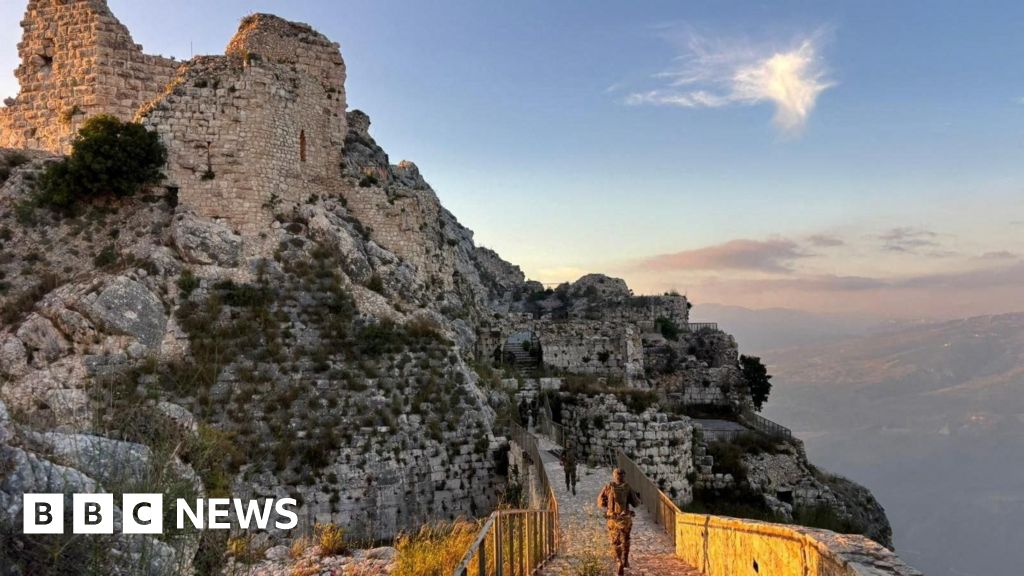
Israeli forces captured the historic Beaufort Castle in southern Lebanon on May 31, 2026, marking their deepest ground incursion into the country in 26 years and complicating U.S.-brokered ceasefire talks with Iran. The operation, part of a broader campaign against Hezbollah, saw the IDF secure a strategic ridge overlooking northern Israel and Lebanon, a site last held by Israel during the 1982 First Lebanon War. The move comes amid heightened regional tensions and a fragile truce that Tehran seeks to expand to include Lebanon.
Historic Fortification Reclaimed
The Beaufort Castle, known as Al-Shaqif in Arabic, has been a contested symbol for centuries. Built by the Crusaders in the 12th century and later used by Saladin’s forces, the Ottoman Empire, and the Israeli military until 2000, its capture by Israeli troops on May 31 echoes a pivotal moment in 1982 when the Golani Brigade secured the site during the First Lebanon War. Defense Minister Israel Katz hailed the operation as a “correction of national sins and distorted perceptions,” emphasizing the need for permanent military control over the area. “We are taking the initiative, we are operating on all fronts,” Prime Minister Benjamin Netanyahu declared, citing the killing of 8,000 Hezbollah fighters since the war began.

The IDF’s advance past the Litani River and into the Beaufort Ridge was supported by air strikes and artillery, with troops preparing to expand operations near Nabatiya, a Hezbollah stronghold. Lebanese Prime Minister Nawaf Salam condemned the assault, accusing Israel of “implementing a policy of total destruction of cities and towns.” Over 3,300 Lebanese civilians have been killed since the conflict began in March, with 1 million displaced, according to the LA Times.
Strategic and Symbolic Significance
The capture of Beaufort underscores Israel’s dual focus on military dominance and political messaging. For the IDF, the ridge offers a vantage point to monitor Hezbollah activity and deter rocket attacks from northern Israel. For the Israeli government, it serves as a rallying point to justify continued operations despite U.S.-led ceasefire efforts. Netanyahu framed the action as a breakthrough in “crushing Hezbollah’s power,” while Finance Minister Bezalel Smotrich called for “extraordinary military aggressiveness,” vowing to retaliate against Hezbollah drones with disproportionate force.
Historians and analysts note the symbolic weight of the operation. Orna Mizrahi, a former National Security Council deputy, described the return to Beaufort as “going in circles,” questioning the long-term gains. “Yes, we are damaging them in the operations, but in parallel we need to pursue a political and diplomatic solution,” she said. The site’s history as a flashpoint for conflict—where Israeli forces faced heavy casualties in 1982—adds layers of complexity to the current campaign.
Regional Implications and Diplomatic Challenges
The operation threatens to derail ongoing negotiations to extend the Iran-Israel ceasefire, which Tehran has tied to a halt in fighting in Lebanon. The U.S. has urged restraint, but Israeli officials insist the campaign is necessary to secure northern communities. “The campaign is not yet over,” Netanyahu warned, signaling that the IDF’s push could intensify. Hezbollah, meanwhile, has vowed to retaliate, with factions in Beirut already planning counterattacks.

The conflict’s humanitarian toll continues to grow. Over 3,300 Lebanese have died since March, including dozens of children, while Israeli casualties include 25 soldiers and two civilians. The displacement of 1 million people has strained Lebanon’s already fragile infrastructure, with aid organizations warning of a deepening crisis. The UN has called for immediate de-escalation, but neither side appears willing to back down.
As the conflict enters its third month, the capture of Beaufort highlights the enduring volatility of the Middle East. For Israel, the operation reinforces its strategy of preemptive strikes and territorial control. For Lebanon and Hezbollah, it represents a stark reminder of the region’s unresolved tensions. The coming weeks will test whether diplomacy can prevail—or if the cycle of violence will continue to define the landscape.
