Mounting Pressure on Zambia’s President Hichilema Amid Economic Discontent
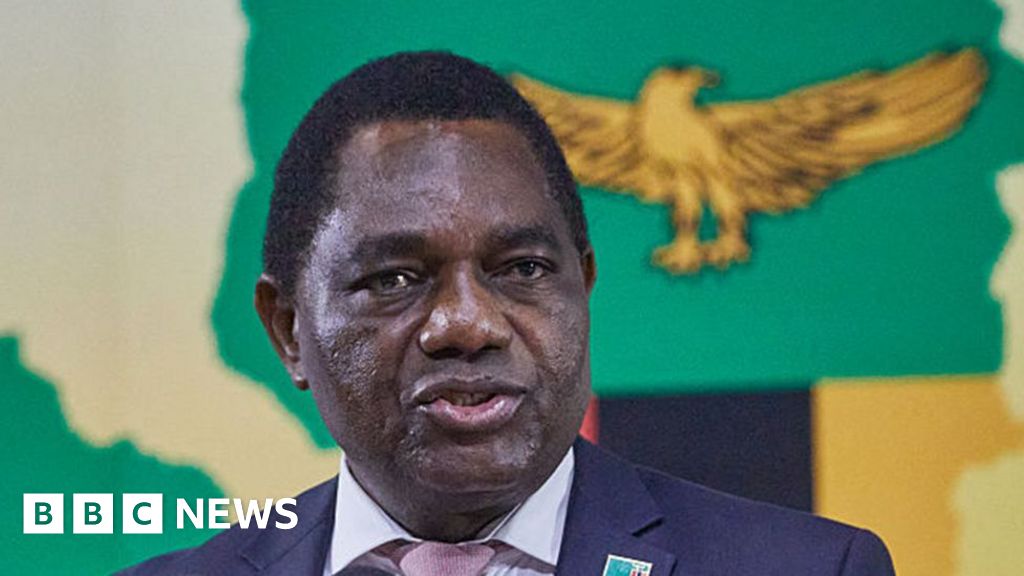
Zambian President Hakainde Hichilema is facing escalating public discontent and political pressure as the country approaches its 2026 general elections. Recent incidents, including his being pelted with stones during a public address in Copperbelt province, underscore a growing disillusionment among segments of the population. Hichilema, who campaigned on a promise to revitalize the economy, now finds himself defending his administration’s progress against criticisms that his policies have yet to alleviate the daily struggles of ordinary Zambians.
During his first press conference in 18 months, President Hichilema addressed the incidents, appealing for national unity and condemning what he described as “hatred.” He attributed the violence to illegal artisanal miners, asserting his government’s commitment to cracking down on unregistered activities. However, opposition figures, like Lusaka mayoral candidate Simon Mwila, suggest the public’s frustration stems from a perceived disconnect between the government and citizens’ daily realities.
Economic Reforms Versus Lingering Hardship
President Hichilema inherited a formidable economic challenge upon assuming office in 2021, including a defaulted debt burden, inflation nearing 25%, and widespread power outages. His administration has since focused on stabilizing government finances and renegotiating debt repayments. Economist Trevor Hambayi lauded these efforts as an “overriding success story,” noting improvements in Zambia’s credit rating and increased foreign investment. Annual inflation has reportedly decreased to just under 12%, and the Zambian Kwacha has recently strengthened after a period of decline.
Despite these macroeconomic achievements, the tangible impact on citizens’ lives remains a key point of contention. The Jesuit Centre for Theological Reflection in Lusaka highlighted in its October report that while inflation eased, many families still face high prices for essential goods, making it difficult to meet basic needs. This sentiment is echoed by Hambayi, who emphasized that the “high cost of living and the lack of employment opportunities” are metrics that resonate most with ordinary Zambians, rather than broader fiscal improvements.
The Persistent Power Crisis and Development Pledges
Critical among the public’s grievances is the persistent power crisis. Zambia, heavily reliant on hydroelectricity, has seen its generation capacity “decapitated” by recent droughts, according to President Hichilema. He acknowledged the “pain and frustration of power outages” suffered by citizens and pledged to diversify energy sources through increased investment in solar and thermal projects. This push for renewable energy aligns with broader global efforts to address climate change impacts on national infrastructure, a topic frequently discussed in international forums.
Hichilema’s administration faces the challenge of demonstrating that its long-term development and investment programs will translate into immediate relief for citizens before the 2026 elections. The timeline for such large-scale projects is often extensive, potentially testing the patience of a populace grappling with daily hardships.
Concerns Over Democratic Backsliding
A significant shift in Hichilema’s political stance since assuming power has drawn criticism from academics and civil society. Dr. Sishuwa Sishuwa of South Africa’s Stellenbosch University argues that the president has adopted measures he once opposed, particularly concerning democratic freedoms. The Cybersecurity Law, intended to combat online fraud, has been flagged for its potential to monitor citizens, a concern previously raised against the administration of his predecessor, Edgar Lungu. Dr. Sishuwa claimed that Hichilema has utilized other “repressive statutes to arrest critics and political opponents” on various charges, despite commendably abolishing the law on defaming the president.
Further exacerbating these concerns is President Hichilema’s backing of a constitutional review process that includes increasing parliamentary constituencies. While in opposition, Hichilema successfully campaigned against similar proposals, arguing they aimed to extend ex-President Lungu’s tenure and were too disruptive close to an election. Now, Hichilema defends the move by citing a constitutional requirement to create new constituencies every decade to ensure equitable resource distribution. Critics plan national prayers to protest the process, highlighting concerns over potential political motivations.
Regional Stability and International Implications
Zambia’s political stability and economic trajectory hold regional significance, particularly as southern Africa navigates complex economic and social challenges. The international community, including bodies like the United Nations, typically monitors elections and human rights records closely. While specific international statements on these recent events have been limited, the UN has consistently emphasized the importance of democratic governance and civic space, as highlighted in reports concerning various nations [un.org](https://www.un.org/unispal/document/special-rapporteur-report-gaza-genocide-a-collective-crime-20oct25/). An unstable Zambia could impact regional trade routes and broader economic partnerships within the Southern African Development Community (SADC). Diplomatic efforts, such as those described by outgoing Middle East envoy Tor Wennesland, often underscore the fragility of political transitions and the role of international engagement in fostering stability [news.un.org](https://news.un.org/en/interview/2024/11/1157241).
As the elections draw closer, President Hichilema faces the dual challenge of demonstrating tangible economic improvements for his citizens while upholding the democratic principles he championed in opposition. The public’s patience, as evidenced by the recent unrest, appears to be wearing thin, emphasizing the urgent need for visible progress and inclusive governance.
