
A leaked U.S. State Department memo dated May 19, 2026, reveals Washington is threatening to revoke the visas of Palestinian diplomats at the United Nations unless Ambassador Riyad Mansour withdraws his bid for a vice presidency role at the General Assembly. The move escalates tensions ahead of this year’s UN debates on Gaza and Israel.
U.S. Pressures Palestinian UN Ambassador Over Senior Role Bid
A confidential State Department cable obtained by NPR and other outlets details a direct warning to Palestinian officials: if Ambassador Riyad Mansour pursues one of the 21 vice president positions at the UN General Assembly, the U.S. will revoke visas for the entire Palestinian delegation. The threat follows a pattern of Trump administration pressure on Palestinian leadership, including last year’s rare visa denials for top officials ahead of the UN General Assembly.
The May 19 memo, marked sensitive but unclassified, cites Mansour’s history of accusing Israel of genocide
as justification for blocking his promotion. It argues his election to a senior UN role would fuel tension
and undermine President Donald Trump’s Gaza peace plan, which remains stalled. The cable warns that Congress would view such a move as a serious breach of U.S. policy.
Palestinian Authority President Mahmoud Abbas’ office declined to comment, but the threat underscores the fraught dynamics between Washington and the Palestinian delegation as the UN prepares for high-stakes debates on the Israel-Hamas conflict. The Trump administration’s approach contrasts with past U.S. policy, where Palestinian diplomats typically retained access despite rhetorical clashes.
—
Background: A History of Visa Restrictions
The Trump administration has increasingly used visa policies as a tool to shape Palestinian diplomacy. In September 2025, the U.S. denied entry to Abbas and other senior officials ahead of the UN General Assembly, citing concerns over inflammatory rhetoric
. That decision sparked protests from Palestinian factions and UN allies, who argued it violated diplomatic norms.
This week’s threat marks a more aggressive tactic: targeting the entire delegation’s visas rather than individual leaders. The move aligns with broader Trump administration efforts to isolate Palestinian institutions perceived as hostile to Israel, including restrictions on funding to UNRWA and Palestinian media outlets.
Mansour, who has served as Palestinian Ambassador to the UN since 2005, is a long-standing critic of Israeli occupation policies. His rhetoric has drawn repeated condemnation from Israeli officials and pro-Israel U.S. lawmakers, who argue it exacerbates regional instability. The State Department memo frames his UN ambitions as a bully pulpit
that would significantly damage U.S. relations with the Palestinian Authority.
—
What’s Next: UN Politics and U.S. Leverage
The UN General Assembly’s vice presidency elections typically occur in September, but the timing of the U.S. threat suggests pressure to influence the outcome sooner. Palestinian officials are unlikely to back down quietly, given Mansour’s popularity among Arab and Global South blocs at the UN. If the U.S. follows through on visa revocations, it risks isolating itself further in multilateral forums, where Palestinian representation is widely seen as a humanitarian necessity.
Legal experts note that while the U.S. can deny visas under national security or diplomatic discretion, revoking existing visas for an entire delegation would set a precedent with unpredictable consequences. The Palestinian Authority could retaliate by restricting U.S. diplomats in Ramallah or Ramallah-based consular staff, though such moves would likely be framed as defensive.
For now, the focus remains on the May 20 cable’s immediate impact. Palestinian diplomats are reportedly assessing whether to challenge the threat through legal channels or escalate public pressure. Meanwhile, the Trump administration’s hardline stance on Gaza—including its refusal to engage with Hamas or Palestinian factions—continues to shape its UN strategy.
One certainty: the visa dispute will dominate discussions during the upcoming UN Security Council meetings on Palestinian statehood and humanitarian aid access. With no signs of de-escalation, the conflict over Mansour’s role may become a proxy battle for influence over the UN’s Middle East agenda.
—
Broader Implications: Diplomacy by Other Means
The U.S. threat reflects a broader trend of using administrative tools—visas, funding cuts, and diplomatic isolation—to achieve foreign policy goals without direct confrontation. Similar tactics have been applied to Venezuelan, Iranian, and Chinese officials in recent years, raising questions about the sustainability of such pressure campaigns.
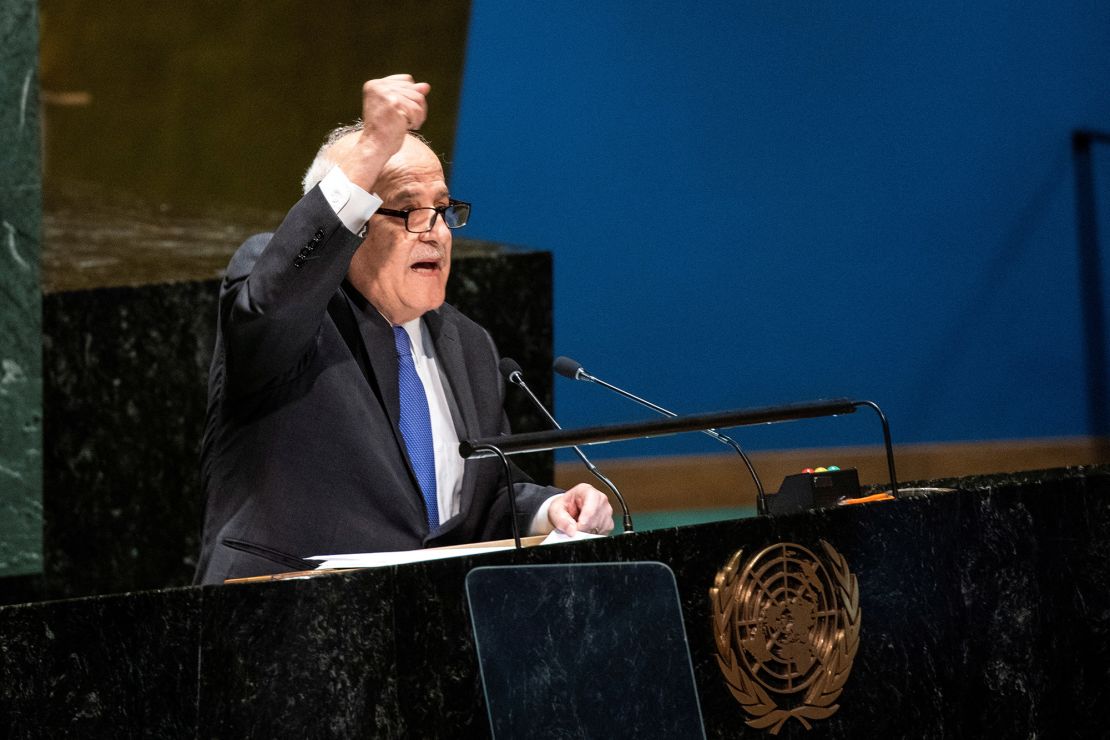
For Palestinians, the stakes are existential. The UN remains a critical platform for advocating statehood and humanitarian aid, particularly as Israel’s military operations in Gaza show no signs of abating. By targeting Mansour, the U.S. risks alienating moderate Arab states and European allies who view Palestinian representation at the UN as a non-negotiable humanitarian issue.
In the short term, the visa threat may force Palestinian officials to prioritize damage control over their UN ambitions. But the long-term effect could be the opposite: a united front among Palestinian factions and their supporters to resist what is increasingly seen as coercive U.S. diplomacy.
As the UN prepares for its autumn session, the Mansour dispute will serve as a litmus test for how far Washington is willing to go to shape international narratives on Israel and Palestine. What is clear is that the traditional rules of diplomatic engagement are being rewritten—with consequences that extend far beyond the UN’s walls.
