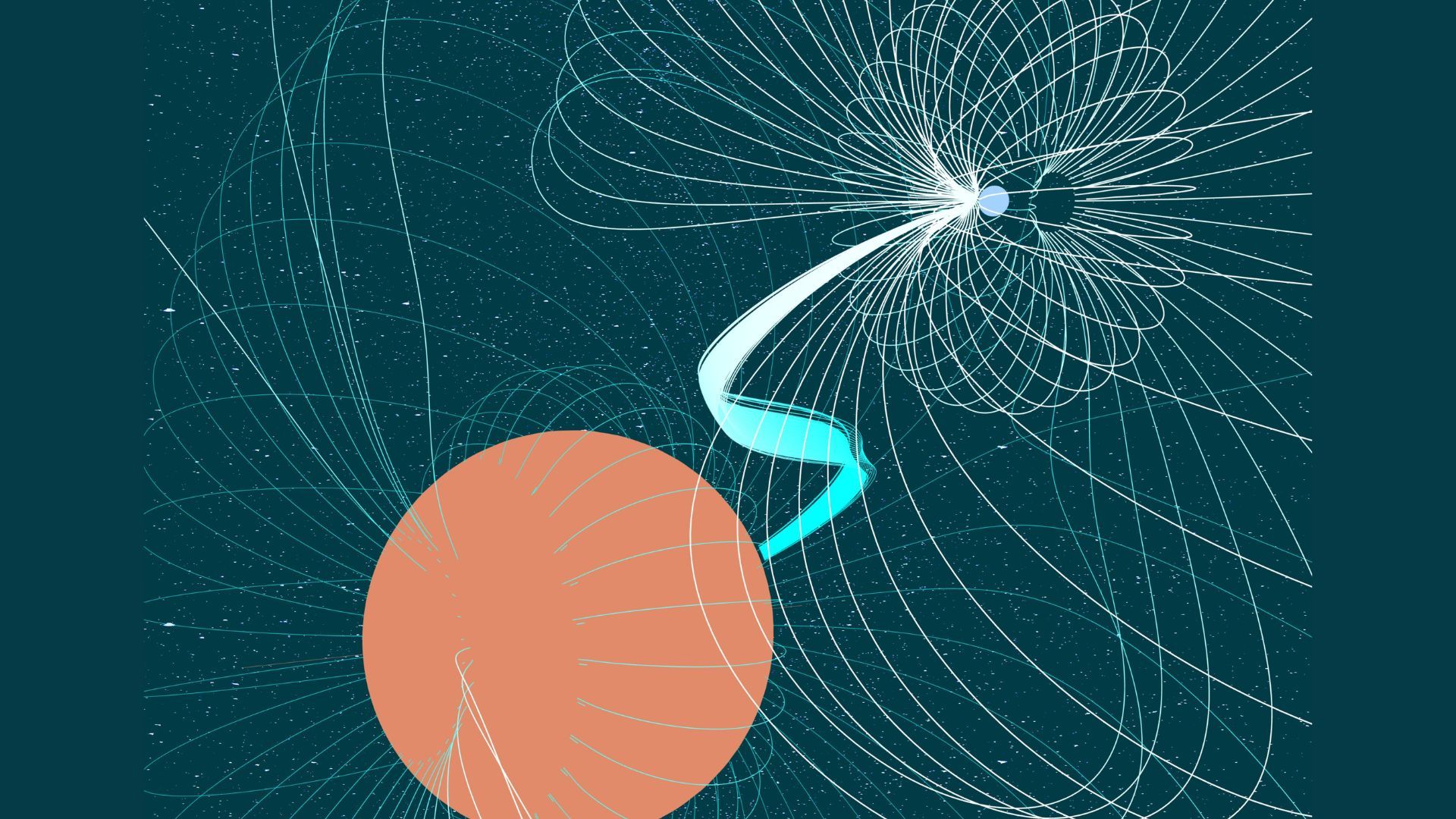
Astronomers have cracked the code on a 20-year-old cosmic mystery: the source of repeating radio signals from space is a “vampire” white dwarf star slowly devouring its companion. The discovery, published in Nature Astronomy, doesn’t just solve a puzzle—it redefines how we hunt for these elusive signals in the future.
For the first time, researchers have traced a long-period radio transient—bursts of radio waves repeating every few minutes—to a binary star system where a white dwarf is siphoning material from a red dwarf. The system, named ASKAP J1745−5051, sits over a thousand light-years away and emits both radio waves and X-rays in a precise 1.4-hour cycle. The breakthrough, led by doctoral candidate Kovi Rose at the University of Sydney, turns a speculative theory into a confirmed celestial blueprint.
The “Rosetta Stone” of Cosmic Signals
Long-period radio transients have baffled astronomers since their discovery in 2005. Unlike fast radio bursts (FRBs), which flash for milliseconds, these signals linger for minutes or even hours—making them harder to pinpoint. Theories ranged from magnetars (highly magnetic neutron stars) to pulsars, but none fit the observed patterns perfectly. Then, in 2022, ASKAP J1745−5051 was detected by the Australian SKA Pathfinder (ASKAP) radio telescope, and something about it didn’t add up.
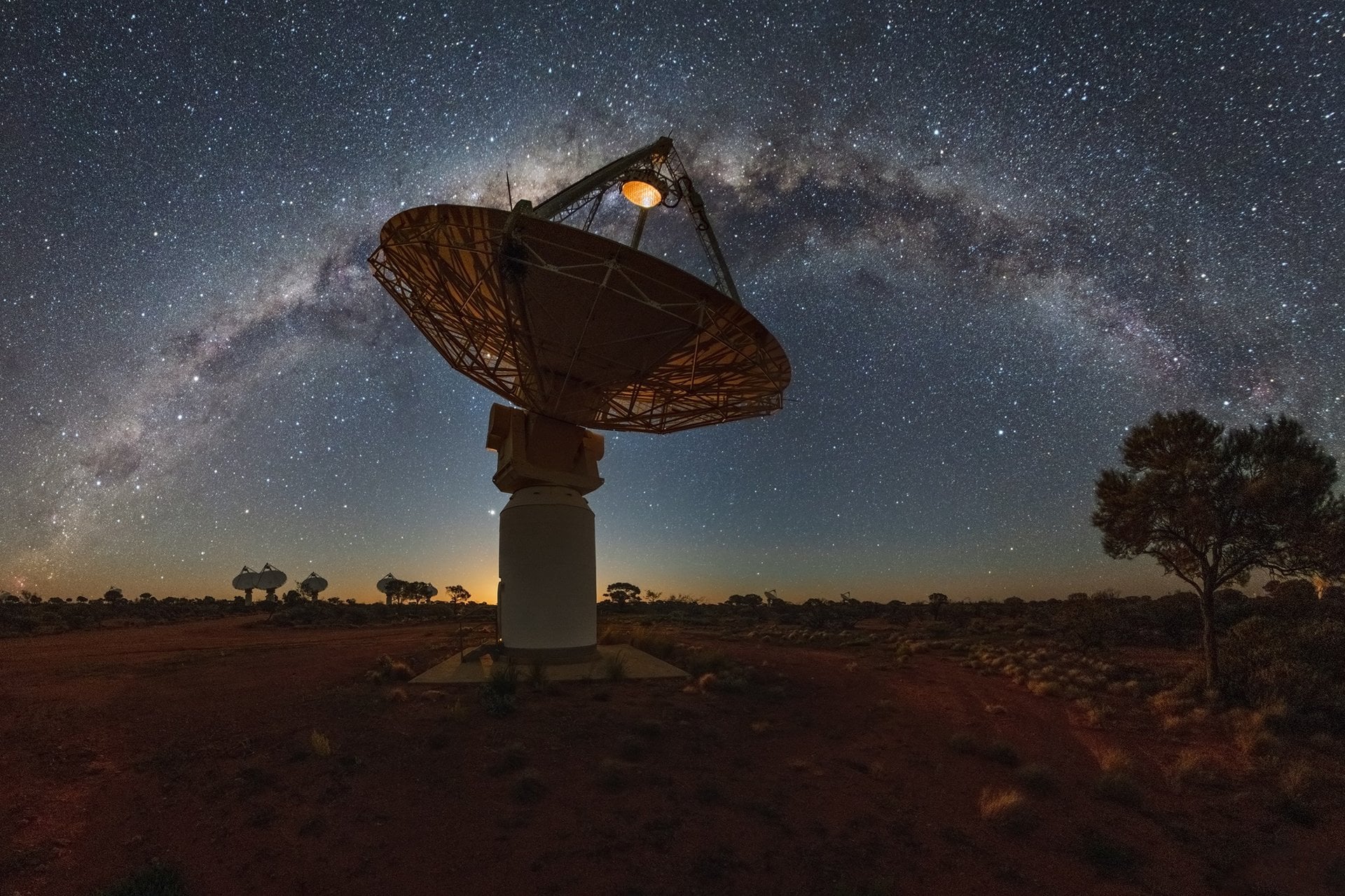
Rose and his team analyzed over 3 million radio sources, narrowing them down to 100 with circularly polarized light—a telltale sign of magnetic activity. Two objects remained unidentified. One turned out to be a brown dwarf; the other, ASKAP J1745−5051, was “something we couldn’t explain,” Rose told Live Science. “When we eventually managed to explain it, it was more interesting than we could have hoped for.”
“A Rosetta Stone to help us decipher the missing bits of information in other long-period transients, both in the dozen or so that we’ve discovered, and the new ones that we’re going to keep discovering.”
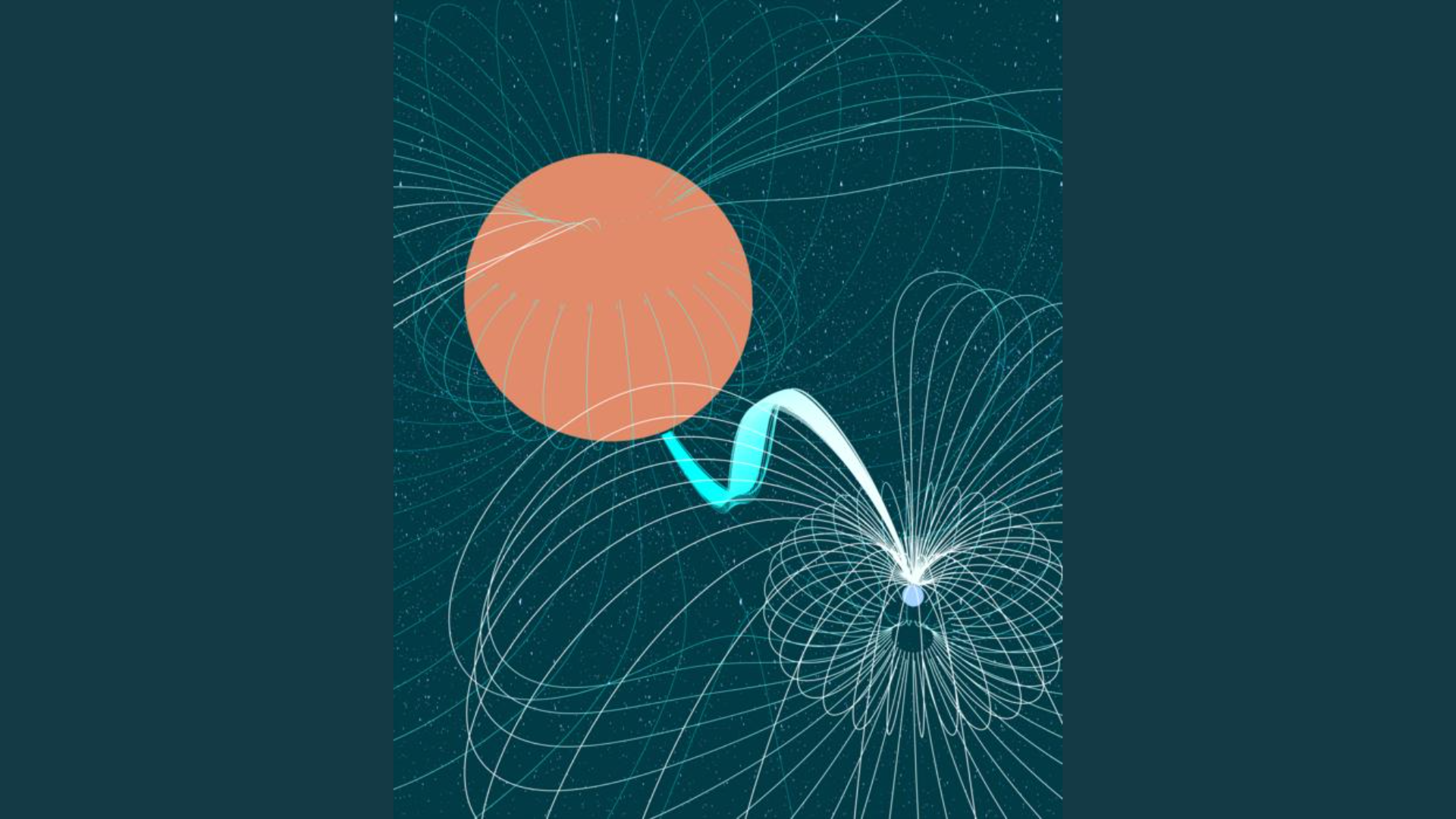
The team combined data from ASKAP, optical telescopes, and X-ray observatories to reveal a binary system where a white dwarf—Earth-sized but with the mass of our sun—is stripping material from a red dwarf companion. The stolen gas spirals into an accretion disk around the white dwarf, heating up to millions of degrees and emitting X-rays. Meanwhile, the clashing magnetic fields of the two stars produce radio bursts every 1.4 hours, synchronized with their orbit.
What makes this discovery groundbreaking isn’t just the identification of the source, but the mechanism. The radio and X-ray emissions peak at different times, proving they originate from distinct regions of the system. The radio bursts, explained Space, arise when the stars’ magnetic fields clash, stripping charged particles that spiral along field lines and emit synchrotron radiation. The X-rays, meanwhile, come from the superheated gas falling onto the white dwarf.
Why This Discovery Matters
Before this, astronomers had only a handful of long-period radio transients to study, with no clear origin. Now, ASKAP J1745−5051 provides a template: a magnetic cataclysmic variable—a white dwarf “vampire” feeding on its companion. This isn’t just one answer; it’s a framework. “Now we’ve been able to show that the source for one of these transients comes from a white dwarf actively pulling material from a companion star,” Rose said in a statement to Universe Today. “Long-period radio transients have puzzled astronomers for years.”
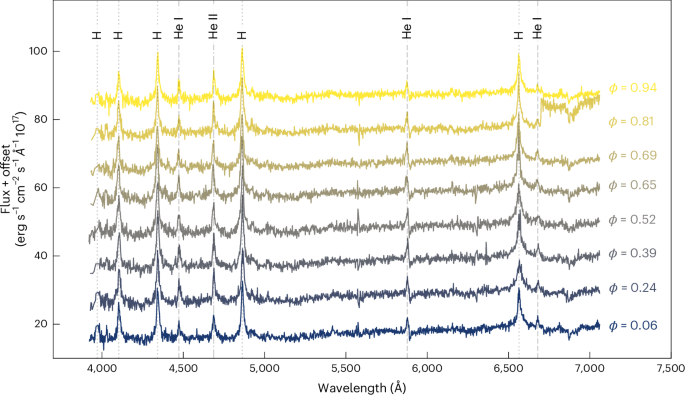
The implications are twofold. First, it rules out magnetars as the primary source for at least some of these signals. Second, it suggests that similar systems—where compact objects feed on companions—could be far more common than previously thought. Only one other long-period transient has been confirmed to emit X-rays, but the team suspects others may follow the same pattern once studied in detail.
This discovery also highlights the power of multi-wavelength astronomy. By combining radio, optical, and X-ray observations, the team pieced together a puzzle that no single telescope could solve alone. ASKAP’s wide-field capabilities were crucial: it could scan large swaths of the sky quickly, spotting transients that might otherwise go unnoticed.
What Happens Next?
The next step is to hunt for more systems like ASKAP J1745−5051. With this “Rosetta Stone,” astronomers can now look for similar magnetic interactions in other long-period transients. The team is already planning follow-up observations with the Square Kilometre Array (SKA), the world’s most powerful radio telescope, set to begin full operations in the 2030s. “We’re going to keep discovering new ones,” Rose said, “and now we have a roadmap to understand them.”
There’s also the question of what else these systems might reveal. Magnetic cataclysmic variables are known to produce novae—explosive outbursts when too much material accumulates on the white dwarf. Could some long-period transients be precursors to these events? Or are they just one of many exotic phenomena waiting to be uncovered?
One thing is certain: the sky is no longer the limit. With ASKAP J1745−5051 decoded, the hunt for cosmic mysteries enters a new phase—one where every signal has a story, and every story has a source.
The Bigger Picture
This discovery isn’t just about solving a puzzle—it’s about rewriting how we think about the universe’s most enigmatic signals. For decades, astronomers have chased FRBs and other cosmic mysteries, but long-period transients remained stubbornly elusive. Now, with a confirmed mechanism, the field can shift from speculation to systematic study.
It’s also a testament to the power of collaboration. Rose’s team included researchers from Australia, the U.S., China, and beyond, pooling data from telescopes across the globe. The result? A discovery that would have been impossible just a few years ago. As Nature’s accompanying study notes, this work builds on decades of research into cataclysmic variables, finally bridging the gap between theory and observation.
For now, ASKAP J1745−5051 remains the only confirmed long-period transient of its kind—but it won’t be the last. With the SKA on the horizon and new telescopes coming online, the next chapter in this cosmic detective story has already begun.
- System: ASKAP J1745−5051 (white dwarf + red dwarf binary)
- Distance: Over 1,000 light-years from Earth
- Cycle: Radio and X-ray bursts every 1.4 hours
- Mechanism: Magnetic interactions + accretion disk
- Discovery Tool: Australian SKA Pathfinder (ASKAP) telescope
- Next Step: Follow-up with Square Kilometre Array (SKA)
The universe just handed astronomers a cheat sheet—and the next mystery is already waiting to be solved.
