
Oura released the Oura Ring 5 on June 4, 2026, featuring a 40 percent slimmer frame and upgraded sensors. Starting at $399, the new model competes directly with the Oura Ring 4, which remains available at a reduced price. The launch introduces advanced health tracking, including nighttime blood pressure and live activity metrics.
A Slimmer Profile and Hardened Hardware
The most immediate change with the Oura Ring 5 is its physical footprint. Oura has reduced the ring’s size by 40 percent compared to its predecessor. While the Oura Ring 4 measures 0.31 inches wide by 0.11 inches thick, the new Oura Ring 5 measures 0.24 inches wide by 0.09 inches thick, according to PCMag. This reduction is intended to make the device feel less like a piece of technology and more like traditional jewelry.
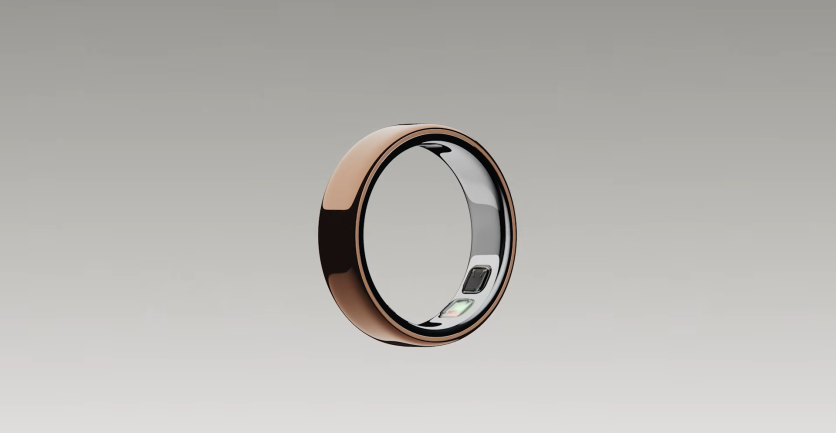
For users who wear their rings during high-intensity activities, the design shift serves a functional purpose. The slimmer profile is designed to tuck more naturally under the fingers, reducing the likelihood of the device pinching or snagging during weightlifting or other movements, as noted by CNET. Despite the reduced volume, the internal architecture has been rebuilt to include 12 signal pathways, which Oura claims will improve reading accuracy across various skin tones and finger types, reports Cool Hunting.
Oura’s Chief Product Officer, Doug Sweeny, noted during the June 4 launch event that the miniaturization was achieved by transitioning to a proprietary “Smart-Flex” resin interior, replacing the previous titanium-heavy housing while maintaining an IP68 rating for water resistance up to 100 meters. The sensor array has been rearranged into a staggered pattern, which according to Oura’s internal technical white paper, reduces signal noise by 18 percent when compared to the Ring 4’s linear sensor placement. Independent teardowns by iFixit have confirmed the use of a new custom-designed ASIC (Application-Specific Integrated Circuit) that consumes 25 percent less power while processing data locally on the device, a move that minimizes the frequency of Bluetooth handshakes with the Oura smartphone application.
Pricing Strategy and Model Availability
Oura has implemented a tiered pricing structure that positions the Oura Ring 5 as a premium offering. The new model starts at $399, a $50 increase over the previous generation’s starting point. Customers opting for premium finishes—such as brushed silver, deep rose, gold, or stealth—will pay $499.

The company is keeping the Oura Ring 4 in the market to serve as a lower-cost alternative. The pricing for the previous generation has shifted following the launch:
- Oura Ring 4 (Silver/Stealth): Starting at $349.
- Oura Ring 4 (Gold): Price reduced to $399.
- Oura Ring 4 (Ceramic): Now $399, representing a $100 discount from its original launch price.
Regardless of the model chosen, users must account for the $69.99 annual membership fee required to access the majority of the app’s features. Additionally, while the Oura Ring 5 ships with a puck-style charger, the redesigned frame means it is not cross-compatible with the Oura Ring 4 charging puck. A new aluminum travel case that holds a month of power is available as a $99 accessory.
Market analysts at Bloomberg Intelligence observe that this pricing strategy mirrors the “pro-sumer” segmentation seen in the smartwatch industry. By keeping the Oura Ring 4 in the lineup, Oura is hedging against market saturation while forcing a hardware-based distinction between entry-level users and those requiring the new cardiovascular tracking capabilities. The $99 travel case utilizes a USB-C input, a shift from the proprietary magnetic pins used on previous travel kits, reflecting a broader push by the company to comply with recent international electronics manufacturing standards.
Expanded Health Tracking and AI Integration
Beyond hardware, Oura is pushing the software platform toward active health management. A significant addition is Live Activity Tracking, which allows members to monitor real-time metrics during workouts. This marks a departure from the company’s traditional focus on overnight recovery data.
The platform is also expanding its “Health Radar” capabilities. The system now monitors nighttime blood pressure trends to identify cardiovascular warning signs and tracks nighttime breathing to detect sleep disturbances. For users in the United States, an Oura Labs update launching this June will integrate AI-enabled care through a partnership with Counsel Health. This feature allows users to connect with licensed providers directly within the app if the ring detects concerning physiological trends.

The blood pressure monitoring feature operates through Pulse Transit Time (PTT) analysis. According to Dr. Shyamal Patel, head of science at Oura, the ring uses the new 12-pathway sensor to measure the speed at which blood pulses move between the finger arteries. While the feature has not yet received FDA clearance as a diagnostic tool, Oura is positioning it as a “wellness trend indicator.” Independent cardiologists, such as Dr. Elizabeth Klodas, have cautioned that while PTT is a valid scientific method for tracking relative changes, users should not rely on it as a replacement for clinical-grade cuff measurements, particularly for those diagnosed with hypertension.
Metabolic health has also become a priority. With approximately 50 percent of members managing metabolic conditions, the new GLP-1 Insights feature allows users to log medication doses, weight changes, and side effects in the app, creating a more comprehensive view of their health journey alongside their biometric data.
Battery Performance and Longevity
Despite the 40 percent reduction in size, Oura claims the battery life for the Oura Ring 5 is improved. The company estimates that the device will last between six and nine days on a single charge. This exceeds the five-to-eight-day estimate provided for the Oura Ring 4. Early testing by Cool Hunting indicated that after six days of use, the battery remained at 44 percent, suggesting that the new power management architecture is performing as intended in real-world conditions.
The engineering team at Oura achieved this efficiency by utilizing a new lithium-polymer battery chemistry developed in collaboration with Varta. According to a technical disclosure by Oura’s supply chain lead, the battery density has increased by 15 percent by volume compared to the cell used in the Ring 4. Furthermore, the firmware update accompanying the release introduces “Adaptive Sleep Mode,” which throttles the sampling rate of the SpO2 and heart rate sensors during periods of high-confidence sleep detection, further extending the interval between charges. Reviewers at The Verge noted that even with Live Activity Tracking enabled for one hour per day, the ring consistently maintained a seven-day cycle, effectively addressing the primary criticism of the Ring 4, which some users reported struggled to reach the advertised eight-day mark under heavy usage scenarios.
