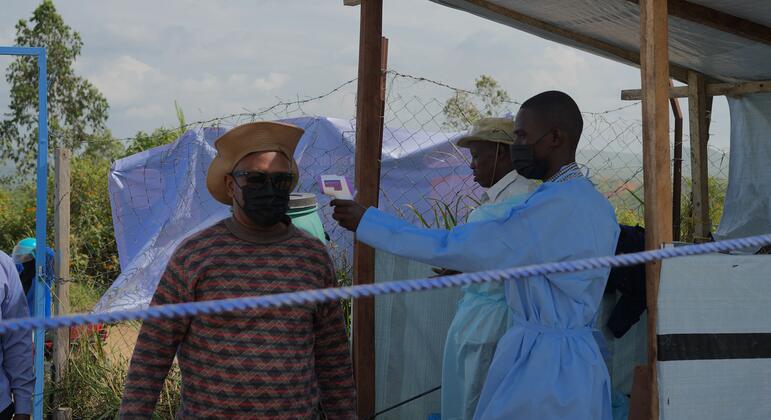
As of May 30, 2026, the Democratic Republic of the Congo (DRC) and Uganda face a rapidly escalating Ebola outbreak caused by the Bundibugyo strain, with 1,077 suspected cases and 238 suspected deaths reported since mid-May. The World Health Organization (WHO) has declared a public health emergency, emphasizing the need for community engagement, early detection, and urgent scaling of medical resources amid a complex humanitarian crisis.
The Deadly Reality of the Bundibugyo Strain
The Bundibugyo strain of Ebola, which has a mortality rate ranging between 30 and 50 per cent, spreads through close contact with infected individuals, particularly during caregiving or burial practices. Anaïs Legand, a WHO Technical Officer, explained that “it’s a disease you get when you care for someone, for your husband or your partner or your child or your mother.” Families and friends must avoid touching sick loved ones, a directive that clashes with local customs, fueling distrust and resistance among communities. “You get it when you want to help someone with symptoms, and this is terrible,” she said, highlighting the paradox of care becoming a vector of transmission.


“Five out of 10 people are likely to die,” Legand added, though she emphasized that optimized intensive care and early diagnostics could improve survival rates. Despite this, health workers in Ituri province, the epicenter of the outbreak, face dire shortages. In some areas, doctors wear expired medical masks while treating suspected patients, according to NPR. The WHO has prioritized three candidate therapeutics—MBP 134, maftivimab, and remdesivir—for clinical trials, alongside post-exposure antiviral obeldesivir and two vaccines under evaluation. However, access to these tools remains hindered by conflict, displacement, and logistical challenges.
International Aid and Controversy
The United States has pledged $80 million in additional aid to combat the outbreak, bringing its total commitment to over $112 million. This includes medical supplies and support for local health systems, as reported by NPR. Meanwhile, the Trump administration’s decision to send Americans exposed to the virus to a quarantine facility in Kenya—a country with no Ebola cases—has sparked legal challenges. A Kenyan court temporarily suspended the plan, citing concerns over safety and preparedness. The U.S. has since shifted focus to Europe for potential care, though the long-term implications of this policy remain unclear.
For more on this story, see Ebola Outbreak in Congo Escalates After Clinic Fire Frees 18 Patients.
WHO Director-General Tedros Adhanom Ghebreyesus, who arrived in Kinshasa on May 28, 2026, called for a ceasefire in Ituri province, where the Allied Democratic Force (ADF) rebel group and ethnic militias have killed at least 40 people in recent weeks. “We cannot build community trust or isolate the sick while bombs are falling,” he stated, underscoring the intertwined crises of violence and disease. The DRC’s ongoing conflict has displaced 1.2 million people in Ituri alone, exacerbating food insecurity and complicating containment efforts.
Humanitarian Challenges and Community Resistance
Health workers in the DRC face not only limited resources but also violent attacks. At least three health centers have been targeted by angry residents protesting strict medical protocols, such as the handling of deceased patients. These protocols, which prioritize infection control, often conflict with traditional burial rites, leading to tensions. “To come here is to really show to the community that they’re not alone,” Tedros said upon his arrival, urging collaboration between officials and local populations.
The situation is further complicated by the closure of Goma’s main airport since January 2025, when the M23 rebel group seized the city. This has hampered the delivery of aid and the evacuation of patients. An American surgeon infected in Ituri was evacuated to Germany for treatment, highlighting the risks faced by foreign medical personnel. “Pushing orders from my comfortable office in Geneva is easy, but I’m asking my colleagues to work with the community and I am asking communities to protect themselves,” Tedros added, acknowledging the limitations of top-down approaches in a region marked by deep mistrust.
What’s Next for the Outbreak?
The WHO has warned that the outbreak’s “speed and scale” could lead to regional spread, particularly given the movement of people through mining zones and conflict-affected areas. With no approved treatment for the Bundibugyo strain, the focus remains on prevention, early detection, and community engagement. However, the interplay of disease, conflict, and logistical barriers suggests the crisis will persist unless access to affected areas improves.
For now, the international community faces a delicate balance: deploying resources swiftly while respecting local customs and political realities. As Legand noted, “The issue that we have in the field is not necessarily an issue of resources, but of access.” The coming weeks will test whether global solidarity can overcome the unique challenges of this outbreak—and whether the lessons learned here will shape future responses to similar crises.
<a href="https://news.un.
