Physicists study the fundamental principles governing the behavior of matter and energy in the universe, according to CareerExplorer.
The Role of Physicists in Scientific Discovery
Physicists investigate the laws of nature across all scales, from subatomic particles to cosmic structures, as outlined by the Bureau of Labor Statistics. Their work involves developing theories, conducting experiments, and applying knowledge to technological advancements. "A physicist specializes in the study of the fundamental principles governing the behavior of matter and energy in the universe," CareerExplorer states. This includes both theoretical exploration—such as quantum mechanics and cosmology—and experimental analysis using tools like particle accelerators and advanced imaging systems.
Specializations and Applications
The field divides into theoretical, experimental, and computational branches. Theoretical physicists create mathematical models to explain phenomena, while experimental physicists test these ideas through controlled studies. Computational physicists use simulations to bridge gaps between theory and practice. Specializations range from condensed matter physics, which studies material properties, to astrophysics, which examines celestial bodies and cosmic events. "Physicists explore the fundamental properties and laws that govern space, time, energy, and matter," the Bureau of Labor Statistics notes.
Contributions to Technology and Society
Beyond academia, physicists contribute to industries such as healthcare, energy, and telecommunications. They design medical imaging devices, optimize renewable energy systems, and develop materials with novel properties. "Their work often involves collaborating with interdisciplinary teams, using cutting-edge technology, and pushing the boundaries of human knowledge," CareerExplorer explains. For example, research in quantum field theory, as discussed by Sean Carroll in Preposterous Universe, underpins modern physics’ understanding of particle interactions and spacetime.
Historical and Contemporary Context
The study of physics dates back to ancient civilizations, with roots in the work of Greek philosophers and Islamic scholars who emphasized experimentation. Modern physics emerged during the Scientific Revolution, with figures like Newton and Einstein shaping foundational theories. Today, physicists continue to address unresolved questions, such as the nature of dark matter and the unification of quantum mechanics with general relativity. "The field generally includes two types of physicists: experimental physicists who specialize in the observation of natural phenomena and the development and analysis of experiments, and theoretical physicists who specialize in mathematical modeling of physical systems," Wikipedia states.
Challenges and Future Directions
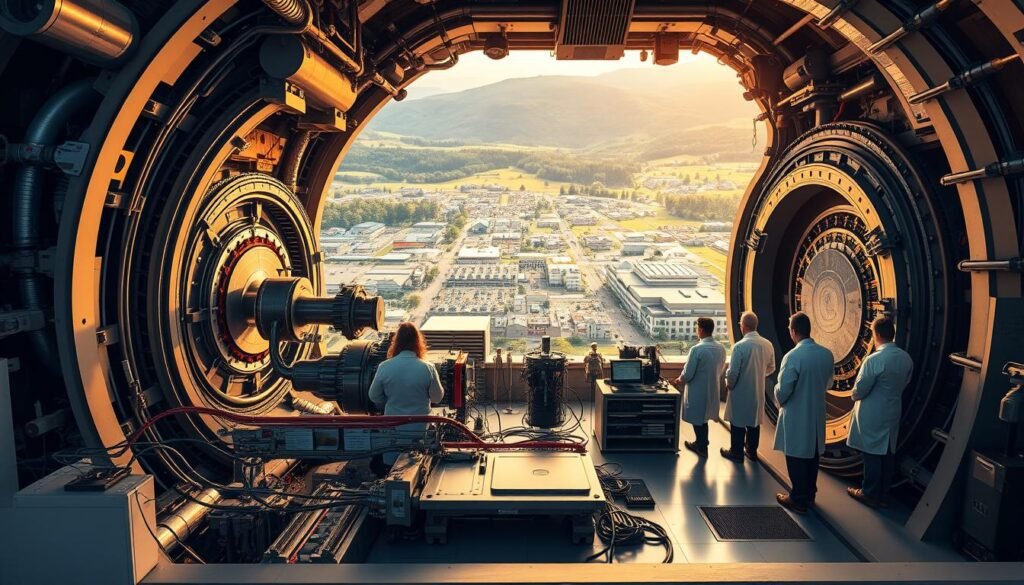
Despite advancements, physics faces challenges in explaining phenomena like quantum gravity and the early universe. Collaborative efforts, such as those at CERN’s Large Hadron Collider, aim to test theoretical predictions through high-energy experiments. "Physicists plan and conduct scientific experiments and studies to test theories and to discover properties of matter and energy," the Bureau of Labor Statistics emphasizes. As technology evolves, their role in addressing global issues—from climate modeling to quantum computing—will remain critical.
Conclusion
While no verified sources mention a "new tachyon theory" related to time travel, the broader field of physics remains pivotal in expanding human understanding. The work of physicists, as documented in primary sources, highlights their enduring impact on science and innovation.
