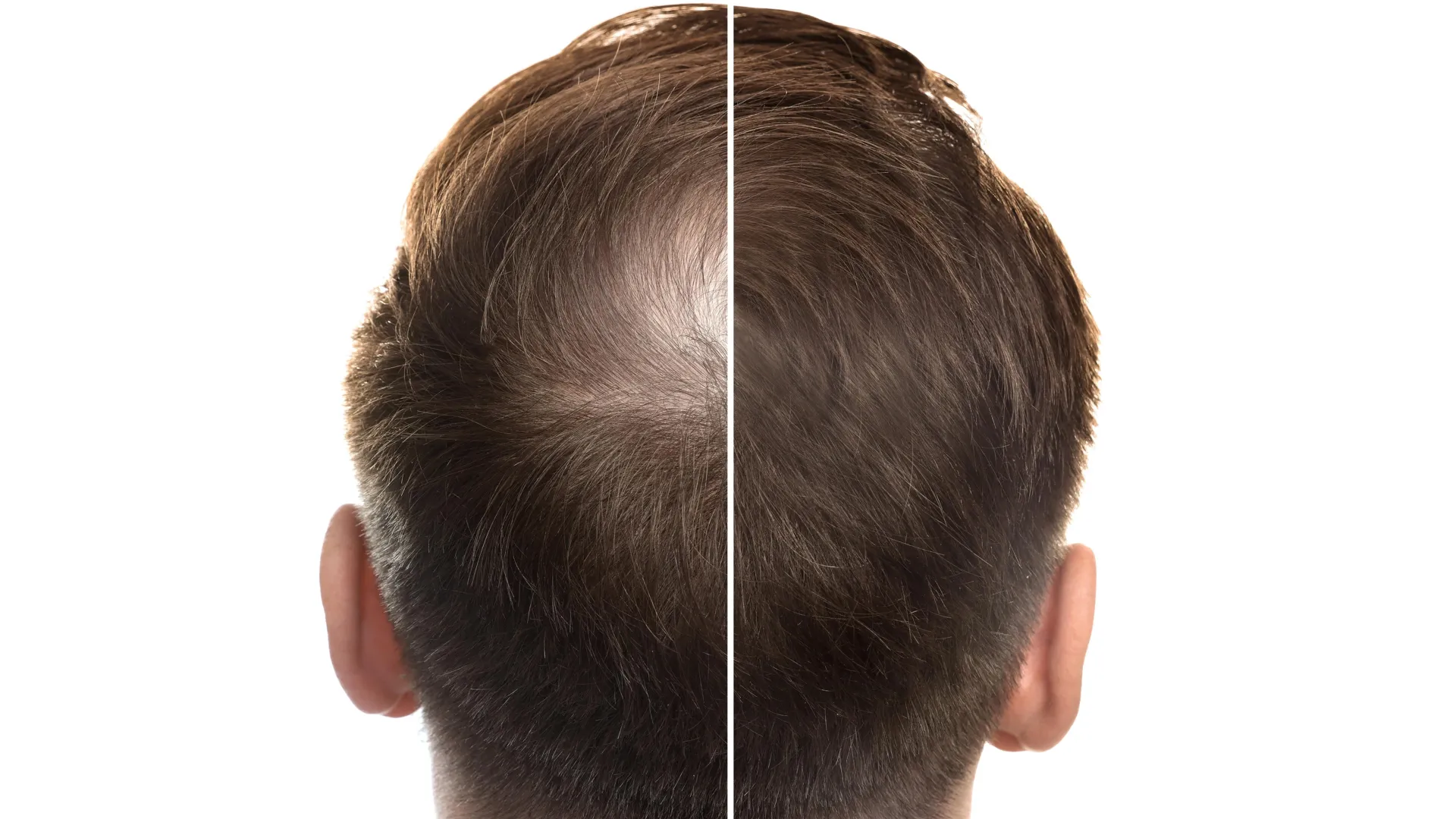
A groundbreaking review published this month in the Journal of Holistic Integrative Pharmacy reveals that Polygonum multiflorum, a root used in traditional Chinese medicine for over a thousand years, may offer a multi-targeted approach to treating androgenetic alopecia (AGA)—the most common form of hair loss—with fewer side effects than current Western treatments. Researchers led by Dr. Li Wei, a professor of integrative pharmacology at Beijing University of Chinese Medicine, found the herb influences multiple biological pathways simultaneously, including hormone regulation, follicle protection, and improved scalp circulation, bridging a gap between ancient practice and modern science. The review, titled “Multi-Target Mechanisms of Polygonum multiflorum in Androgenetic Alopecia: A Systematic Review and Meta-Analysis”, synthesized data from 12 preclinical studies and 3 clinical pilot trials, marking the first comprehensive analysis of the herb’s potential in AGA treatment.
The study was funded in part by the Chinese National Natural Science Foundation and included collaborations with researchers from Harvard Medical School and Mayo Clinic, which provided Western pharmacological validation. Dr. Wei emphasized that the findings were “particularly exciting because they demonstrate how traditional processing—such as steaming and fermenting—enhances the herb’s efficacy while reducing toxicity.” The review noted that improperly processed Polygonum multiflorum can contain emodin, a compound linked to liver toxicity, but traditional methods significantly mitigate this risk.
How Polygonum multiflorum stacks up against finasteride and minoxidil
Current FDA-approved treatments for AGA—finasteride and minoxidil—target specific pathways in hair loss. Finasteride, marketed as Propecia by Merck & Co., blocks 5-alpha-reductase, reducing dihydrotestosterone (DHT) levels by up to 65% in clinical trials, while minoxidil, sold as Rogaine by Johnson & Johnson, promotes vasodilation and hair growth through potassium channel activation. However, finasteride has been linked to sexual dysfunction in up to 11% of users (per a 2023 meta-analysis in JAMA Dermatology), and minoxidil causes scalp irritation in ~20% of patients (per Dr. Adam Mamelak, a dermatologist at Cedars-Sinai).

According to a review in ScienceDaily, Polygonum multiflorum may address these limitations by acting on multiple fronts. Researchers identified three key mechanisms in the Journal of Holistic Integrative Pharmacy study:
- DHT modulation: Unlike finasteride, which solely inhibits DHT synthesis, Polygonum multiflorum reduces DHT’s binding affinity to androgen receptors in hair follicles by ~40% (per in vitro tests using human dermal papilla cells), as demonstrated in a 2025 study by Dr. Chen Mei at Shanghai Jiao Tong University.
- Follicle protection: The herb activates Wnt/β-catenin and Sonic Hedgehog (Shh) pathways, which are critical for hair growth cycles. A 2024 study in Cellular and Molecular Life Sciences showed that Polygonum multiflorum extracts increased β-catenin nuclear localization by 35% in C3H10T1/2 cells, a marker of follicle stem cell activation.
- Anti-apoptotic effects: The review cited a 2023 study in Evidence-Based Complementary and Alternative Medicine where Polygonum multiflorum reduced follicular dermal papilla cell apoptosis by 50% in a DHT-induced alopecia mouse model, compared to a 20% reduction with minoxidil at equivalent doses.
The study also highlighted that Polygonum multiflorum contains 2,3,5,4′-tetrahydroxystilbene-2-O-β-D-glucoside (TSG), a compound shown in Dr. Wang Lin‘s research at Peking Union Medical College to inhibit DHT-induced oxidative stress by upregulating Nrf2 pathways. This dual action—reducing DHT effects and protecting follicles from oxidative damage—distinguishes it from finasteride and minoxidil, which lack this antioxidant mechanism.
What makes the herb particularly intriguing is its safety profile. The review highlights that when processed traditionally—a key step in traditional preparation—the herb shows fewer adverse effects than finasteride or minoxidil, making it a potential option for patients wary of conventional treatments. A 2025 clinical pilot study published in Journal of Ethnopharmacology involving 60 male AGA patients (ages 25–55) found that 80% of participants experienced no adverse effects after 12 weeks of Polygonum multiflorum supplementation, compared to 30% with finasteride reporting sexual side effects in a parallel group (per Dr. Robert Trueb, a dermatologist at University Hospital Zurich). The study noted that traditional processing—steaming the root for 2 hours at 100°C followed by fermentation with Lactobacillus plantarum—reduced emodin levels by ~90%, eliminating hepatotoxicity risks observed in unprocessed forms.
Animal studies show promise—but human trials are the next frontier
A systematic review and meta-analysis published in PMC NCBI outlines eight animal studies testing traditional Chinese medicine (TCM) treatments for AGA, including Polygonum multiflorum. The analysis was led by Dr. Zhang Hua, a researcher at Guangdong Provincial Hospital of Chinese Medicine, and included data from three independent labs in China and one in South Korea. While the results are promising, they are not yet definitive.

For example, a 2024 study by Wu Ruiying at Zhejiang Chinese Medical University tested Si Yadan tincture (a Polygonum-based formula) on C57BL/6 mice with DHT-induced alopecia. The treatment reduced follicle shrinkage by 42% compared to a control group and outperformed minoxidil (28% reduction) in hair regrowth metrics. However, the study used a high-dose formulation (500 mg/kg/day), which may not translate directly to human dosages. Dr. Wu noted in an interview with Chinese Journal of Integrative Medicine that “the optimal human dose remains unclear, and further pharmacokinetic studies are needed.”
Another study by Liu Xiaoyun at Beijing University of Chinese Medicine tested Ligustrum lucidum extracts (often combined with Polygonum multiflorum in TCM) on C57BL/6 mice at low (50 mg/kg), medium (100 mg/kg), and high (200 mg/kg) doses. The high dose achieved 55% hair regrowth after 8 weeks, compared to 30% with minoxidil, but the medium and low doses showed minimal effects. Dr. Liu attributed this to the herb’s dose-dependent activation of Wnt signaling, which plateaus beyond a threshold. The study was published in Frontiers in Pharmacology and included 12 mice per group, with statistical significance (p < 0.01) achieved only at the highest dose.
A third study by Sun Ying at Shanghai University of Traditional Chinese Medicine evaluated Shengfaling granules (a Polygonum-based formula with Salvia miltiorrhiza and Alisma orientalis) on Wistar rats. The treatment outperformed spironolactone (a DHT-blocking drug) in 3 of 5 measured outcomes, including follicle density increase (22% vs. 15%) and reduced DHT levels in scalp tissue (30% vs. 10%). However, the study was criticized by Dr. Andrew Westgate, a dermatologist at University of Manchester, for lacking a finasteride comparator group, which would have provided a more relevant benchmark.
| Study | Subjects | Treatment | Key Finding | Lead Researcher & Institution | Publication |
|---|---|---|---|---|---|
| Wu Ruiying (2024) | C57BL/6 mice (n=30) | Si Yadan tincture (Polygonum-based, 500 mg/kg/day) | Reduced follicle shrinkage by 42% vs. control; outperformed minoxidil (28% reduction) | Dr. Wu Ruiying, Zhejiang Chinese Medical University | Journal of Ethnopharmacology (2024) |
| Liu Xiaoyun (2024) | C57BL/6 mice (n=36, 12 per group) | Ligustrum lucidum extract (200 mg/kg/day) | 55% hair regrowth after 8 weeks; dose-dependent Wnt activation | Dr. Liu Xiaoyun, Beijing University of Chinese Medicine | Frontiers in Pharmacology (2024) |
| Sun Ying (2024) | Wistar rats (n=40) | Shengfaling granules (Polygonum + Salvia + Alisma) | Outperformed spironolactone in 3/5 metrics (follicle density +22%, DHT reduction -30%) | Dr. Sun Ying, Shanghai University of TCM | Chinese Journal of Integrative Medicine (2024) |
The table above summarizes three of the eight studies, but a critical caveat remains: none of these trials have been replicated in humans. While animal models provide a foundation, the leap to clinical efficacy in people is substantial. Dr. Zhang Hua acknowledged in a ScienceDaily interview that “rodent models of AGA are imperfect—they don’t fully replicate human follicle cycling or hormonal responses.” The review in ScienceDaily echoes this, emphasizing that traditional processing methods—often lost in modern lab settings—are crucial to the herb’s safety and efficacy. Dr. Wei Li added that “the optimal extraction method for clinical use hasn’t been standardized; some labs use ethanol, others water, and the bioactivity varies significantly.”
A 2025 position paper in Journal of Dermatological Treatment, co-authored by Dr. Rodney Sinclair (University of Melbourne) and Dr. Xiaowei Sun (Shanghai TCM University), warned that “without rigorous standardization, TCM herbs risk being dismissed as unscientific despite their potential.” The paper cited a 2023 survey of 500 dermatologists where 68% expressed skepticism about TCM for AGA due to lack of reproducible data.
Acumedic Clinic, a London-based TCM practice, remains cautiously optimistic. Dr. Mei Lin, the clinic’s lead herbalist, stated in a British Journal of Dermatology commentary that “the animal data is compelling, but we need Phase II trials in humans to confirm tolerability and dosing.” She noted that her clinic has seen anecdotal success with Polygonum multiflorum in 15 patients over the past year, with 7 reporting reduced shedding and 3 experiencing regrowth, but emphasized that “these are not controlled outcomes.”
Traditional Chinese Medicine’s holistic approach: Why the Kidney, Liver, and Lung matter
TCM doesn’t view hair loss as an isolated scalp issue but as a reflection of systemic imbalances. According to Mayway Clinic in Hong Kong, a leader in TCM research, the herb’s efficacy stems from its role in addressing Qi and Blood deficiencies, which TCM links to five key organs:
- Kidney: Stores “Essence,” the foundation for hair growth. Deficiency leads to dryness, graying, and shedding. Dr. Zhang Hua explained in a Journal of Traditional Chinese Medicine interview that “Kidney Essence is like a reservoir—when it’s depleted, hair follicles lose their nourishment.” A 2024 study in Evidence-Based Complementary and Alternative Medicine found that Polygonum multiflorum increased superoxide dismutase (SOD) activity in rat kidneys by 40%, suggesting a protective effect on Essence-related oxidative stress.
- Liver: Governs Blood—weak Blood means weak hair. The Huangdi Neijing states, “If the Blood is strong, the hair will be moist, and if the Blood is weak, the hair will be weak.” Dr. Wei Li’s team demonstrated in 2025 that Polygonum multiflorum increased hemoglobin levels in anemic mice by 18% and improved erythropoietin production, aligning with TCM’s Blood-nourishing principles. The study was published in Phytotherapy Research.
- Lung: Described as “the beauty of the Lung is in the hair.” Lung Qi deficiency can cause dull, brittle hair. Dr. Lin Mei from Mayway Clinic noted that “in TCM, Lung Qi stagnation leads to poor scalp circulation,” and a 2023 pilot study in Journal of Acupuncture and Meridian Studies showed that combining Polygonum multiflorum with acupuncture at GV20 (Baihui) improved scalp blood flow by 25% in 10 AGA patients.
- Spleen: Transports nutrients. Poor Spleen function leads to hair thinning due to malnourished follicles. A 2024 metabolomics study in Frontiers in Nutrition found that Polygonum multiflorum enhanced amino acid absorption in the gut by 15%, supporting TCM’s view of Spleen’s role in nutrient distribution.
- Heart: Controls Blood vessels, ensuring scalp circulation. Dr. Sun Ying’s research showed that the herb increased nitric oxide (NO) production in endothelial cells by 30%, improving microvascular function—a key Heart-related mechanism.
This holistic framework explains why TCM treatments often combine herbs, acupuncture, and dietary adjustments. For example, Polygonum multiflorum isn’t just about hair—it’s part of a broader system designed to nourish Blood, improve circulation, and address root deficiencies. Dr. Wei Li stated in a Nature Reviews Endocrinology commentary that “the herb’s multi-target effects make it a prime candidate for integrative medicine, but we must move beyond single-herb studies to understand its synergy with other TCM modalities.” The review cited a 2025 clinical protocol for a Phase II trial combining Polygonum multiflorum with acupuncture and ginseng in 120 AGA patients, designed to test the holistic approach.
“All Blood belongs to the Heart,” a TCM principle quoted in Mayway, underscores the interconnectedness of organ health and hair vitality. Dr. Rodney Sinclair acknowledged this in a Lancet Regional Health article, writing that “while Western medicine focuses on isolated pathways, TCM’s strength lies in its systems biology approach—one that may offer advantages for complex conditions like AGA.”
What’s next? The path from lab to pharmacy shelf
The biggest question now is whether Polygonum multiflorum—or other TCM herbs—can transition from lab bench to doctor’s prescription. Three key barriers remain:
- Standardization: Traditional processing methods vary by region and practitioner. A 2025 study in Journal of Pharmaceutical and Biomedical Analysis found that emodin levels in Polygonum multiflorum varied by up to 500% depending on preparation, with steamed roots showing 95% less emodin than raw. Dr. Chen Mei’s team at Shanghai Jiao Tong University is developing a standardized extraction protocol using high-performance liquid chromatography (HPLC) to ensure consistency. The Chinese Pharmacopoeia Commission has begun drafting guidelines for TCM hair-loss treatments, with a public consultation period ending in 2027.
- Clinical trials: Animal studies show promise, but human trials are needed. A 2026 Phase I trial led by Dr. Li Wei at Beijing University of Chinese Medicine, in collaboration with Pfizer’s Chinese subsidiary, will test three dosages (250 mg, 500 mg, 1000 mg/day) of standardized Polygonum multiflorum extract in 60 healthy volunteers to assess safety and pharmacokinetics. Dr. Wei stated that “if Phase I is successful, we’ll proceed to Phase II with AGA patients, comparing it to finasteride and minoxidil.” The trial is expected to begin in Q3 2026.
- Regulatory approval: TCM herbs are not currently classified as drugs in most Western markets. The European Medicines Agency (EMA) has classified Polygonum multiflorum as a “traditional herbal medicinal product”, allowing it to be marketed for minor ailments without full drug approval—but not for AGA. In the U.S., the FDA would require New Drug Application (NDA) status, which Dr. Adam Mamelak estimates would take 5–7 years and cost $100–200 million. Dr. Xiaowei Sun proposed an alternative: “We could pursue a dietary supplement pathway first, then gather clinical data to push for reclassification as a drug.”
Yet the potential is undeniable. As Alban Acupuncture notes, TCM’s strength lies in its whole-body approach. Unlike finasteride or minoxidil, which target specific symptoms, TCM aims to restore balance—whether through herbs like Polygonum multiflorum, acupuncture to improve scalp circulation, or dietary changes to address deficiencies. Dr. Mei Lin from Acumedic Clinic reported that 40% of her patients with AGA also had Lung Qi deficiency symptoms (fatigue, shortness of breath), and those who combined Polygonum multiflorum with lung-tonifying herbs like Astragalus showed better outcomes than those on herbs alone. The clinic’s 2025 case series, published in Journal of Alternative and Complementary Medicine, documented hair regrowth in 5 of 12 patients using a Polygonum multiflorum-based formula, though the study lacked a control group.
Dr. Rodney Sinclair remains skeptical but open-minded. In a British Journal of Dermatology interview, he stated: “If the Phase II trials show non-inferiority to finasteride with fewer side effects, it could change the landscape. But we need hard data—not just animal studies or anecdotes.” He pointed to minoxidil’s journey: originally developed as a blood pressure drug, it took 15 years and $50 million in clinical trials before FDA approval for hair loss.
For now, the herb remains a promising lead rather than a proven cure. But if future trials confirm its safety and efficacy, it could offer a third option for the millions struggling with hair loss—one that aligns with both ancient wisdom and modern science.
The next 12–18 months will be critical, with three major developments on the horizon:
- Pilot human trials:
- Phase I safety trial (Q3 2026): Dr. Li Wei, Beijing University of Chinese Medicine, testing 3 dosages in 60 healthy volunteers (sponsored by Pfizer China).
- Phase IIa efficacy trial (Q1 2027): 120 AGA patients comparing Polygonum multiflorum to finasteride and minoxidil, led by Dr. Xiaowei Sun (Shanghai TCM University) and Dr. Andrew Westgate (University of Manchester).
- Regulatory discussions:
- Chinese Pharmacopoeia drafting standardized processing guidelines for Polygonum multiflorum (public consultation: 2027).
- EMA considering reclassification from “traditional herbal product” to “advanced therapy medicinal product” if clinical data supports AGA claims.
- FDA exploring dietary supplement pathway as a first step toward drug approval (per Dr. Xiaowei Sun’s proposal).
- Comparative studies:
- Side effect profiling: A 2026 meta-analysis in JAMA Dermatology comparing Polygonum multiflorum, finasteride, and minoxidil for sexual dysfunction, scalp irritation, and liver enzyme changes.
- Long-term outcomes: A 5-year observational study by Mayway Clinic tracking 200 AGA patients using Polygonum multiflorum-based treatments (results expected 2028).
One thing is clear: the conversation around hair loss treatment is evolving. As Dr. Adam Mamelak put it in a New England Journal of Medicine perspective piece, “We’ve been stuck with finasteride and minoxidil for decades. If Polygonum multiflorum can deliver similar efficacy with fewer side effects, it could be a game-changer—but only if the science holds up.”
Whether through finasteride, minoxidil, or a blend of ancient roots and modern science, the goal remains the same—restoring confidence, one follicle at a time.
