
Mercury is at its brightest and farthest from the sun in the evening sky on June 15, 2026, offering the best chance this year to spot the elusive planet before it disappears back into solar glare by mid-July. Astronomers and observatories worldwide are urging skywatchers to act quickly—visibility will decline sharply after this peak elongation, with Mercury set to vanish from view by early July.
Why This Week’s Elongation Is the Best Chance of 2026
Mercury’s orbit keeps it perpetually close to the sun, making it one of the hardest planets to observe. But on June 15, it reaches its greatest eastern elongation—the point where it appears farthest from the sun in the evening sky. According to Astronomy Magazine, this alignment places Mercury 25 degrees from the sun (a figure that varies slightly across sources, with Focus Taiwan reporting 24.5 degrees), making it visible for about an hour after sunset before it sinks below the horizon.
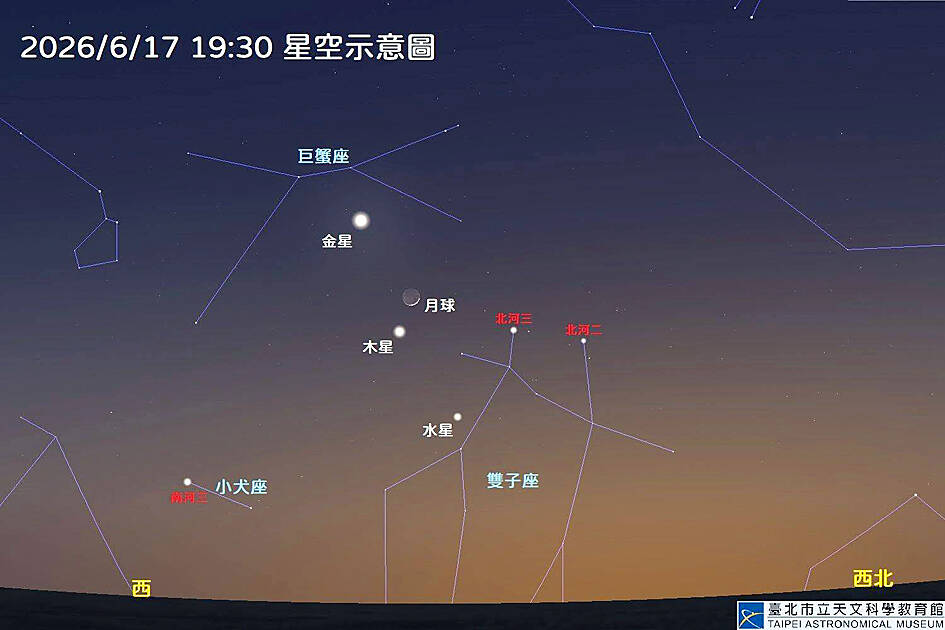
This isn’t just a technical detail—it’s the difference between success and failure for amateur astronomers. Mercury typically hugs the horizon, lost in twilight. But this week, it climbs to 22 degrees above the western horizon at sunset, according to Taipei Astronomical Museum, high enough to be visible to the naked eye in clear conditions. Binoculars or a small telescope will enhance the view, revealing Mercury’s 38% illuminated disk (per Astronomy Magazine), a stark contrast to Venus’s 75% illumination.
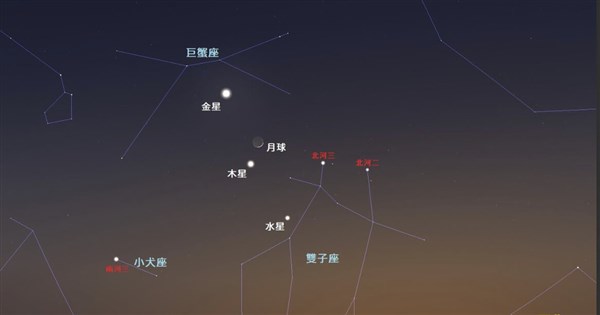
The timing couldn’t be better. Mercury’s elongation coincides with a thin crescent moon (just 2% illuminated, per Astronomy Magazine) and the bright duo of Jupiter and Venus, creating a celestial lineup that even casual stargazers can’t miss. The Taipei Astronomical Museum describes the arrangement as a vertical alignment in the western sky: Mercury at the bottom, followed by Jupiter, the moon, and Venus at the top. This configuration makes it easier to locate Mercury by tracing upward from the brighter planets.
What to Expect: A Rare Alignment of Planets and Moon
If you’ve ever struggled to find Mercury, this week’s alignment is a gift. The planet will be visible for roughly 90 minutes after sunset—longer than usual—before it drops below the horizon around 10 p.m. local time, per Astronomy Magazine. Jupiter and Venus, meanwhile, linger until nearly 11 p.m., serving as reliable guides.
Through a telescope, Mercury’s disk spans just 8 arcseconds, dwarfed by Jupiter’s 32 arcseconds and Venus’s 14 arcseconds (per Astronomy Magazine). But its proximity to the sun means it’s often overshadowed. This week, however, its magnitude 0.5 brightness (brighter than most stars) makes it stand out—especially when paired with the moon’s crescent and the gas giants’ glow.
The Taipei Astronomical Museum recommends viewing between 7 p.m. and 8:30 p.m. local time from a spot with an unobstructed western horizon. Urban skywatchers may need to escape light pollution to see Mercury clearly, though its brightness this week should help. The museum’s researcher, Wu Tien-yen, warns that unstable weather could disrupt visibility, so clear skies are critical.
Why This Matters: Mercury’s Fleeting Visibility
Mercury’s greatest elongation isn’t just a fleeting astronomical event—it’s a reminder of how ephemeral planetary visibility can be. After June 15, Mercury’s distance from the sun will shrink rapidly, dragging it closer to the horizon each evening. By July 12, it will reach inferior solar conjunction, passing between Earth and the sun before reemerging as a morning object in August. This transition marks the end of its evening apparition for 2026.
Space.com frames this as a once-a-year opportunity. Most years, Mercury’s elongations are less favorable, with the planet appearing dimmer or closer to the sun. This year’s alignment is one of the best for northern hemisphere observers, offering a rare chance to see all four objects—Mercury, Jupiter, Venus, and the moon—in a single glance.
The contrast between Mercury’s 38% illumination and Venus’s 75% (per Astronomy Magazine) highlights how planetary phases change with distance. Mercury’s rapid orbit means its phases shift dramatically over weeks, unlike slower-moving outer planets. This week’s crescent phase is a snapshot of its current position—one that won’t last.
What Happens Next: Mercury’s Vanishing Act
After June 15, Mercury’s visibility will plummet. Each night, it will set earlier and appear lower in the sky, eventually disappearing into the sun’s glare by early July. Space.com notes that by July 12, Mercury will be inferior to the sun, passing between Earth and our star before emerging in the morning sky by late July or August.
For those who miss this week’s window, the next best opportunity won’t come until September 2026, when Mercury reaches its greatest western elongation in the morning sky. But even then, visibility will depend on timing and weather. This week’s alignment is a limited-time event—one that astronomers urge skywatchers not to squander.
The Taipei Astronomical Museum’s warning about unstable weather underscores the urgency. Cloud cover or light pollution can erase Mercury’s visibility in an instant. If skies are clear, this is the week to look up—before the planet slips back into the sun’s embrace for months.
How to Maximize Your Viewing Experience
If you’re planning to observe Mercury, timing and location matter. The Taipei Astronomical Museum advises viewing between 7 p.m. and 8:30 p.m. local time, when the sky is dark enough but Mercury is still above the horizon. A western horizon free of obstructions—trees, buildings, or hills—is essential. Urban observers may need to travel to darker skies to avoid light pollution.
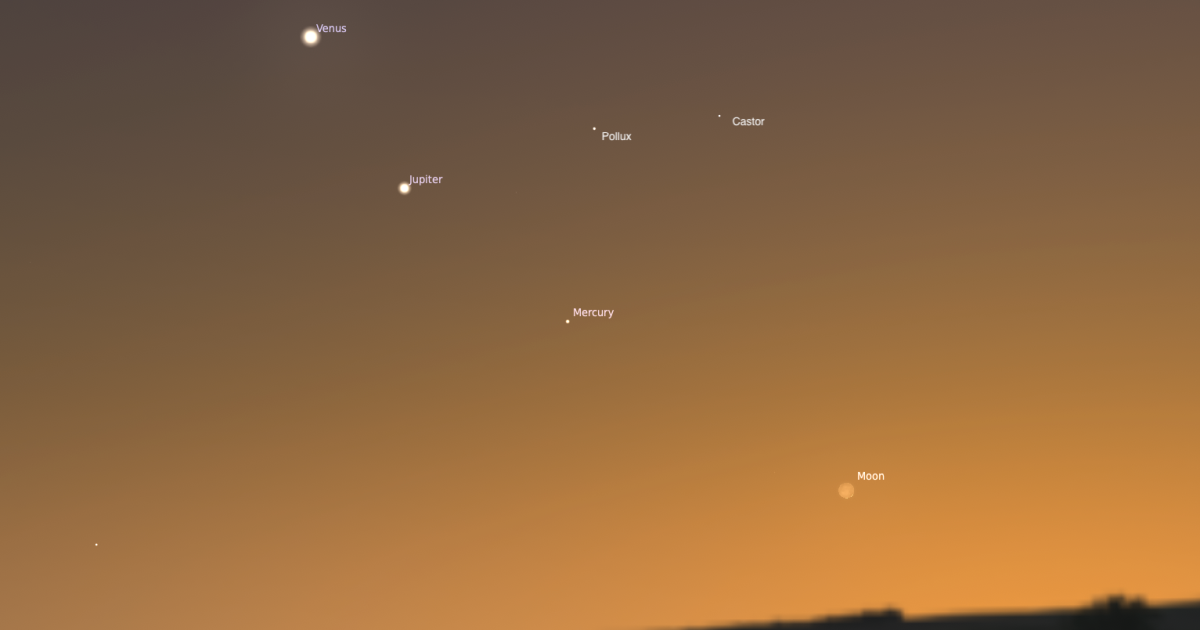
For those without telescopes, binoculars will enhance Mercury’s visibility, though it should be visible to the naked eye under ideal conditions. Space.com suggests using Jupiter and Venus as reference points: Mercury will appear below them, near the crescent moon. The vertical alignment makes it easier to spot than during other apparitions.
Photographers can capture the scene with a tripod-mounted camera and a wide-angle lens. A telephoto lens will isolate Mercury, but the planet’s small size (just 8 arcseconds) means high magnification is needed for detail. Space.com recommends using a DSLR with manual focus for sharp images of Mercury’s crescent phase.
If clouds roll in, don’t despair—Mercury’s next elongation won’t be until September. But this week’s alignment is a rare convergence of visibility, brightness, and celestial companionship. For now, the clock is ticking.
For real-time updates on Mercury’s visibility, check Astronomy Magazine’s Sky This Week column or the Taipei Astronomical Museum’s recommendations.
Find more reporting in our Technology section.
