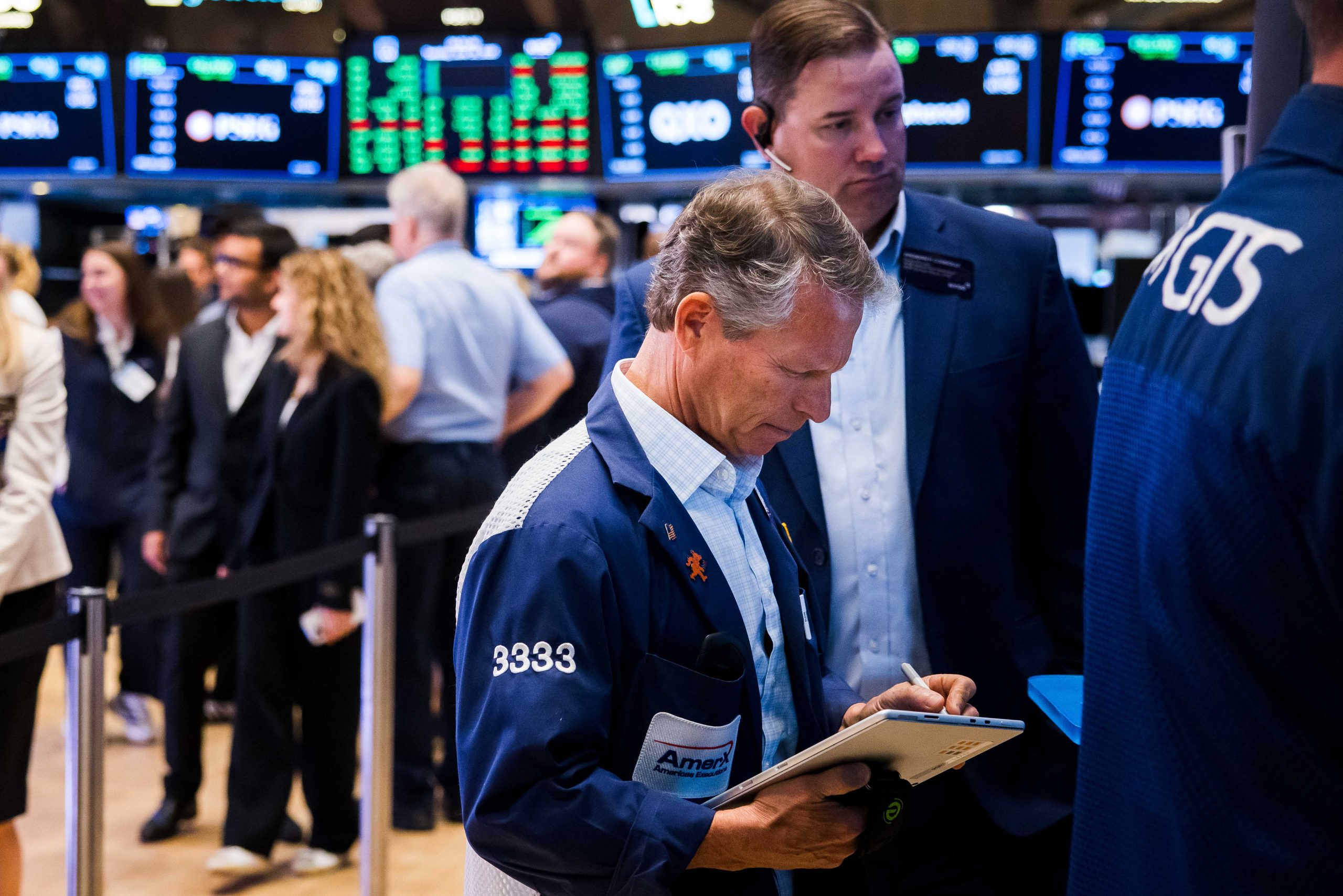
Wall Street’s mixed performance Tuesday capped a volatile week as the Federal Reserve prepared to hold its first policy meeting under new leadership, while a fragile U.S.-Iran deal sent oil prices tumbling and SpaceX shares surged past $200 for the first time since its IPO. The Dow Jones Industrial Average hit a record close, but the S&P 500 and Nasdaq slipped amid skepticism over whether Iran would fully reopen the Strait of Hormuz by Friday’s signing ceremony in Switzerland.
Why the Dow hit a record while the S&P 500 and Nasdaq fell
The Dow’s record close—up 0.64% to 51,999.67—contrasted sharply with the S&P 500’s 0.6% drop and the Nasdaq’s 1.1% slide, reflecting a divergence in investor sentiment. The blue-chip index’s gains were driven by defensive sectors like industrials and financials, which rallied on hopes that easing geopolitical tensions in the Strait of Hormuz would stabilize oil prices and cool inflation pressures. Meanwhile, tech stocks—heavyweights in the S&P 500 and Nasdaq—faced selling pressure as traders questioned whether the U.S.-Iran agreement would deliver immediate relief.

According to Yahoo Finance, the Dow’s outperformance underscores a broader rotation into value stocks as investors bet the Fed may pivot toward rate cuts later this year. The Nasdaq’s underperformance, however, signals lingering caution about whether the Iran deal will hold—and whether oil prices, which surged during the conflict, will sustain their recent decline.
How SpaceX’s stock rally reflects the broader market’s Iran bet
SpaceX shares closed Tuesday at a 4% gain, extending their post-IPO rally to nearly 50% above their $135 debut price. The stock’s surge mirrors the broader market’s reaction to the U.S.-Iran deal: as traders anticipate lower oil prices, energy-linked stocks like SpaceX—whose Starlink satellite network competes with traditional telecom infrastructure—have become proxies for the geopolitical risk trade.
Elon Musk’s company now trades within striking distance of Amazon in market value, a milestone that CNBC reported reflects both SpaceX’s operational momentum and the market’s growing appetite for high-growth tech stocks tied to geopolitical tailwinds. Analysts like Scott Chronert, head of U.S. equity strategy at Citi Research, note that SpaceX’s gains are part of a broader “broadening playbook” in equities, where investors are rotating into sectors that benefit from easing tensions.

“I think we’re in pretty good shape here for a solid finish to the quarter, and then, as we go into the second half, color us constructive.”
For more on this story, see Micron Hits $1 Trillion Milestone as Tech Rally Pushes Nasdaq to Record Highs.
—Scott Chronert, head of U.S.
Chronert’s optimism hinges on two key assumptions: first, that the Iran deal will stick and oil prices will stay depressed, and second, that the Fed will respond by easing monetary policy. Both bets are unproven. While Pakistani Prime Minister Shehbaz Sharif confirmed that military operations had ceased and a signing ceremony is set for Friday in Switzerland, Yahoo Finance reports that U.S. officials have warned the Strait of Hormuz’s full reopening could take months—and that oil shipments may not ramp up as quickly as markets hope.
What the Fed’s rate decision means for markets—and why traders are watching the ‘dot plot’
The Federal Reserve’s June meeting, its first under new Chairman Kevin Warsh, is widely expected to keep interest rates unchanged at 3.5%–3.75%. But the real focus is on the “dot plot”—the quarterly update of where policymakers expect rates to head. While most analysts anticipate no immediate hikes, CNBC reports that traders are parsing signals about whether Warsh will signal a shift toward cuts later this year.
The timing is delicate. Inflation remains sticky, with energy prices still elevated despite the Iran deal’s potential to ease supply constraints. The Bank of Japan’s decision Tuesday to raise its benchmark rate to a 31-year high—its first hike in over a decade—underscores the global central bank dilemma: how to balance cooling inflation without stifling growth in a world where geopolitical risks still loom.
This follows our earlier report, Nasdaq Hits New High on AI Stocks, Dollar Tree Surges as Markets Defy Iran Tensions.
“With oil prices beginning to come off here as we get closer to an Iran conflict resolution, I think we can see the Fed moving to the sidelines.”
Chronert’s comment points to a critical feedback loop: if the Iran deal holds and oil prices stay low, the Fed may have more room to ease. But if tensions flare again—or if the Strait of Hormuz’s reopening proves slower than expected—markets could reverse course quickly. The Fed’s decision Wednesday will be the first test of Warsh’s leadership, and his handling of the dot plot could shape investor expectations for the rest of 2026.
What happens next: Three scenarios for the market’s next move
The next 30 days will hinge on three variables: the Iran deal’s durability, the Fed’s policy signals, and whether corporate earnings can sustain the rally.

- Scenario 1: The deal holds, oil stays low, Fed cuts — If Iran fully reopens the Strait of Hormuz by Friday and oil prices drop below $70 a barrel, the Fed may signal rate cuts as early as September. Tech stocks could rally, and the Nasdaq could retest its all-time highs.
- Scenario 2: Deal stalls, oil spikes, Fed stays hawkish — If tensions persist or the Strait’s reopening is delayed, oil prices could rebound, forcing the Fed to keep rates high. The Dow’s defensive sectors would outperform, but growth stocks like SpaceX could face headwinds.
- Scenario 3: Mixed signals, earnings drive the show — If the Fed holds rates steady but hints at future cuts, and corporate earnings (like those from CarMax and Jabil, due Wednesday) beat expectations, the market could grind higher in a narrow range.
The wild card remains SpaceX. Its stock has already priced in much of the Iran optimism, meaning any further upside may depend on execution—particularly its Starlink expansion and potential military contracts. If the company can deliver on its guidance, its rally could extend beyond the geopolitical trade.
Read also: U.S.-Iran talks progress spark Dow futures jump, oil plunge.
Why this matters: The Fed’s first test under Warsh
Wednesday’s Fed meeting is more than a routine decision—it’s a referendum on Kevin Warsh’s ability to navigate a divided central bank. With inflation still above target and growth slowing, Warsh faces pressure to balance markets’ hopes for easing with the need to avoid reigniting price pressures. His first dot plot could reveal whether the Fed is truly pivoting—or just pausing.
For investors, the stakes are clear: the Dow’s record close may be a fleeting moment. If the Iran deal unravels or the Fed stays hawkish, the rally could reverse quickly. But if both developments play out as hoped, the market’s broadening rotation could set the stage for a stronger second half—one where SpaceX, AI infrastructure, and defensive sectors lead the way.
The next 72 hours will tell the tale.
Find more reporting in our Business section.
