
General Motors has unveiled the 2027 Chevrolet Silverado 1500 with two new V8 engines, a redesigned interior, and a simplified seven-trim lineup, positioning it as the most powerful naturally aspirated truck in its class as Ford’s F-150 sales decline due to supply chain constraints.
Why the 2027 Silverado matters now
The 2027 Silverado arrives at a pivotal moment for the full-size truck segment. While Ford’s F-150 remains the best-selling vehicle in America, its sales have plummeted 15.1% year-over-year through May 2026, dragged down by aluminum supply shortages stemming from fires at Novelis’ plant in late 2025. GM’s timing couldn’t be more strategic: by introducing a truck with two new V8 engines, including a 6.6-liter naturally aspirated powerplant that Motor1 reports will be the most powerful in its class, Chevrolet is directly challenging Ford’s dominance. The move also signals GM’s commitment to keeping V8s alive in an era where electrification looms large—something Ford has largely abandoned in its truck lineup.

Chevrolet’s decision to bring back the 5.7-liter and 6.6-liter V8s—displacements that evoke the brand’s muscle-car heritage—isn’t just nostalgia. According to The Drive, these engines represent a new generation of small-block V8s built on a common platform (“same block; bigger holes,” as GM engineer Mark Dickens put it). The 6.6-liter, in particular, is designed to deliver 535 horsepower, though Chevrolet hasn’t yet confirmed whether it will surpass Ford’s 5.0-liter EcoBoost V8 in the F-150. What Yahoo Finance highlights is that these engines are being built at GM’s Flint, Tonawanda, and St. Catharines plants, ensuring domestic production—a selling point for truck buyers wary of overseas manufacturing.
The engines: Power, legacy, and a gamble on the future
The 2027 Silverado’s powertrain lineup is a study in contrasts. On one hand, Chevrolet is doubling down on gasoline engines at a time when automakers are rushing toward electrification. The truck will offer four engine options: the turbocharged 2.7-liter four-cylinder, the Duramax 3.0-liter turbo-diesel, and the two new V8s. The 5.7-liter and 6.6-liter V8s, Motor1 notes, are designed to be more powerful and fuel-efficient than their predecessors—though GM hasn’t released exact horsepower or torque figures, likely to avoid direct comparisons with rivals.
Yet the engines aren’t just about brute force. As Silverado Chief Engineer Mark Dickens told reporters, “We pushed these engines through an extensive testing and validation process to make sure they deliver the durability, capability and dependability Silverado customers expect.” The emphasis on real-world performance—from towing to daily wear and tear—is a direct response to Ford’s recent struggles with quality and reliability in its F-150 lineup. While Ford has pivoted to aluminum bodies to save weight, Chevrolet is betting that traditional truck toughness will resonate with buyers still skeptical of lightweight materials.
There’s a symbolic weight to these engines, too. The 6.6-liter V8, The Drive points out, is essentially a 409 cubic-inch motor—a displacement that harks back to Chevrolet’s legendary small-blocks of the 1960s and ’70s. The 5.7-liter, meanwhile, replaces the aging 5.3-liter V8 that’s been in production since the 1990s. GM isn’t just selling horsepower; it’s selling heritage. “From tough towing scenarios to the daily demands our customers put on their trucks, these next-generation V8s were engineered and proven to perform in the real world,” Dickens said. The messaging is deliberate: Chevrolet is positioning these engines as the last word in gasoline-powered truck performance before the inevitable shift to electrification.
Design and tech: A digital cockpit for a mechanical beast
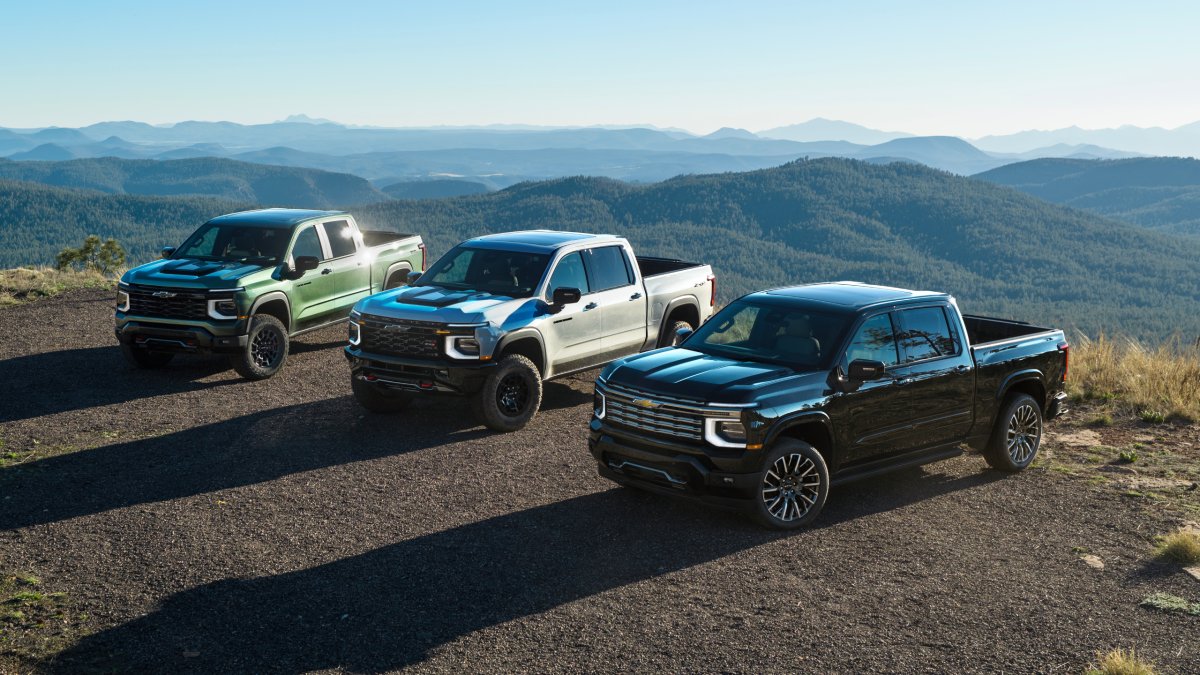
The 2027 Silverado’s exterior gets a bold, angular redesign that Motor1 describes as “new yet familiar.” LED headlights and taillights, a revamped front fascia, and more pronounced wheel openings give the truck a modern, aggressive look—one that still nods to its working-class roots. Inside, however, the updates are more dramatic. Every Silverado now comes standard with a 12.2-inch driver display and a 16.3-inch infotainment screen, while the top trims—ZR2 and High Country—add an 11.5-inch passenger display, a head-up display, and a rear camera mirror. The result? More than 60 inches of digital screens in the cabin, a first for Chevrolet.
The interior upgrades are a direct response to Ford’s tech advantages. The F-150 has long led the segment in digital features, but Chevrolet is closing the gap with Super Cruise hands-free driving now available across the lineup. The High Country trim, positioned as the flagship, introduces a panoramic sunroof, real wood trim, and a Multi-Flex center console that can open into a flat workspace—a nod to the growing demand for truck-based mobile offices.
Trims and pricing: Who gets what, and for how much?
Chevrolet is simplifying its Silverado lineup to seven trims, a move that Yahoo Finance suggests is aimed at reducing complexity for dealers and buyers alike.

- Work Truck: The base model, designed for commercial use.
- Custom: Mid-range trim with upgraded features.
- Silverado (formerly LT): A step up with more tech and comfort.
- High Country: The top trim, with premium interior materials and a panoramic sunroof.
- Custom Trail Boss: Off-road focused, with a 2.0-inch suspension lift and 34-inch tires.
- Trail Boss: Adds unique styling and Torch Red-trimmed seatbelts.
- ZR2: The off-road kingpin, with 35-inch tires, E-lockers, and Multimatic DSSV dampers. It also features forged carbon-fiber trim, Chevrolet’s first use of the material.
- ZR2 Bison: A collaboration with AEV, offering distinct bumpers, rocker protection, and beadlock-capable wheels.
Pricing details remain under wraps, but Motor1 confirms that the 2026 Silverado Work Truck starts at $39,695, including a $2,795 destination charge. The ZR2 starts at $74,990, positioning it as a premium off-road option. With Ford’s F-150 facing supply constraints, Chevrolet’s pricing strategy could be critical—especially if the Silverado’s new V8s deliver the performance buyers crave.
What happens next: Sales, supply, and the electric future
The 2027 Silverado goes on sale at the end of 2026, just as Ford’s F-150 struggles to recover from its supply chain woes. GM’s move is a calculated risk: if the Silverado’s new engines and tech resonate with buyers, it could accelerate Ford’s sales decline. But the bigger question is whether these V8s represent the last gasp of gasoline trucks or a transition phase before Chevrolet fully embraces electrification.
Chevrolet has already signaled its electric ambitions with the upcoming Silverado EV, slated for a 2027 launch (though likely pushed to 2028). The gas-powered Silverado, then, may be the final hurrah for traditional truck buyers before the shift to electric. For now, GM is betting that performance, heritage, and durability will keep the Silverado relevant—even as the industry hurtles toward a battery-powered future.
One thing is certain: the 2027 Silverado isn’t just another truck. It’s a statement—one that could redefine the segment if it delivers on its promises. With Ford’s F-150 sales slipping and Tesla’s Cybertruck still years away from mass production, Chevrolet has a window of opportunity. Whether it seizes it depends on whether these new V8s—and the truck they power—can outperform, outlast, and out-sell the competition.
Sources: Motor1, Yahoo Finance, <a href="https://www.thedrive.
<!– /wp:paragraph Ultimately, the success of this ambitious venture rests on Chevrolet's ability to maintain its market dominance while navigating the complex transition toward a more sustainable and electrified automotive landscape.Find more reporting in our Business section.
