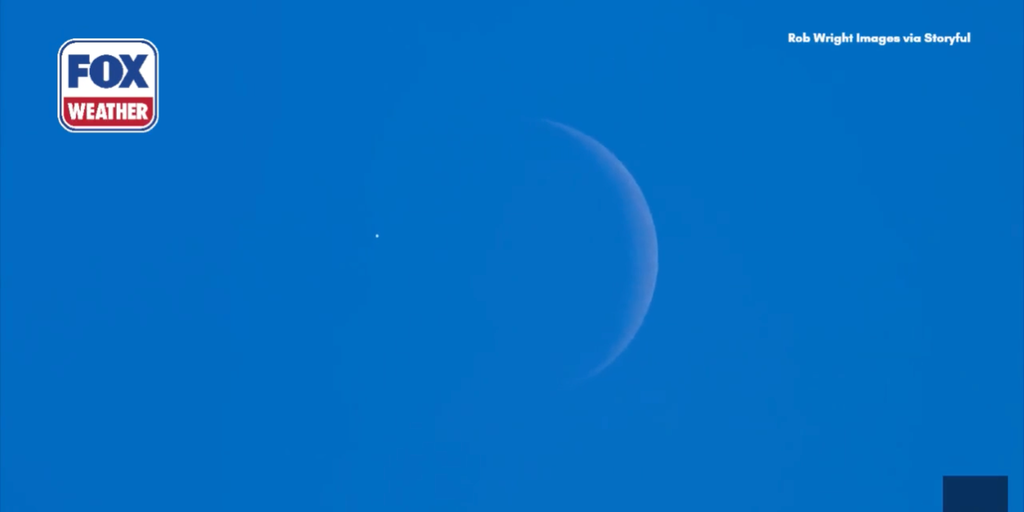
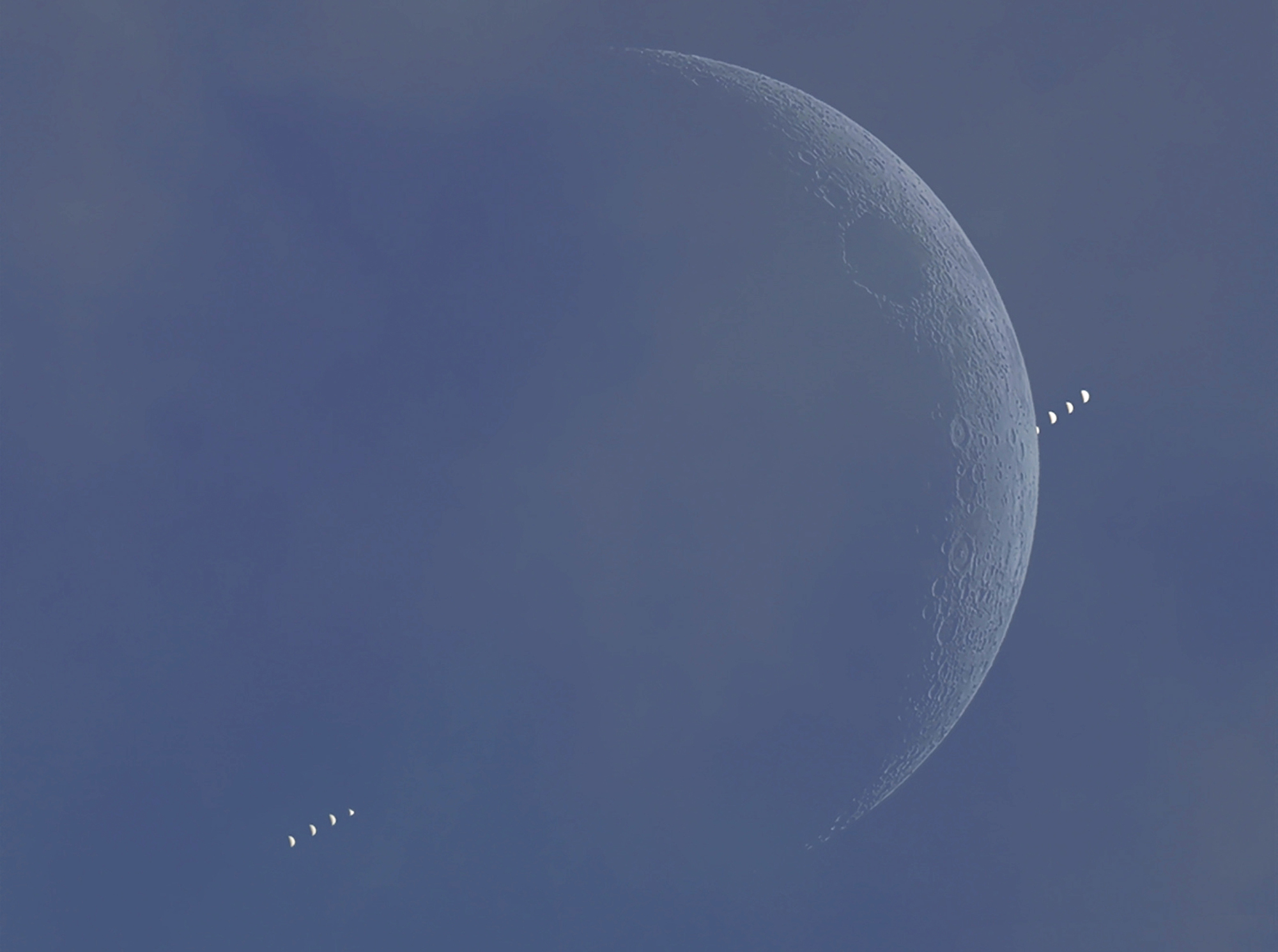
“The moon obscured Venus in a rare daytime lunar occultation on 17 June 2026, according to Fox Weather, while the BBC Sky at Night Magazine documented the planet’s evening conjunction with the crescent Moon across multiple continents.”
Timing Discrepancies: Daylight vs. Dusk Observations
A lunar occultation of Venus occurred on 17 June 2026, but accounts differ on its visibility window. Fox Weather reported the event as a “daytime” phenomenon, noting that the moon passed directly in front of Venus, temporarily hiding the planet from view. This aligns with the agency’s description of the event being observable “across much of North America, southern Canada, northern Mexico, and parts of the Caribbean and South America” during daylight hours.
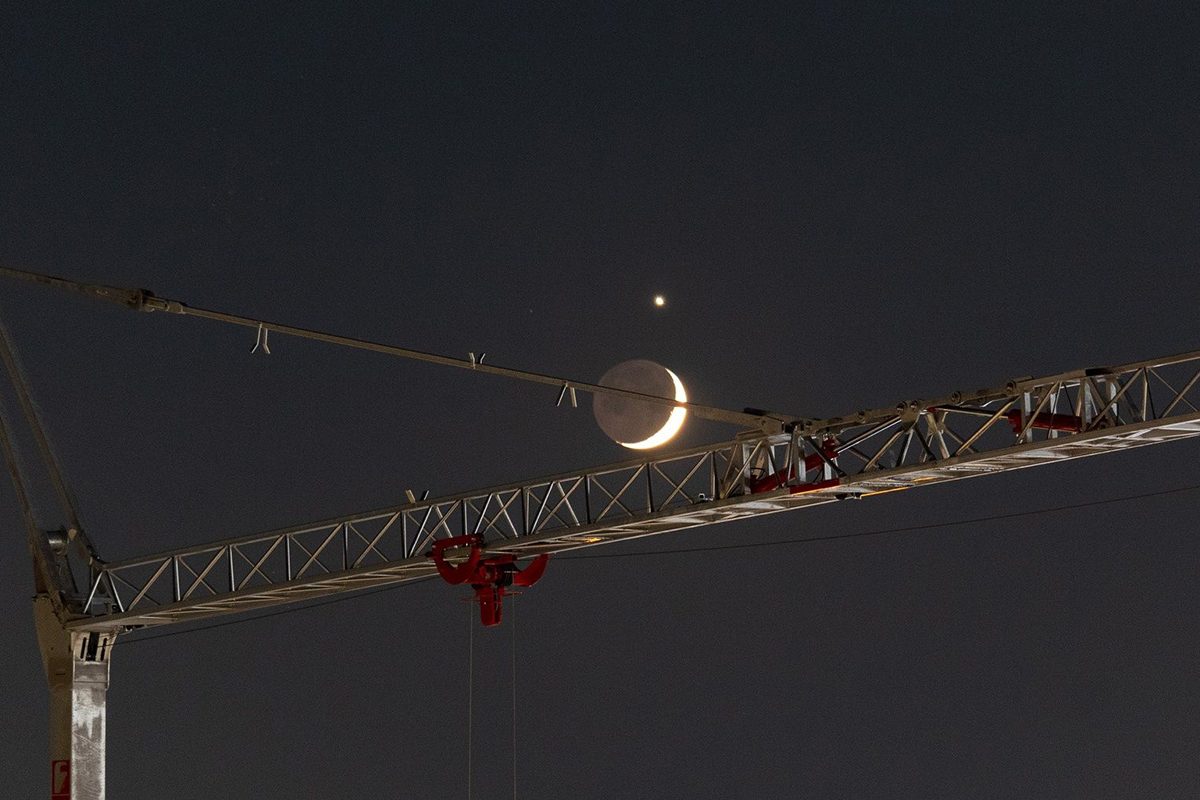
In contrast, the BBC Sky at Night Magazine highlighted the conjunction as an “evening” spectacle, with Venus and the crescent Moon visible just after sunset in the western sky. Photographers across Europe, including in the Netherlands, Italy, and the UK, captured the event, emphasizing its visibility in the early evening. The discrepancy likely stems from geographic location: observers in North America experienced the occultation during the day, while those in Europe and parts of the Americas saw it at dusk.
Scientific Context: Why Lunar Occultations Are Rare

Lunar occultations occur when the moon passes between Earth and a celestial object, blocking its view. While these events are common for stars, they are rarer for bright planets like Venus, Mars, Jupiter, or Saturn. The moon’s apparent size in the sky—despite being 240 times closer to Earth than Venus—allows it to fully obscure the planet during an occultation. Fox Weather explained that the moon’s eastward movement at 2,300 mph relative to background stars enables such alignments.
Global Photography: A Tapestry of Perspectives
The BBC article featured images from photographers worldwide, showcasing the event’s visual diversity. Arash Sefidgaran in London captured Venus and the crescent Moon with a Nikon Z6II camera, while Helene Saskia Bazuin used an iPhone to document the scene in the Netherlands. In Italy, Paolo Barrella photographed the conjunction from Scandicci, and Giovanni Passalacqua included Mercury and Jupiter in his shot from Sicily. These images highlight the event’s accessibility to amateur astronomers and the global enthusiasm it generated.
Technical Details: Equipment and Exposure Settings
Photographers employed a range of equipment, from DSLR cameras to smartphones. James M from Kent, UK, used a Panasonic DMC-TZ60 camera with ISO 1600, f/6.4, and a 1/6s exposure to capture the “tiny white dot” of Eta Cancri above the moon. Marco Meniero in Rome used a FUJIFILM GFX 100S II camera with a 2s exposure, blending two focused shots. These technical choices reflect the adaptability of astrophotography, with some photographers prioritizing star details and others focusing on planetary alignment.
Historical and Cultural Significance
The 17 June 2026 event followed a close Venus-Jupiter conjunction on 9 June, marking Venus as a standout planet in June’s sky. The BBC noted that Venus, often called the “Evening Star,” has been a consistent celestial highlight, visible just after sunset. This pattern underscores the planet’s prominence in both scientific observation and cultural narratives, from ancient navigation to modern astronomy.
Future Occurrences: What’s Next?
Lunar occultations of Venus are periodic but infrequent. Fox Weather mentioned that the moon’s orbital path and the planet’s position relative to Earth create these alignments roughly every few years. Astronomers anticipate similar events in the coming decades, though their visibility will depend on geographic location and weather conditions. The 2026 occurrence, however, stands out for its dual visibility in daylight and dusk across multiple regions.
Implications for Astronomy and Public Engagement
The event demonstrated the power of citizen science and global collaboration. The BBC’s call for reader-submitted images emphasized the role of amateur astronomers in documenting celestial phenomena. Meanwhile, Fox Weather’s timelapse footage provided a dynamic record of the occultation, illustrating how technology enhances public engagement with astronomy.
Scientific and Educational Value
Such events offer educational opportunities, allowing educators to explain lunar motion, planetary visibility, and the scale of the solar system. The 2026 occultation, with its dual visibility, served as a practical example of how celestial mechanics operate. Researchers may also use the data to refine models of lunar and planetary orbits, though no specific studies were cited in the sources.
Conclusion: A Celestial Moment for All
The 17 June 2026 lunar occultation of Venus bridged scientific curiosity and public wonder. Whether observed in daylight or dusk, the event underscored the moon’s dynamic role in our solar system and the shared human fascination with the cosmos. As astronomers and enthusiasts alike reflect on the occurrences, the synthesis of global perspectives—from timelapse videos to smartphone photos—shows how celestial events unite diverse audiences.
“According to Fox Weather, the moon obscured Venus in a rare daytime lunar occultation on 17 June 2026.”
“Photographers worldwide documented the event, with the BBC Sky at Night Magazine highlighting images from Europe, Italy, and the UK.”
“The moon’s eastward motion at 2,300 mph enables periodic occultations of planets like Venus.”
“Amateur astronomers contributed to the documentation, showcasing the event’s accessibility through varied equipment and techniques.”
“Future occultations of Venus are expected, though their visibility will depend on geographic and meteorological factors.”
Find more reporting in our Technology section.
