
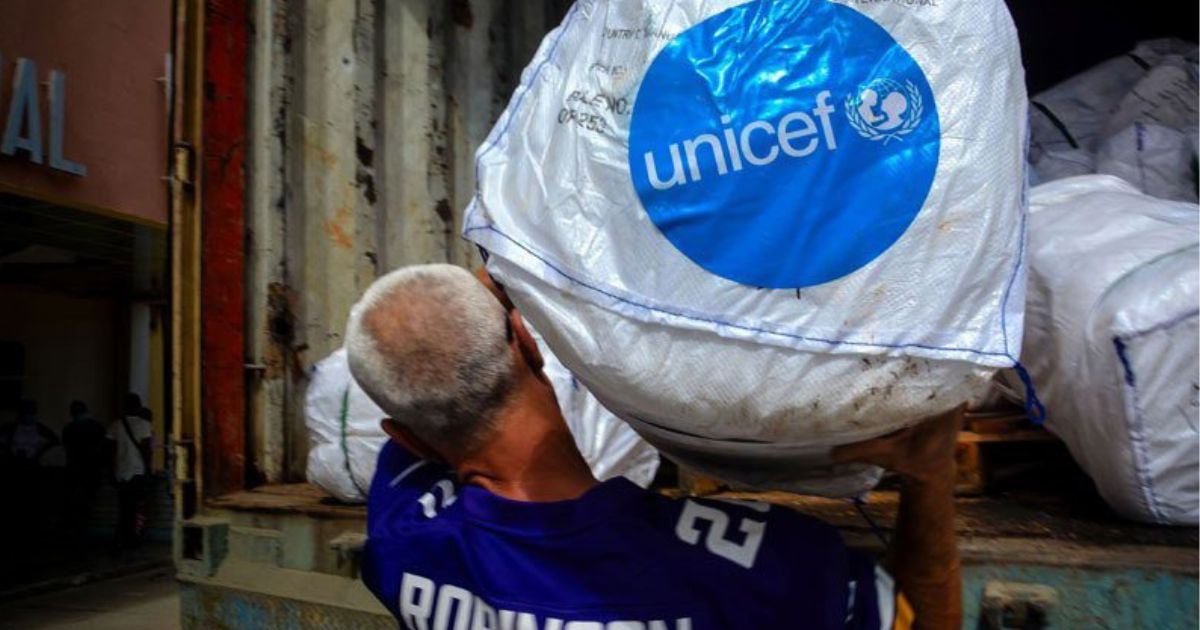
The first shipment of donated infant formula and nutritional milk powder arrived in Havana on May 30, 2026, under a humanitarian program coordinated by the United Nations World Food Programme (WFP) and the Cuban Ministry of Health, as the island faces its worst dairy shortages in over a decade.
UN-Backed Aid Eases Shortages, But Supply Chain Gaps Persist
The 12-tonne consignment—donated by the European Union’s humanitarian aid fund and distributed through the WFP—marks the first direct delivery of milk-based products to Cuba since the country’s dairy sector collapsed in 2024. The shipment includes 8,500 litres of infant formula and 3,500 kilograms of fortified milk powder, targeting hospitals in Havana, Santiago de Cuba, and Holguín, where malnutrition rates among children under five have risen by 18% since 2023, according to the Cuban National Statistics Office.

The aid follows months of negotiations between Havana and international agencies, accelerated after Cuba’s state-run dairy cooperative, Industria Alimentaria, reported a 45% drop in milk production last year due to feed shortages and aging livestock. The WFP’s Cuba representative, Maria Elena Varela, confirmed the shipment’s arrival but warned that the consignment covers only 3% of the island’s estimated monthly deficit.
“This is a critical but insufficient step. Cuba’s dairy sector remains structurally weak, and without sustained investment in infrastructure and feed supplies, these shortages will recur.”
Maria Elena Varela, WFP Representative to Cuba
Cuba’s Dairy Crisis: How the Shortage Unfolded
The current crisis traces back to 2024, when U.S. sanctions on Cuban agricultural imports—particularly soybean meal, a key livestock feed—worsened after Washington tightened restrictions on third-party sales to Havana. Cuba’s Ministry of Agriculture reported that by mid-2025, the country’s cattle herd had shrunk by 12% due to malnutrition among animals, while dairy processing plants in Matanzas and Villa Clara operated at 60% capacity.
Domestic production has not recovered despite Cuba’s attempts to revive local farms. In April 2026, the government launched Operación Leche, a program to import 50,000 tonnes of powdered milk from Brazil and Argentina, but logistical delays and payment disputes have stalled deliveries. A May 2026 report by the Inter-American Development Bank (IDB) noted that Cuba’s dairy imports now rely heavily on Venezuela and Russia, both of which have imposed their own export controls in recent months.
Havana’s Ministry of Health has attributed rising child malnutrition to the shortage, with officials citing a 22% increase in hospitalizations for severe protein deficiency in the first quarter of 2026. The WFP’s Varela attributed the spike to families substituting milk with sugary drinks or watered-down formulas, a practice health workers say has led to a surge in rickets cases.
Humanitarian Aid vs. Structural Fixes: What Comes Next
The UN shipment is part of a broader $15 million aid package announced in March 2026 by the EU, but Cuban officials have made clear that donations alone cannot solve the problem. At a press conference in Havana on May 31, José Angel Portal Miranda, Cuba’s Minister of Foreign Trade and Investment, called for debt relief and waivers on agricultural import tariffs.
“We welcome the solidarity, but Cuba needs more than handouts. We require the lifting of unjust economic measures that prevent us from accessing the inputs necessary to rebuild our food security.”
José Angel Portal Miranda, Cuban Minister of Foreign Trade and Investment
The U.S. State Department has not responded to requests for comment, but a senior official told reporters on May 30 that Washington would not ease sanctions unless Cuba demonstrated “meaningful economic reforms.” The EU’s aid, meanwhile, is tied to conditions including transparency in distribution—a demand Havana has resisted, citing sovereignty concerns.
In the short term, the WFP plans to distribute the donated milk through a network of 120 health clinics, prioritizing children under two and pregnant women. However, logistics remain a challenge: Cuba’s port infrastructure, strained by years of underinvestment, has led to delays in unloading containers in Mariel and Santiago de Cuba. A WFP spokesperson acknowledged that some shipments have sat for weeks due to bureaucratic hurdles.
The Bigger Picture: Cuba’s Food Security in a Shifting Global Market
Cuba’s dairy crisis is part of a broader food security challenge across Latin America, where climate shocks and geopolitical tensions have disrupted supply chains. The IDB’s May 2026 report highlighted Cuba as one of three countries in the region—alongside Venezuela and Haiti—where staple food prices have risen by over 30% in the past year. Unlike Venezuela, which relies on subsidized imports from Iran and Russia, Cuba has fewer diplomatic levers to secure alternative suppliers.

Brazil, historically Cuba’s largest dairy supplier, has reduced exports to the island by 40% since 2025 due to domestic demand surges. Argentina, another key provider, has imposed quotas on powdered milk sales to prevent domestic shortages. Meanwhile, Russia’s invasion of Ukraine has tightened global grain markets, pushing up the cost of feedstocks like corn and soy—a critical issue for Cuba’s struggling livestock sector.
For now, the UN shipment offers temporary relief, but experts warn that without structural changes—including debt restructuring, sanctions relief, and investment in local production—Cuba’s dairy sector will remain vulnerable. The next WFP delivery, scheduled for July, will test whether the current aid framework can scale. Until then, families in Havana’s Reparto Santiago neighborhood, where milk prices have spiked to 25 Cuban pesos ($1) per litre, are left to cope with rationing and makeshift substitutes.
What’s Uncertain: Three Open Questions
1. Will the EU expand its aid package? The current $15 million covers only 10% of Cuba’s estimated annual dairy import needs. The EU’s humanitarian chief, Janez Lenarčič, has signaled openness to further assistance, but political divisions within the bloc—particularly between France and Spain—could delay decisions.
2. Can Cuba negotiate new trade deals? Havana has explored partnerships with China and India for dairy imports, but both countries have prioritized domestic markets. A Cuban delegation is set to meet with Russian officials in Moscow next month to discuss long-term supply agreements, though sanctions risks complicate any deal.
3. How long will shortages last? The WFP’s Varela estimates that even with sustained aid, Cuba’s dairy deficit could persist for at least two years without major reforms. The question is whether the international community—and Cuba’s own government—will treat this as a temporary crisis or a long-term challenge requiring systemic change.
For families in Cuba’s cities, the answer may already be clear: the shortage is not just a supply problem. It is a symptom of a system under strain.
