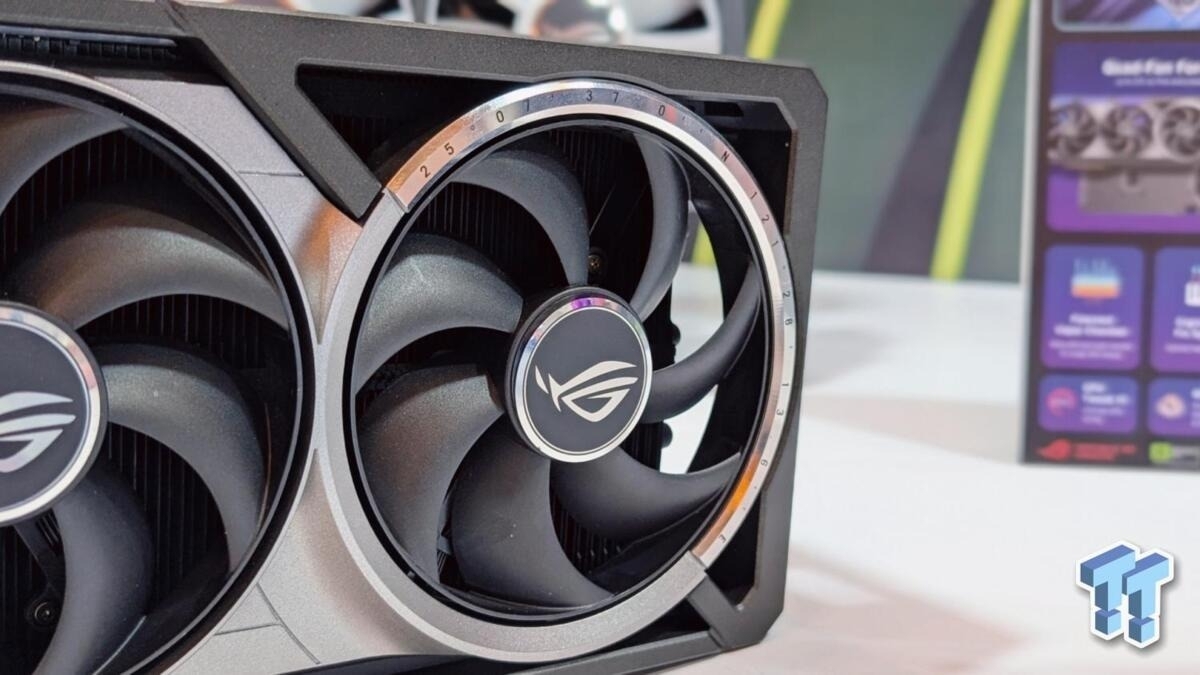
Asus ROG Astral RTX 5090 graphics cards have been linked to discoloration on ASUS motherboard PCH heatsinks after six months of use, according to reports from multiple outlets. A Taiwanese user’s experience highlights thermal management risks in high-power systems, with conflicting explanations about whether heat or RGB lighting caused the damage. TweakTown and Zamin.uz describe the issue, while Gizchina.com raises alternative causes.
What Happened: A Systemic Thermal Challenge
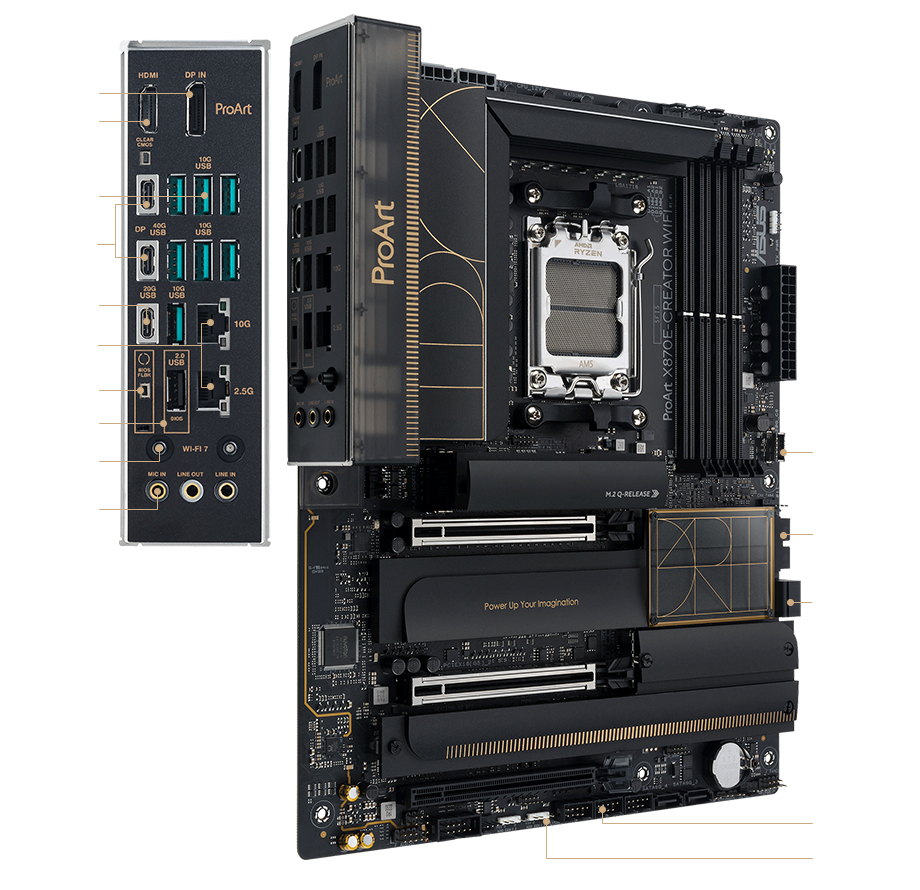
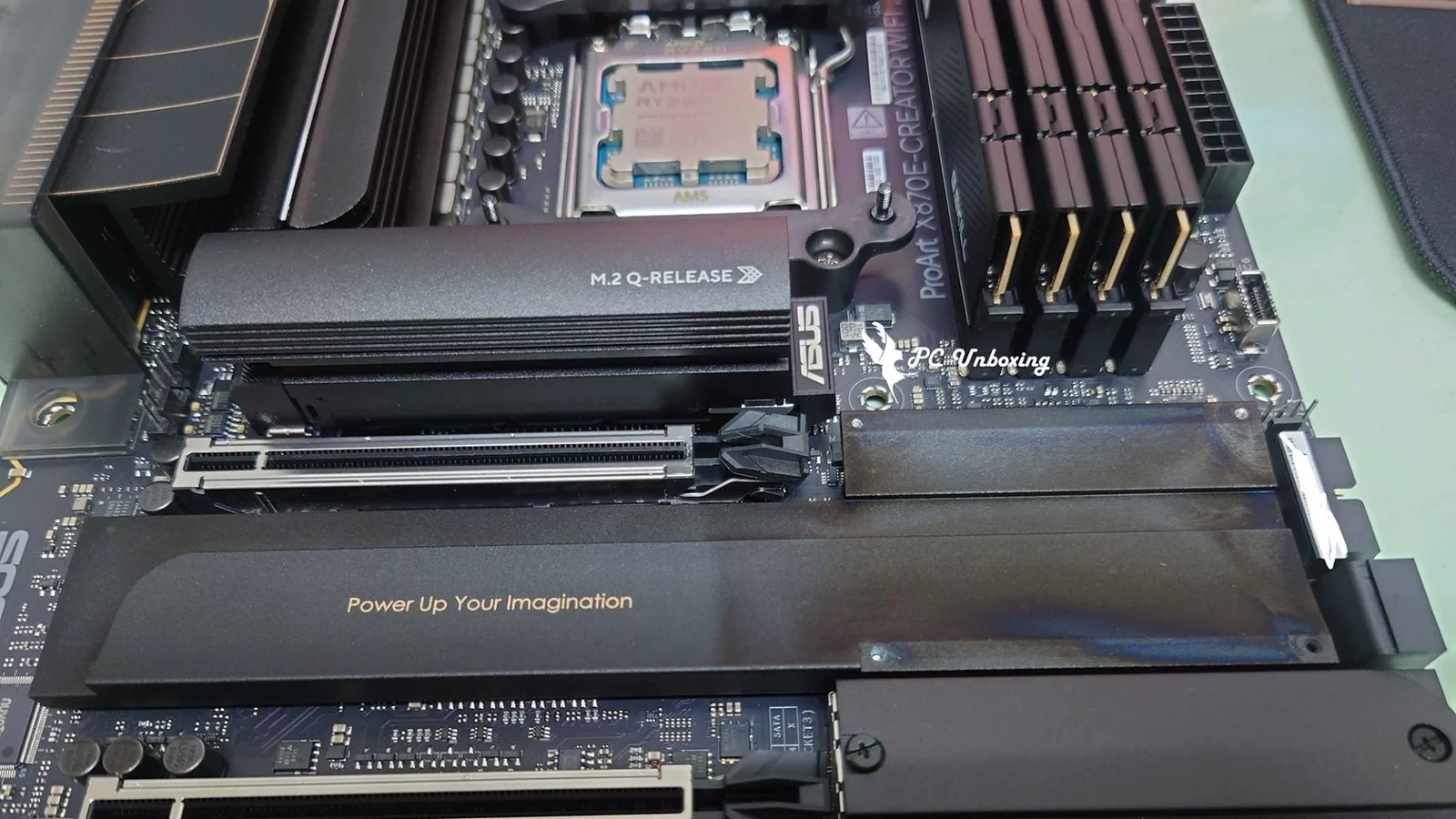
A user on a Taiwanese hardware forum reported visible discoloration on the PCH heatsink of an ASUS ProArt X870E-Creator WiFi motherboard after six months of use with an Asus ROG Astral RTX 5090. The system, entirely built with ASUS components—including a ProArt PA602 case—experienced heat-related degradation, with the user noting the mark could be partially removed but not fully restored. TweakTown emphasized the “awkward” nature of the incident for ASUS, given the all-ASUS setup.
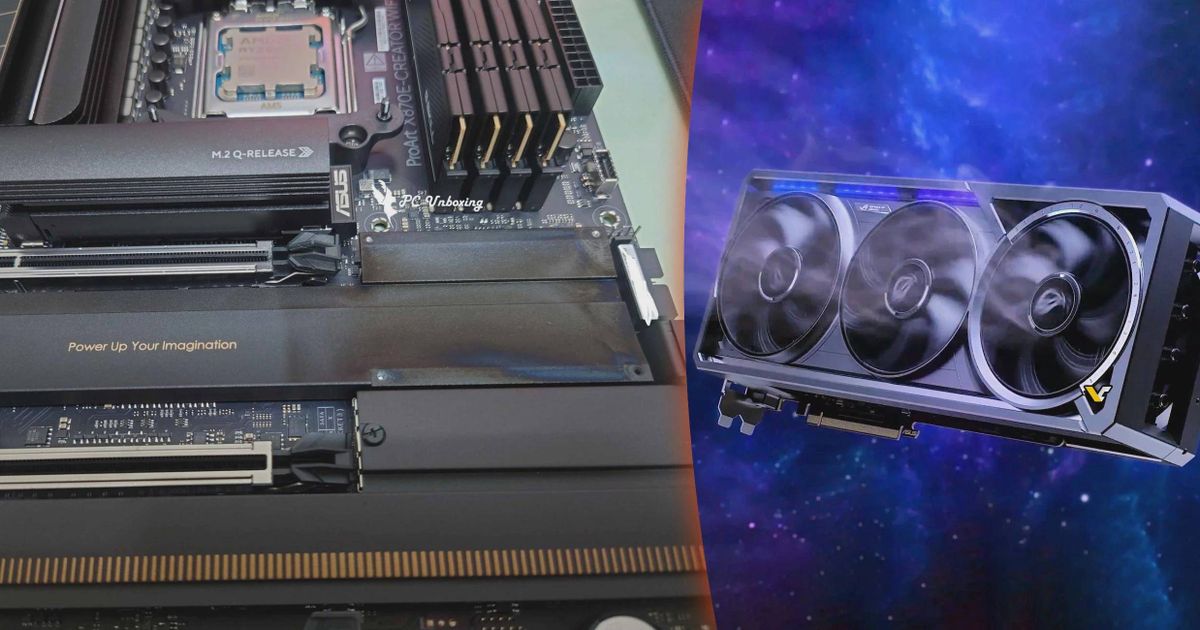
Zamin.uz’s report, citing Ixbt.com, described the user as “Bahamut,” who used the system for AI workloads. The motherboard’s heatsink coating degraded due to “constant high temperatures,” with the user attempting to clean it with a damp cloth without success. The outlet highlighted the RTX 5090’s power draw, noting it consumes up to 1,000W under peak loads—comparable to a household microwave or oven. Zamin.uz warned that “even heat-resistant paint” on heatsinks may fail under such conditions.
In modern PC architecture, the PCH (Platform Controller Hub) heatsink is often situated directly beneath the primary PCIe slot where high-end graphics cards reside. As GPUs have grown in physical size and power density, the proximity between the back of the GPU and the motherboard surface has decreased, limiting the natural convection of air. This creates a “hot zone” where heat trapped by the GPU’s cooler can saturate the components on the motherboard surface below it.
Heat vs. Light: A Contested Explanation
While all outlets attributed the issue to thermal stress, Gizchina.com introduced an alternative theory: “RGB lighting from nearby memory modules has previously caused similar discoloration on hardware surfaces.” This suggests the discoloration might not stem from heat but from prolonged exposure to concentrated light. The outlet noted that the PCH heatsink’s position beneath the GPU in a typical ATX build places it near DRAM modules with continuous RGB illumination.
However, TweakTown stressed that the RTX 5090’s heat output remains “extreme,” with its quad-fan cooler designed to push heat downward. “If the case airflow isn’t optimized, that heat has nowhere to go except into the components directly beneath the card,” the outlet wrote. The contradiction between heat and light as causes underscores the need for further investigation.
Beyond the debate between light and thermal degradation, materials science experts often note that anodized aluminum heatsinks used on motherboards can react to localized, sustained heat sources. When temperatures exceed the rated thresholds of the finish or the thermal interface material, the surface can oxidize or discolor, particularly if the airflow is stagnant due to the massive physical footprint of current-generation “triple-slot” or “quad-slot” cooling solutions.
Historical Context: A Troubled Launch
The RTX 5090’s issues are not isolated. Gizchina.com listed prior problems, including “melting 16-pin connectors, missing ROPs in early production batches, black screen issues, and at least one confirmed fire.” A separate incident in early 2025 involved a card catching fire due to a blown MLCC capacitor. Zamin.uz noted that “experts” have long raised concerns about the card’s power consumption and thermal design, particularly for AI and compute workloads.
The GPU’s 575W TDP rating contrasts sharply with its real-world performance. Zamin.uz reported that “typical real-world loads run closer to 700W, and in certain peak scenarios… figures reportedly approaching 1,000W have been documented.” This disparity has led to warnings about the need for “high-quality, high-power (at least 1200-1500 W) power supplies” and “maximum airflow inside the case.”
The 16-pin power connector, technically known as the 12VHPWR or 12V-2×6 connector, remains a focal point of industry concern. Since its introduction, organizations and independent hardware reviewers have cautioned that incomplete insertion or excessive bending of these cables can lead to high resistance, which in turn causes localized melting at the connector interface. The incidents reported with the RTX 5090 suggest that the thermal management challenges are not limited to the connector alone but extend to the entire component ecosystem surrounding the GPU.
What This Means for Enthusiasts and Professionals
The incident highlights critical challenges in building high-performance systems. Zamin.uz advised users to “ensure maximum airflow” and “regularly check the condition of thermal pads and heatsinks.” For AI workloads, which push hardware to its limits, these precautions are essential.
For professional users, the reliance on high-wattage hardware necessitates a shift in how systems are assembled and maintained. The use of custom water-cooling loops or high-static-pressure fans is increasingly common to mitigate the heat generated by flagship GPUs. Furthermore, the industry-wide focus on AI-driven compute tasks means that graphics cards are now frequently operating at maximum utilization for hours at a time, a departure from traditional gaming workloads that featured intermittent spikes in power draw.
As these reports continue to circulate, the broader hardware community remains focused on the long-term reliability of components subjected to such high thermal envelopes. The case of the discolored PCH heatsink serves as a data point in an ongoing discussion about the physical limitations of current PC chassis designs and the necessity for more robust thermal management strategies in the era of ultra-high-power graphics processing units.
Find more reporting in our Technology section.
