
The AI valuation crash has left hundreds of pre-ChatGPT startups stranded, with 857 U.S. unicorns now facing steep declines as investors shift focus to AI-first companies, according to CNBC.
The AI Valuation Crash: A $250 Billion Boom and Bust
The AI boom that funneled more than $250 billion into OpenAI and Anthropic has left startups built before ChatGPT’s 2022 arrival in a precarious position. Nearly half of the 857 U.S. startups valued at $1 billion or more have not raised fresh funding in the last three years, with those last funded in 2021 now worth 68% less on average, according to PitchBook data cited by CNBC. Mercury CEO Immad Akhund, whose company raised $200 million in May 2026, noted that many of these firms are “pre-AI, not just in their cost structure, but also in their products.”
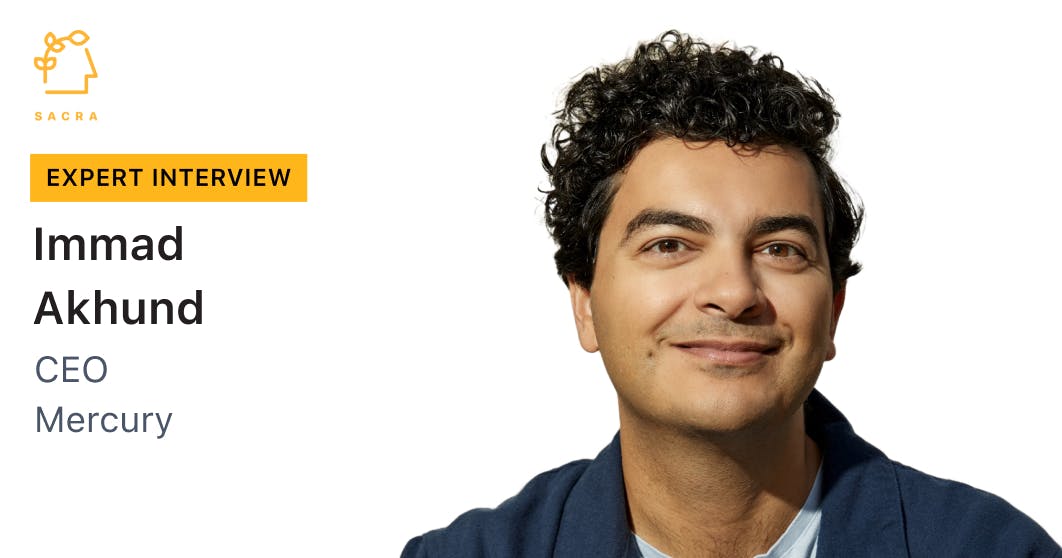
The fallout includes well-known brands like Glossier, Rothy’s, and Savage X Fenty, which have seen their valuations collapse. “They’re definitely in a difficult spot,” Akhund said. “All the attention’s on AI, so if you’re not an AI-first company, you need really strong numbers to raise.”
Investors now demand “strong numbers” from non-AI startups, a stark contrast to the pre-2022 era when even unprofitable ventures could secure billion-dollar valuations.
Tokenmaxxing and the Shift in Enterprise Priorities
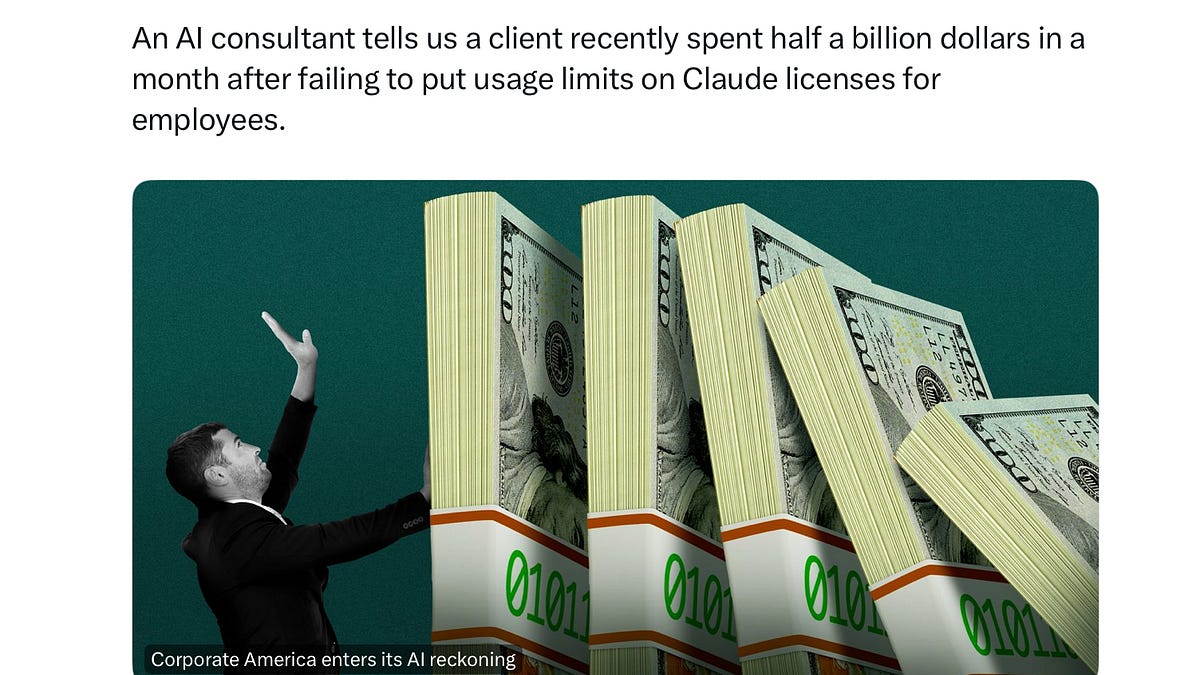
Meanwhile, the enterprise sector is grappling with the consequences of “tokenmaxxing”—a practice where companies overuse AI tokens to inflate short-term revenue for providers like Anthropic and OpenAI. Gary Marcus, a MIT PhD and NYU professor, called the trend “stupid” and warned that its sustainability was always questionable. “Nobody is going to be comfortable accidentally burning half a billion dollars of tokens in a month,” he wrote on Substack.

Ali Ansari, CEO of model training firm Micro1, echoed this sentiment, stating that enterprises are “undergoing a ‘healthy swing’ away from AI overuse— or ‘tokenmaxxing.’” This shift is already impacting revenue streams: Uber’s COO recently noted that AI costs are “harder to justify” due to a lack of measurable ROI. “Tokens got burned for millions of dollars without any real significant ROI to show for it,” a Twitter thread cited by Marcus observed.
The backlash is hitting even the most successful AI companies. Anthropic’s $10.9 billion Q2 revenue, partly driven by tokenmaxxing, may not be sustainable. “The same conversation is happening across tech right now,” said Karthik Hariharan, a tech analyst. “The largest accounts with OpenAI and Anthropic subs have FDEs being thrown at them to retain the [AI] clients.”
Consolidation and the Rise of AI-First Giants
As the market recalibrates, major AI players are consolidating their dominance through strategic acquisitions and licensing deals. Anthropic’s purchase of Stainless, a dev tools startup used by OpenAI and Google, underscores the industry’s shift toward controlling infrastructure. “Stainless makes the plumbing that connects models with everything else,” noted The Ken, which highlighted the deal as a move to strengthen competitive moats.
Google DeepMind’s licensing deal with Contextual AI—a $80–90 million arrangement that avoids antitrust scrutiny—further illustrates this trend. “The move with Contextual AI is more about acquiring expertise than assets,” the publication noted. Similar strategies have been used by Google in previous years, including a $2.4 billion licensing deal with Windsurf in 2025.
These consolidations are reshaping the AI landscape. OpenAI is reportedly preparing for an IPO with a valuation above $1 trillion, while Anthropic aims for profitability by 2026. “The enterprise is undergoing a ‘healthy swing’ away from AI overuse,” said Ansari, signaling a broader realignment of resources toward sustainable AI applications.
The Future of Pre-ChatGPT Startups
For the hundreds of pre-ChatGPT startups now labeled “disrupted or dead,” the path forward is uncertain. Many lack the AI integration required to attract investment, leaving them stranded between the private and public markets. “A lot of those companies are pre-AI, not just in their cost structure, but also in their products,” Akhund said, emphasizing the urgency of adaptation.

Some startups are pivoting to AI-driven models, while others are seeking partnerships with AI giants. However, the window for survival is narrowing. “If you’re not an AI-first company, you need really strong numbers to raise,” Akhund reiterated. For many, that threshold may be too high to meet.
The AI sector’s next phase will likely be defined by consolidation, regulatory scrutiny, and a focus on long-term viability. As Marcus warned, “The AI numbers are starting to look very ugly. Even under ‘best case’ assumptions, [Microsoft] AI ROI at -9%, Google at -15%.
