President Donald Trump’s sudden demand that Arab and Muslim-majority states normalize ties with Israel—amid a war in Gaza and escalating tensions with Iran—has exposed a widening rift between Washington’s diplomatic ambitions and regional realities. On May 25, 2026, Trump insisted in a social media post that countries including Saudi Arabia, Qatar, Pakistan, Turkey, and Egypt should simultaneously sign onto an expanded Abraham Accords framework, framing it as a precondition for ending the Iran conflict. But diplomats and regional officials are dismissing the push as a desperate bid for legacy-building, one that risks deepening divisions rather than stabilizing the Middle East.
Trump’s Last-Ditch Gambit: Why the Abraham Accords Are Collapsing
Trump’s latest maneuver—linking Iran war negotiations to a rapid expansion of the Abraham Accords—has caught even his closest allies off guard. The accords, first brokered in 2020 under his presidency, already normalized relations between Israel and the UAE, Bahrain, Sudan, and Morocco. But Trump’s insistence on forcing new signatories—including Pakistan, a nuclear-armed state with deep historical ties to Palestine—has triggered backlash. Regional officials privately describe the demand as “gaslighting,” a desperate attempt to salvage a foreign policy legacy while ignoring the humanitarian toll of the Gaza war.

“It’s gaslighting.”
—Aaron David Miller, former State Department official and senior fellow at the Carnegie Endowment for International Peace
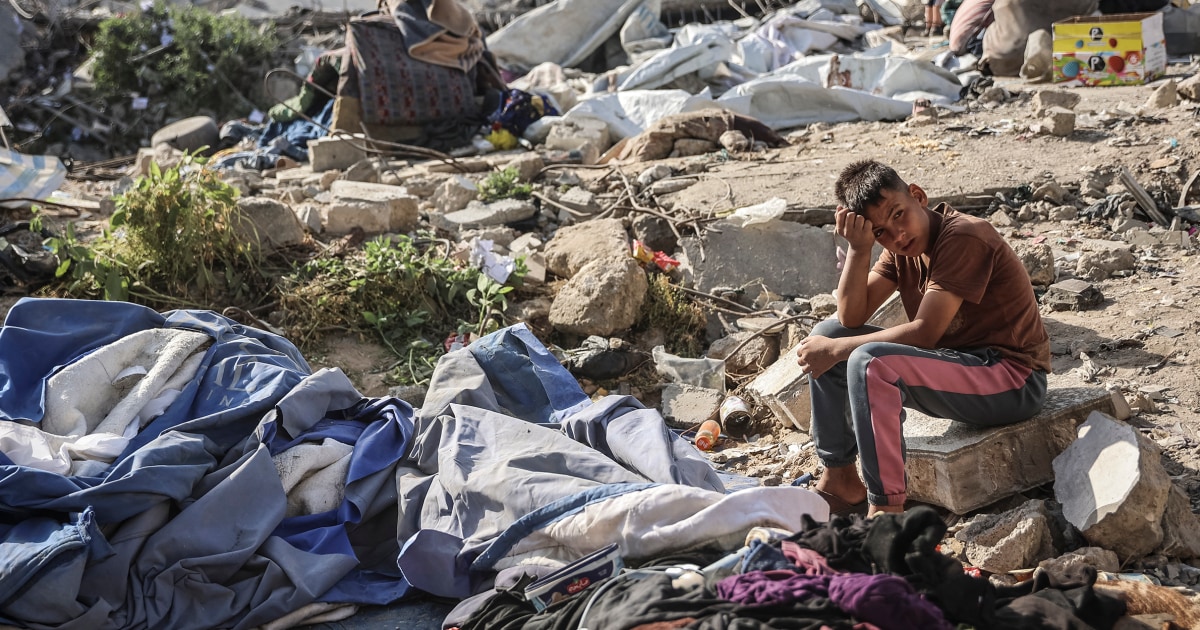
Miller’s comparison to Trump’s earlier, abandoned promise to turn Gaza into a “luxury Riviera” underscores the disconnect between Washington’s messaging and on-the-ground realities. The war has left Gaza’s civilian population facing famine, according to UN reports, while Israeli strikes continue unabated. Meanwhile, Trump’s demand for normalization ignores the fact that many of the countries he’s targeting—like Saudi Arabia and Qatar—have already faced Iranian retaliation for their indirect involvement in U.S.-led actions against Tehran.
“Someone is misunderstanding the situation in a big way. We should be paid back, not paying the price.”
—Senior Arab official involved in mediation, via Al-Monitor
The push for normalization comes as Saudi Arabia, under Crown Prince Mohammed bin Salman (MBS), has been engaged in a delicate balancing act between its economic interests and its regional alliances. While Riyadh has maintained a pragmatic stance on Israel, publicly avoiding direct normalization, sources close to the Saudi leadership have confirmed that the kingdom has privately expressed frustration with Trump’s approach. A Saudi official, speaking on condition of anonymity, stated that “the timing of this demand is reckless,” given the ongoing negotiations with Iran over a potential ceasefire in Yemen and the kingdom’s own internal challenges, including economic reforms and domestic dissent.
In a May 26 statement, the Saudi Foreign Ministry emphasized that “any normalization process must be based on a comprehensive and just solution to the Palestinian issue,” a position that directly contradicts Trump’s framing. The statement was released just hours after Trump’s post, signaling a swift and deliberate pushback. Meanwhile, Saudi officials have privately indicated that any move toward normalization would require a significant shift in Israeli policy, particularly regarding Palestinian statehood and the Gaza conflict.
Qatar, which has played a key role in mediating between Israel and Hamas, has been equally dismissive. A Qatari diplomat, speaking to The Washington Post, described Trump’s demand as “unrealistic and out of touch with current dynamics.” The diplomat noted that Doha has already faced severe backlash from Iranian-backed groups, including Hezbollah, for its indirect support of U.S. and Israeli positions. “We are already under immense pressure from Tehran and its proxies,” the diplomat said. “Asking us to move forward with normalization while Gaza is being bombed is not just insensitive—it’s strategically foolish.”
Pakistan, which Trump has repeatedly pressured to join the Abraham Accords, has been particularly vocal in its rejection. In a May 27 statement from the Pakistani Foreign Ministry, officials called Trump’s proposal “a non-starter” and accused the U.S. of “ignoring the historical and moral obligations” of Muslim-majority nations. The statement was released following a closed-door meeting between Pakistani officials and U.S. envoys, where sources confirmed that Islamabad explicitly rejected any normalization without a resolution to the Palestinian issue. Pakistani Prime Minister Shehbaz Sharif, in a May 28 press conference, reiterated that “Pakistan’s stance on Palestine is non-negotiable,” adding that any attempt to force normalization would “severely damage” U.S.-Pakistan relations.
Turkey, which has long positioned itself as a leader of the Muslim world, has also rejected Trump’s overtures. In a May 26 statement from the Turkish Foreign Ministry, officials condemned the proposal as “a violation of international law and human rights.” Turkish President Recep Tayyip Erdoğan, in a May 27 speech, accused the U.S. of “abandoning its allies” and warned that Turkey would “never accept” any normalization process that did not address Palestinian statehood. Erdoğan’s remarks came after a high-level meeting with Iranian President Ebrahim Raisi, where the two leaders reaffirmed their commitment to opposing any U.S.-led diplomatic initiatives that they deemed “one-sided.”
Egypt, which has maintained a fragile relationship with Israel through the 1979 peace treaty, has also signaled resistance. A senior Egyptian official, speaking to Al-Masry Al-Youm, stated that “Cairo cannot be pressured into a decision that would alienate its own population and regional partners.” The official noted that Egypt has already faced significant domestic backlash over its limited role in Gaza ceasefire negotiations, and any move toward normalization would risk further destabilizing President Abdel Fattah el-Sisi’s government. Meanwhile, Egyptian officials have privately indicated that they would only consider normalization if Israel agreed to a full withdrawal from the West Bank and a meaningful Palestinian state.
The backlash extends beyond the targeted countries to key U.S. allies in the region. Israeli officials, while publicly supportive of Trump’s proposal, have privately expressed skepticism. A senior Israeli diplomat, speaking to Haaretz, described the timing as “disastrous,” stating that “Israel cannot afford to be seen as pushing for normalization while Gaza is under siege.” The diplomat added that any expansion of the Abraham Accords would require “significant concessions” from Israel, including a halt to military operations in Gaza and a clear path to Palestinian statehood—conditions that Israeli Prime Minister Benjamin Netanyahu has repeatedly rejected.
The diplomatic fallout has also reached the United Nations, where Secretary-General António Guterres condemned Trump’s proposal in a May 26 statement. Guterres called the push for normalization “premature and counterproductive,” warning that it could “further inflame tensions” in the region. The statement was issued after consultations with regional leaders, including Saudi Arabia, Qatar, and Egypt, all of whom expressed concern over the U.S. approach. Meanwhile, the UN’s Office for the Coordination of Humanitarian Affairs (OCHA) released a May 27 report detailing the worsening humanitarian crisis in Gaza, where nearly 90% of the population is now facing acute food insecurity—a development that directly contradicts Trump’s framing of normalization as a humanitarian priority.
The timing of Trump’s push also coincides with escalating tensions between the U.S. and Iran, where negotiations over a potential military confrontation have stalled. Iranian Foreign Minister Hossein Amir-Abdollahian, in a May 26 interview with Iranian state media, accused the U.S. of using the Abraham Accords as a “distraction” from its failure to secure a ceasefire in Gaza. “The Americans are desperate,” Amir-Abdollahian said, adding that Iran would “not allow any normalization process that serves U.S. and Israeli interests at the expense of Palestine.” Iranian-backed militias in Iraq and Syria have also ramped up attacks on U.S. forces in recent weeks, with the Pentagon confirming May 28 that at least three U.S. military personnel were injured in rocket strikes linked to Iranian proxies.
In Washington, the Biden administration has largely remained silent on Trump’s proposal, though officials have privately expressed frustration. A senior State Department official, speaking on condition of anonymity, told The New York Times that “this is not the way to build trust in the region.” The official added that the Biden administration has been working behind the scenes to mediate between Israel and Arab states, but Trump’s public demand has “undermined those efforts.” Meanwhile, U.S. lawmakers from both parties have criticized the proposal, with Senate Foreign Relations Committee Chair Bob Menendez (D-NJ) calling it “a reckless and tone-deaf distraction” in a May 27 statement. Republican Senator Lindsey Graham (R-SC), a close ally of Trump, also expressed skepticism, stating that “you can’t normalize relations while Gaza is being destroyed.”
The collapse of Trump’s push for expanded Abraham Accords has left regional diplomats questioning the future of U.S. Middle East policy. A senior Gulf diplomat, speaking to Bloomberg, stated that “the U.S. is losing credibility” in the region, adding that Arab states are increasingly turning to China and Russia for diplomatic cover. Meanwhile, Israeli officials have privately admitted that the failure of Trump’s proposal could lead to a “reassessment” of U.S. support for Israel, particularly if Washington continues to push for normalization without addressing Palestinian demands.
As the diplomatic fallout continues, one thing is clear: Trump’s gambit has not only failed to unite regional actors but has also deepened divisions at a time when the Middle East is on the brink of wider conflict. With Iran, Israel, and Arab states all moving in different directions, the prospects for stability—let alone normalization—appear increasingly remote.
