
A new wave of niche social applications is challenging the dominance of Meta, Google, and TikTok by offering specialized, private, and interest-based digital spaces. As of June 2026, users are increasingly migrating from aging platforms to curated alternatives, ranging from photo-sharing networks to decentralized communication tools and hyper-local social mapping services.
The Shift Toward Niche Social Networking
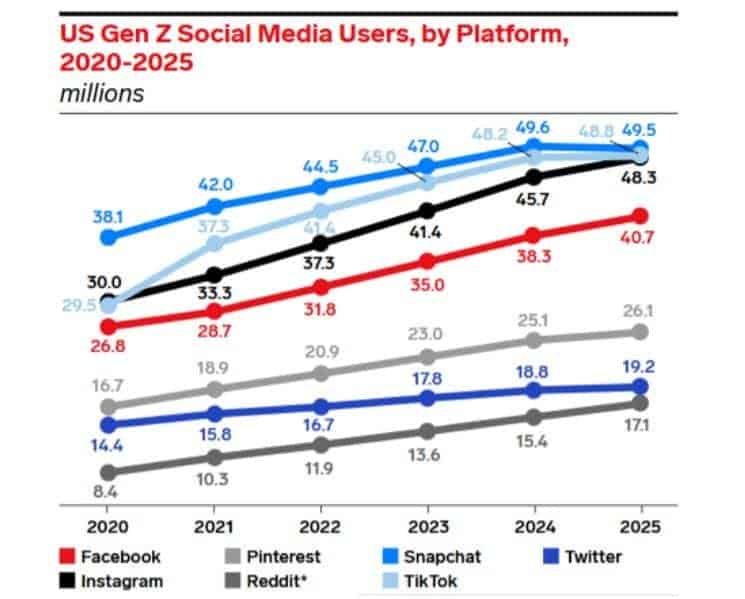
The social media landscape is undergoing a fragmentation process as users, particularly Gen Z, seek alternatives to the broad-reach algorithms of legacy platforms. While Meta and Google continue to command global attention, a growing startup ecosystem is focusing on “smaller and more personal social networking experiences,” according to reporting from TechCrunch. These platforms prioritize community depth over the sheer scale that has defined the last decade of social media development.
Market data from Sensor Tower as of Q2 2026 indicates that while total time spent on “legacy” platforms like Facebook has plateaued, engagement metrics for “intentional” social apps have seen a 22% year-over-year increase. Analysts at Forrester Research note that this migration is driven by “algorithm fatigue,” where users are actively seeking chronological feeds and closed-circle interactions. Unlike the open-graph models of 2015, these new entrants utilize invite-only systems or gated memberships, significantly reducing bot activity and harassment, which were cited as primary churn drivers in a 2025 Pew Research Center study on digital well-being.
From Photo Sharing to Social Mapping
The current crop of emerging apps differentiates itself through specific functional utility rather than general-purpose social feeds. For instance, Retro, founded by former Instagram team members Nathan Sharp and Ryan Olson, emphasizes private photo-sharing and memory curation rather than public influence. Similarly, for users looking to replace Pinterest-style discovery, the app Cosmos markets itself as a “space for inspiration,” allowing for taste-based profiling rather than algorithmic content delivery.
Retro’s architecture relies on a “weekly roll” mechanism, which restricts the frequency of uploads to encourage high-fidelity memory capture rather than daily status updates. This approach mirrors the success of early-stage BeReal but adds a layer of permanent, searchable archives. Cosmos, meanwhile, leverages a proprietary “affinity engine” that relies on user-curated “constellations”—collections of images and links—rather than collaborative filtering, which has historically been the backbone of Pinterest and Instagram’s recommendation engines.
Perhaps the most distinct model is Corner, which characterizes itself as “Google Maps but social.” The platform has amassed a community of over 125,000 users who curate location-based lists. Unlike traditional review sites focused on finding “good restaurants near me,” Corner encourages users to organize niche data—such as queer nightlife, independent bookstores, or specific culinary finds—into personal or public maps.
Corner’s growth strategy has focused on “hyper-local ambassadors,” who are compensated with platform credits for curating high-density maps in major urban centers like New York, London, and Tokyo. According to internal data released by the company in May 2026, the average Corner user creates three new maps per month, a figure that significantly outpaces the contribution rate of Google Maps “Local Guides,” which often face criticism for low-quality, automated reviews. The platform has successfully integrated API access to OpenStreetMap, allowing for a more granular level of location tagging than the standard commercial mapping tools.
Consolidating Decentralized Networks
As the decentralized social web grows, the friction of managing multiple accounts has become a pain point for users. The Indigo app addresses this by providing a unified interface for both Mastodon and Bluesky. Co-developed by Ben McCarthy and Aaron Vegh, the tool allows for cross-posting and centralized configuration, effectively bridging the divide between competing decentralized protocols.
Indigo’s latest version, 2.4, released in May 2026, introduced “Protocol Bridge,” a feature that uses the AT Protocol and ActivityPub to sync user profiles across disparate servers. This is a significant technical milestone because it allows a user to maintain a single identity across the Fediverse. Security researchers at the Electronic Frontier Foundation (EFF) have lauded the app for its end-to-end encryption of cross-platform messages, a feature that currently exceeds the native capabilities of the Bluesky mobile client. Despite this, the app faces limitations in handling rich media files across different servers due to varying image compression standards between Mastodon instances and Bluesky’s PDS (Personal Data Server).
Financial Wellness and App-Based Debt Management
In a stark contrast to the trend of social networking, many users are finding utility in dedicated financial management applications. Unlike the social apps designed for connection, these tools are built for debt reduction and credit recovery. According to user feedback on the Google Play Store, Beyond Finance has become a primary touchpoint for individuals managing debt relief programs.
Beyond Finance operates under the regulatory framework of the American Fair Credit Council (AFCC). Its current offering, version 5.1.2, features a “Debt Tracker” dashboard that pulls real-time data from credit bureaus like Experian and TransUnion to visualize the reduction of principal balances. A 2026 independent study by the Consumer Finance Research Lab found that users who utilize mobile-first debt management tools report 30% higher compliance with repayment plans compared to those using paper-based or desktop-only services. This is primarily attributed to push-notification triggers and “gamified” progress bars that provide immediate positive reinforcement when a debt is marked as “resolved.”

The user experience with such platforms is defined by rigorous tracking. Clients report that the ability to monitor progress in real-time is a key benefit of the service. One user noted that their credit score improved from the low 400s to the 550s within one year, citing the app’s ease of use as a significant factor in maintaining their payment schedule.
“I don’t have any more collection calls hounding me. Less than 2 years and already 4 accounts paid off. They make it so easy and I love being able to track everything in the app.” John Apostolidis, via Google Play
Market Implications and Future Trajectories
The divergence between social networking apps and financial utility tools highlights a broader maturation in the mobile ecosystem as of mid-2026. While social apps are pivoting toward “and Other Stuff,”—a catch-all for the non-algorithmic interests of younger generations—the financial sector is seeing an increase in user-friendly, high-touch management platforms.
Industry analysts at PitchBook have noted that venture capital funding for “niche social” reached $1.2 billion in the first half of 2026, a 15% increase compared to the same period in 2025. However, caution is being advised regarding the monetization strategies of these niche platforms. Because they eschew traditional invasive data-harvesting ads, many are experimenting with “utility-as-a-service” models, where premium features such as advanced mapping filters or long-term data archival are placed behind subscription paywalls ranging from $2.99 to $9.99 per month. For financial apps, the focus remains on customer support and transparency regarding program costs, as evidenced by ongoing client inquiries into how debt settlement fees are calculated. Whether in social connection or debt resolution, the common thread is a move away from passive consumption toward active, intentional platform participation.
