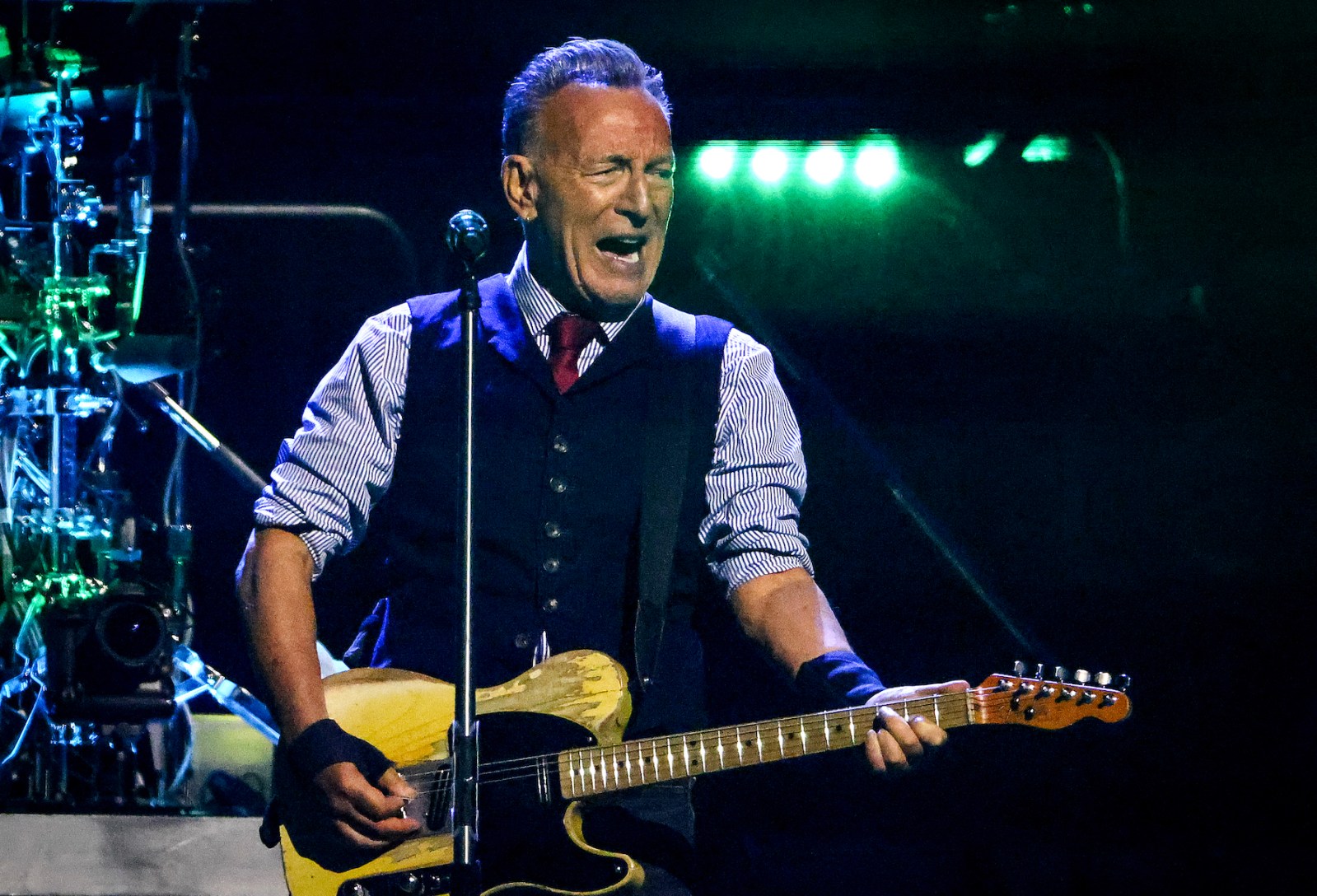
Bruce Springsteen officially opened the Bruce Springsteen Center for American Music on June 13, 2026, in West Long Branch, New Jersey, marking a pivotal moment in the preservation of American musical heritage. The event coincided with a star-studded concert at Monmouth University’s OceanFirst Bank Center, featuring collaborations with Jon Bon Jovi, Public Enemy, and other icons, while the new $50 million facility—designed by COOKFOX Architects—unveiled immersive exhibits and a performance theater.
Concert as Cultural Tapestry: From Elvis to Public Enemy
The two-night “Music America: The Songs That Shaped Us” event served as both a celebration of American music and a launchpad for the new center. On the second night, Springsteen opened with a high-energy rendition of Elvis Presley’s “Jailhouse Rock,” a nod to his hero, followed by “Burnin’ Love.” The performance was framed by Robert Santelli, director of the center, who highlighted the historical disparity between Presley and Chuck Berry, noting, “he could never get to the same point where Elvis was for the simple reason he was Black.” This observation underscored the concert’s broader mission to spotlight the diverse, often overlooked narratives in American music.
Jon Bon Jovi’s appearance was particularly notable, as it marked his first public performance in New Jersey since 2018. He took the stage for Chuck Berry’s “Johnny B. Goode,” a choice that drew direct parallels to the racial and cultural tensions of the 1950s. The night also featured Dion DiMucci’s “The Wanderer,” Mavis Staples’ “The Weight,” and Public Enemy’s “Fight the Power,” each act weaving a timeline of American music’s evolution. The concert concluded with a group performance of “Raise Your Hand,” a song deeply tied to Springsteen’s career, and a final solo set by the Boss on “Land of Hope and Dreams.”
The Bruce Springsteen Center: A $50 Million Vision for American Music
The newly opened center, located on Monmouth University’s campus, is a 32,000-square-foot hub designed to “place [Springsteen] in the greater story of American music.” Its exhibits trace his career while exploring the broader history of genres from blues to hip-hop. The facility includes a 250-seat Dolby soundstage, interactive experiences, and a documentary by Thom Zimny, who has long chronicled Springsteen’s work. Santelli emphasized the center’s dual role as a “national hub for programs, exhibits, concerts, scholarship, and education initiatives,” positioning it as a bridge between academic research and public engagement.
Monmouth University President Patrick F. Leahy called the center “a place where American music in all of its forms can be preserved, studied, and celebrated.” The venue’s design, led by COOKFOX Architects, prioritizes accessibility and innovation, with spaces for concerts, workshops, and symposia. The center’s opening on June 13—just days after the concert—signals its ambition to become a year-round cultural destination, though its long-term impact will depend on sustained funding and programming.
Legacy and Critique: A Celebration or a Commercial Venture?
The event drew praise for its star power and historical depth, but some critics questioned whether the center’s focus on Springsteen risked overshadowing the broader American music narrative it aims to represent. The inclusion of artists like Public Enemy and Mavis Staples, however, suggested an effort to balance the Boss’s legacy with the contributions of marginalized voices. Santelli’s remarks about Berry’s racial barriers, for instance, added a layer of social commentary often absent from mainstream music celebrations.

Springsteen’s decision to perform alongside Bon Jovi and Public Enemy also reflected his ongoing role as a unifying figure in American music. The collaboration with the Disciples of Soul, Little Steven’s band, and the presence of veterans like Dion highlighted a generational exchange that resonated with fans. Yet, the event’s commercial underpinnings—such as the center’s $50 million price tag and the impending Bon Jovi residency at Madison Square Garden—raised questions about the intersection of art and profit in cultural institutions.
What Comes Next? The Center’s Path Forward
The center’s success will hinge on its ability to balance accessibility with academic rigor. While its exhibits and programs are designed for “scholars, students, fans, and neighbors,” the challenge lies in maintaining relevance beyond Springsteen’s devoted following. The upcoming summer tour by Bon Jovi, which includes a Madison Square Garden residency, may help draw broader audiences, but the center’s long-term viability will depend on partnerships with other cultural organizations and sustained public interest.
For now, the June 2026 opening has solidified Springsteen’s legacy as both an artist and a cultural curator. As Santelli stated, “Popular music is one of America’s most enduring and respected cultural resources,” and the center aims to ensure that legacy endures. Whether it becomes a beacon for American music or a footnote in the Boss’s career remains to be seen, but the event has already cemented its place in the annals of music history.
“The Springsteen Center provides a home for Bruce Springsteen’s archives and places him in the greater story of American music.”
