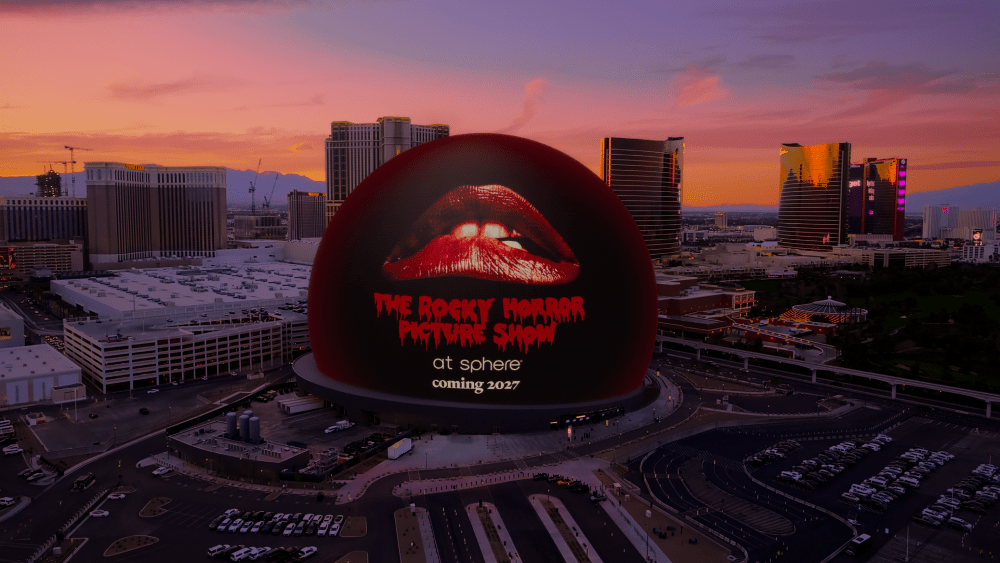
The Las Vegas Sphere will bring “The Rocky Horror Picture Show” to its massive LED screen in 2027, marking the venue’s second major immersive film experience after the record-breaking “The Wizard of Oz at Sphere,” which has already grossed over $400 million since its August 2025 debut. The announcement comes as Sphere Entertainment doubles down on its strategy of reimagining classic films as high-tech, audience-participation spectacles—blending cutting-edge technology with decades-old cult traditions.
Why This Isn’t Just Another Film Screening
The Sphere’s version of “Rocky Horror” won’t be a simple projection. As Variety reports, the production will leverage the venue’s 160,000-square-foot wraparound LED screen and spatial audio to create an experience that feels like stepping into Transsexual, Transylvania itself. But the real innovation lies in how it preserves—and amplifies—the film’s signature audience participation, which has made it a midnight-movie staple since 1975.
While the original film famously encouraged attendees to shout back lines (“Sweet transvestite!”), throw toast during the dinner scene, and toss toilet paper at key moments, the Sphere version will adapt these traditions for its high-tech setting. The venue hasn’t specified whether audience members can still bring props, but the spirit of interactive chaos remains intact. “The cult-classic experience—where viewers dress up in character costumes, sing ‘Time Warp,’ and throw props—will continue in the enhanced Sphere version,” USA Today confirms, quoting Sphere Entertainment’s CEO Jim Dolan.
“Since ‘The Rocky Horror Picture Show’ premiered in 1975, it redefined audience participation and became a cultural phenomenon,” Dolan said in a statement. “With Sphere, we have the opportunity to take that spirit of immersion to an entirely new level.”
The $400 Million Blueprint: How “Wizard of Oz” Proved the Model Works
The “Rocky Horror” announcement arrives on the heels of “The Wizard of Oz at Sphere,” which has already sold over 3 million tickets and grossed $400 million—making it one of the highest-grossing live entertainment experiences in Las Vegas history. The production, which premiered last August, didn’t just re-release the 1939 classic; it reimagined it entirely, trimming 25 minutes of runtime to fit the Sphere’s scale while adding wind effects, rumbling seats, and even Nerf-like apples raining from the ceiling during the “Poppies” scene.

As Deadline notes, the “Oz” experiment has been a mixed bag for purists—some film historians have criticized the runtime cuts and AI-assisted edits—but the box office numbers don’t lie. The Sphere’s approach isn’t about preserving the original film; it’s about creating a new, shareable experience that leverages the venue’s technology to make audiences feel like they’re *inside* the story.
- $400 million grossed by “The Wizard of Oz at Sphere” since its August 2025 debut.
- Over 3 million tickets sold, making it a cultural phenomenon in Las Vegas.
- Runtime trimmed by 25 minutes to fit the Sphere’s immersive format.
- Added effects: wind machines, rumbling seats, and interactive props (like apples dropped on the audience).
This model—high production value, interactive elements, and a focus on spectacle over fidelity—is exactly what Sphere Entertainment is betting on for “Rocky Horror.” The question isn’t whether it will work; it’s whether the audience will embrace the same level of immersion for a film that thrives on its raunchy, participatory nature.
What Makes “Rocky Horror” Different From “Oz”?
Where “The Wizard of Oz” is a nostalgic family classic, “Rocky Horror” is a counterculture icon—a film that was initially a box-office flop but became a midnight-movie phenomenon through audience-driven chaos. The Sphere’s challenge is to translate that energy into a high-tech setting without losing its rebellious spirit.
As the Las Vegas Review-Journal points out, the original film’s participatory elements—like tossing toast during Frank-N-Furter’s “sweet transvestite” line or screaming “Great Scott!”—were improvised by audiences long before immersive tech existed. The Sphere’s version will need to decide how much of that spontaneity to preserve. Will attendees still bring their own props, or will the venue provide them? Will the spatial audio encourage shouting back lines, or will the high-tech setting mute the traditional chaos?
The film’s cultural legacy is undeniable. It launched the careers of Tim Curry, Susan Sarandon, and Meat Loaf while cementing its place as a queer icon and a staple of midnight screenings. But translating that into a $100 million-plus production—like “Oz”—requires balancing nostalgia with innovation.
What Comes Next: The Sphere’s Immersive Pipeline
“Rocky Horror” isn’t the only classic getting the Sphere treatment. The venue has already announced Postcard From Earth, a sci-fi documentary by Darren Aronofsky, as part of its slate of “original experiences.” The success of these productions could redefine how films are consumed—not just as passive viewing, but as interactive, multi-sensory events.

This trend isn’t limited to the Sphere. As Deadline reports, other venues like IMAX and shared-reality startups are experimenting with similar formats, from 4DX theaters to AI-enhanced screenings. The Sphere’s approach, however, stands out for its scale and ambition—turning entire films into live, participatory events.
For now, the focus is on “Rocky Horror,” which will debut in 2027. While no exact date has been set, the Sphere’s track record suggests it will be a major draw—especially for fans eager to experience the film in a way that feels both faithful and futuristic. The real question is whether the audience will trade traditional midnight-movie antics for high-tech immersion—or if they’ll find a way to do both.
One thing is certain: If “Oz” is any indication, this won’t be a one-off. The Sphere is betting that audiences are hungry for experiences that blend technology with tradition—and “Rocky Horror” might just be the perfect test case.
Find more reporting in our Entertainment section.
