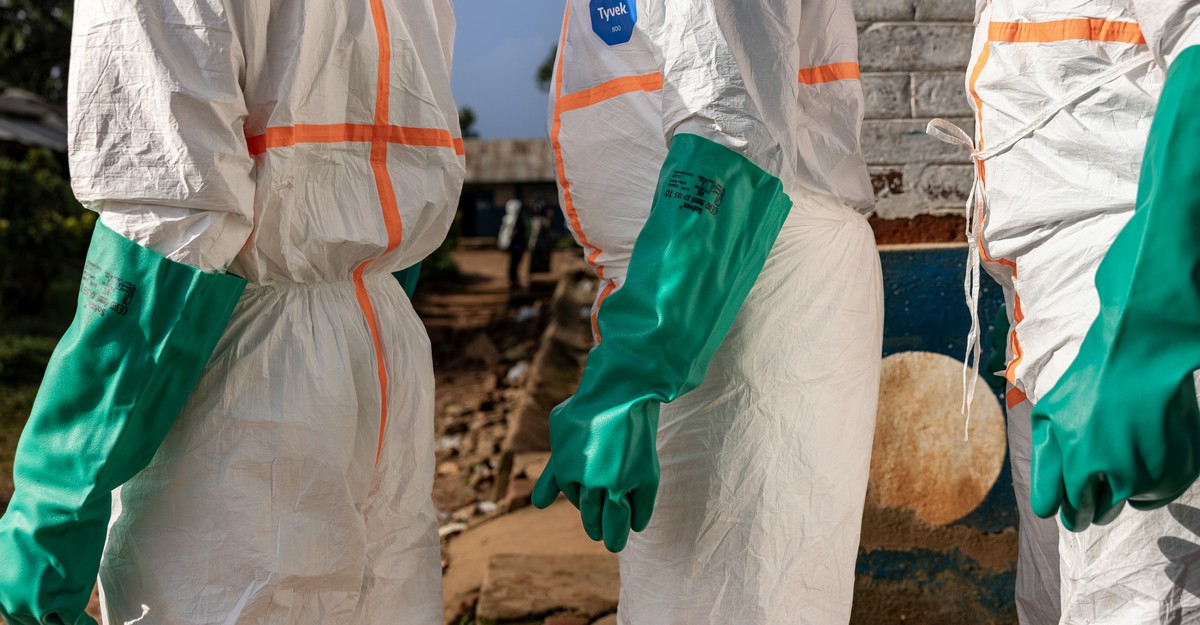
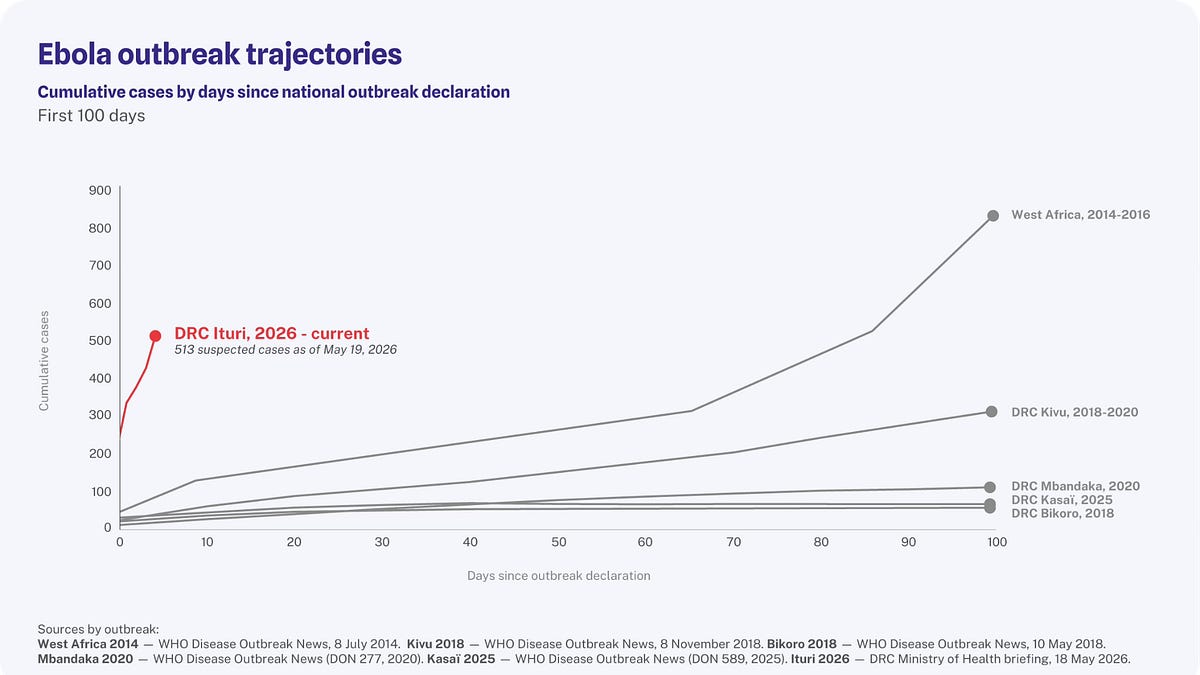
As of May 23, 2026, the Ebola outbreak in the Democratic Republic of the Congo (DRC) and Uganda has reached 600 suspected cases and 139 deaths, marking the third-largest outbreak in history, according to The Atlantic. The World Health Organization (WHO) declared a public-health emergency of international concern after the virus spread to urban centers, with delays in detection and response raising alarms about global preparedness.
The Science of Ebola: A Virus That Evolves, a Response That Stagnates
Dr. Steven Bradfute, an infectious disease expert at the University of New Mexico Health Sciences Center, explains that the Bundibugyo strain currently circulating in the DRC and Uganda is one of four Ebola species that infect humans. “It shares early symptoms with other viral illnesses—fever, muscle aches, and fatigue—but without rapid testing, it’s nearly impossible to distinguish from malaria or typhoid,” he says. UNM HSC Newsroom. The virus’s ability to mimic common diseases complicates containment, especially in regions with limited diagnostic infrastructure.

Despite advancements in vaccine development, no approved treatments exist for the Bundibugyo strain. Bradfute’s research at the UNM Center for Global Health focuses on creating non-infectious vaccine components, part of a Department of Defense-funded consortium aimed at rapid response. “We’re not working with live virus, but our subunits are critical for testing by other labs,” he notes. This collaborative effort underscores the fragility of global health networks, which have been strained by years of funding cuts and policy shifts.
From Compassion to Isolation: The Human Toll of an Outbreak
The Ebola outbreak has exposed a paradox: the disease spreads through acts of care, yet global solidarity has waned. “Ebola is the disease of compassion,” says Dr. Craig Spencer, a physician and public health advocate. “It thrives when families and communities support the sick, but it also spreads when we abandon those in need.” Your Local Epidemiologist. The current crisis, however, is compounded by a broader “me” over “we” mindset, where individualism undermines collective action.

This shift, the article argues, is rooted in decades of dismantling public health infrastructure. “When systems fail—whether through underfunded clinics or political neglect—people stop trusting institutions,” the author writes. “The result is a cycle of isolation that weakens our ability to respond to crises.” The erosion of agencies like USAID, which once funded global health initiatives, has left gaps in surveillance and rapid response, according to Hartford Courant, which links the outbreak to the Trump administration’s cuts to pandemic preparedness.
Political Failures and the Cost of Apathy
The Atlantic highlights the Trump administration’s dismantling of early-warning systems, trained response teams, and funding for global health programs. “The destruction of this infrastructure contributed to the delayed detection of the current Ebola outbreak,” the article states. The Atlantic. This has left the U.S. and its allies scrambling to catch up, even as the WHO acknowledges it does not yet know the outbreak’s full scope or origin.
The Hartford Courant draws a direct line between past policy decisions and the current crisis. “The network that contained the 2014 Ebola outbreak—CDC labs, USAID training programs, and international partnerships—has been dismantled,” the editorial argues. Hartford Courant. The 2014 case of Emile, a Guinean child whose death sparked a regional epidemic, serves as a grim reminder of how quickly a localized outbreak can spiral into a global emergency. “Ebola is only a plane ride away,” the article warns, citing the 2014 Dallas case where a Liberian man transmitted the virus to two nurses before dying.
What’s Next? A Call for Urgent Action
Experts caution that without immediate intervention, the DRC and Uganda outbreaks could spiral into a transnational crisis. The WHO has called for increased surveillance, community engagement, and vaccine distribution, but logistical challenges persist. “We’re playing from behind,” a WHO representative told The Atlantic. “The virus has been circulating for six weeks in the DRC before public confirmation, and we still don’t know how far it’s spread.”
For the U.S., the outbreak is a stark reminder of the costs of complacency. “Investing in global health isn’t just humanitarian—it’s economic and strategic,” argues Your Local Epidemiologist. “A sixfold return on investment in research and development can yield jobs and innovation, but only if we prioritize collective action over short-term gains.” As the world grapples with the dual threats of Ebola and hantavirus, the lesson is clear: preparedness is not a luxury, but a necessity.
