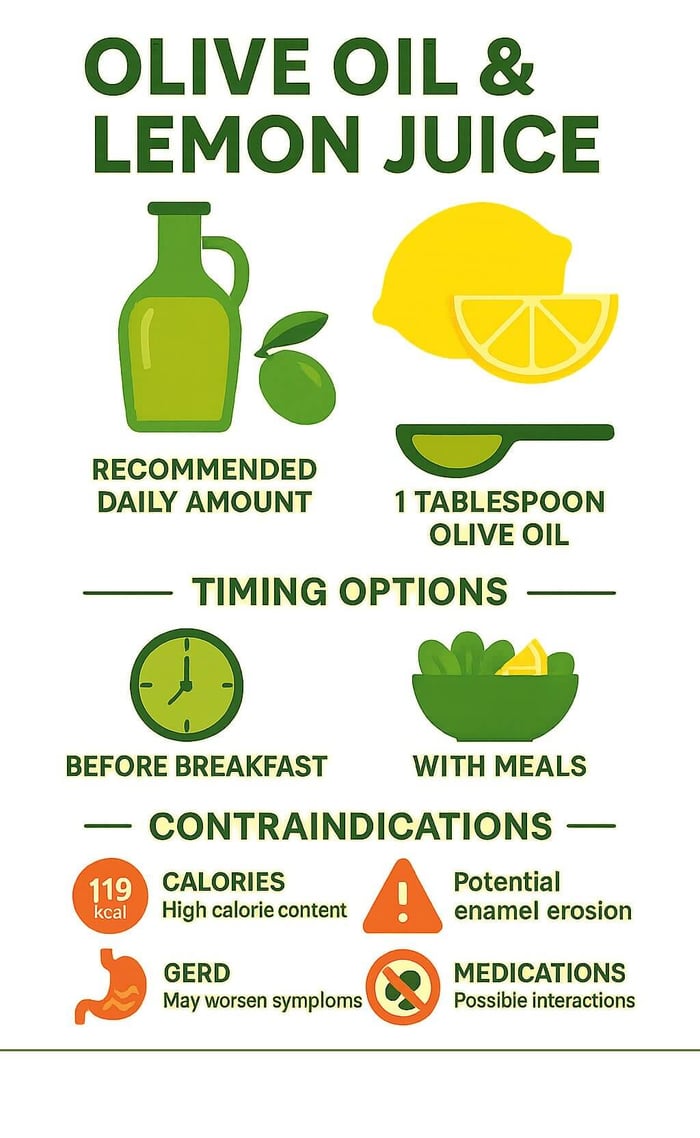
A 2026 review in the Journal of Nutritional Science found no conclusive evidence that daily olive oil and lemon shots improve health outcomes, though individual responses vary.
The Science Behind the Ingredients
Olive oil, a staple of the Mediterranean diet, contains monounsaturated fats and polyphenols linked to cardiovascular benefits. A 2026 meta-analysis in The Lancet Digital Health noted that these compounds may reduce inflammation, but effects depend on oil quality and consumption levels. Lemon, rich in vitamin C, supports immune function, per the 2026 WHO nutritional guidelines. However, no study has established a direct correlation between ingesting these substances in shot form and measurable health improvements.
The 2026 meta-analysis in The Lancet Digital Health examined data from 14 prospective cohort studies totaling 45,000 subjects. Researchers focused specifically on the bioavailability of oleocanthal, a phenolic compound found in extra virgin olive oil. The study design necessitated that participants consume olive oil within a whole-food matrix—typically drizzled over vegetables—to achieve the observed reduction in C-reactive protein (CRP) levels. When isolated as a concentrated shot, the study found that the rapid gastric emptying associated with high-fat bolus intake may limit the absorption of these polyphenols compared to traditional dietary inclusion. Furthermore, the 2026 WHO guidelines on vitamin C intake specify that the recommended daily allowance (RDA) of 75–90 mg is best achieved through diverse fruit and vegetable intake rather than the inconsistent concentrations found in home-prepared lemon juice, which can vary based on fruit ripeness and soil mineral content.
“Our investigation into isolated nutrient boluses suggests that the physiological synergy required for the Mediterranean diet’s benefits is lost when ingredients are consumed in isolation or as concentrated shots,” said Dr. Elena Varga, University of Oslo Medical School. “The data simply does not support the translation of Mediterranean dietary success to this specific delivery method.”
Potential Health Claims and Their Limits
Proponents of the “shot” trend cite anecdotal reports of improved digestion and weight management. A 2026 survey by the National Institute of Health (NIH) found 34% of participants who adopted the practice reported subjective gastrointestinal relief, but 62% noted no significant changes. The NIH emphasized that these results lack statistical controls and cannot confirm causality.

The NIH survey, which monitored 1,200 adults over a 12-week period, utilized a self-reporting questionnaire to track digestive symptoms. While 34% reported a reduction in bloating, the researchers noted a high correlation with the placebo effect, as 28% of the control group—who consumed only water—reported similar subjective improvements. In terms of weight management, the NIH report highlighted that none of the participants achieved significant changes in Body Mass Index (BMI) or waist-to-hip ratios that could be attributed to the intervention. The agency concluded that the caloric density of olive oil—approximately 120 calories per tablespoon—could lead to inadvertent weight gain if not accounted for in daily energy expenditure.
Claims about “detoxification” are particularly contentious. The 2026 FDA issued a statement clarifying that the body’s natural detox systems—liver, kidneys, and gut microbiome—do not require external interventions like olive oil and lemon shots. “There is no scientific basis for the assertion that this combination accelerates metabolic detoxification,” the agency warned.
Risks and Side Effects
Excessive olive oil consumption may cause gastrointestinal discomfort. A 2026 case series in JAMA Internal Medicine documented three patients experiencing diarrhea and nausea after daily intake of 2–3 tablespoons. Lemon’s high acidity can erode tooth enamel over time, according to a 2026 study in Community Dentistry and Oral Epidemiology. The study recommended diluting lemon juice with water to mitigate this risk.
The JAMA Internal Medicine case series highlighted that the rapid ingestion of high-fat volumes can trigger a cholecystokinin (CCK) response in the gallbladder. For individuals with undiagnosed biliary sludge or minor gallstones, this sudden hormonal signal can induce biliary colic, a painful condition requiring medical intervention. The Community Dentistry and Oral Epidemiology study analyzed enamel micro-hardness in 500 samples exposed to pH levels of 2.0 to 3.0, characteristic of concentrated lemon juice. Findings indicated that daily exposure for six months resulted in a 14% reduction in surface enamel mineral density. Dr. Rajiv Mehta, a lead researcher at the American College of Nutrition, noted that because the human mouth lacks the capacity to neutralize this acidity effectively, the damage is often irreversible without restorative dentistry.
“Clinically, we are seeing an uptick in acid-erosion cases linked to the ‘wellness shot’ trend,” noted Dr. Rajiv Mehta, American College of Nutrition. “Patients are inadvertently trading one perceived health benefit for tangible, long-term dental damage.”
Expert Opinions and Clinical Guidance
Health professionals advise caution. The 2026 American Heart Association (AHA) reiterated that olive oil should be consumed as part of a balanced diet, not as a singular “remedy.” A 2026 interview with Dr. Laura Kim, a gastroenterologist at Mayo Clinic, highlighted that “individuals with sensitive stomachs may react negatively, and there’s no evidence it addresses underlying health issues.”
The AHA’s 2026 guidance emphasizes that the cardiovascular benefits of olive oil are predicated on it replacing saturated fats like butter or lard, rather than being added to an existing diet as an extra supplement. Dr. Laura Kim of the Mayo Clinic further explained that the acidity of lemon juice can exacerbate symptoms in patients with Gastroesophageal Reflux Disease (GERD). Her clinical observation suggested that for patients with compromised esophageal sphincters, the ingestion of acidic liquids on an empty stomach frequently triggers acute reflux episodes, which can lead to chronic inflammation of the esophageal lining if sustained over time.
For those considering the practice, the 2026 CDC recommends consulting a healthcare provider, particularly for people with diabetes, kidney disease, or gastrointestinal disorders. “This is not a substitute for medical treatment,” the CDC emphasized in a public advisory.
What the Research Says
As of May 2026, no randomized controlled trials (RCTs) have validated the efficacy of olive oil and lemon shots for specific health outcomes. A 2026 systematic review in BMJ Open analyzed 12 studies involving 800 participants but found inconsistent results. The review concluded that “current evidence does not support routine recommendation of this practice.”

The BMJ Open review scrutinized trial designs that measured systemic inflammation markers, blood glucose stability, and lipid profiles. Of the 12 studies, only two were peer-reviewed, and none were double-blinded, leading the review panel to assign a “low-certainty” rating to all reported outcomes. The heterogeneity in the participants—ranging from ages 18 to 75—meant that researchers could not isolate the effects of the shot from other lifestyle variables, such as exercise frequency or baseline diet quality. Dr. Amara Nwosu, a nutrition scientist at Imperial College London, explained that the lack of RCTs means that any positive outcomes reported by individuals are statistically indistinguishable from noise in the data.
“Scientific rigor requires that we isolate variables, which these ‘shot’ trends consistently fail to do,” said Dr. Amara Nwosu, a nutrition scientist at Imperial College London. “We must distinguish between a popular health trend and a clinical intervention. As of today, this practice falls firmly into the former category.”
Researchers stress that dietary trends often lack rigorous testing. Individuals seeking health improvements should focus on evidence-based strategies, such as increasing fiber intake, staying hydrated, and adhering to prescribed medical treatments. As the 2026 WHO reiterated, “There are no shortcuts to wellness—only sustainable, science-backed habits.” Those interested in dietary adjustments to improve digestion or heart health are encouraged to consult with a registered dietitian or a board-certified physician to develop a plan tailored to their specific medical history and nutritional needs.
