Congo: Ebola Outbreak Spreads to Provinces Haut-Uele and Tshopo
The Democratic Republic of the Congo faces a critical health crisis as a rare strain of Ebola expands into new provinces amid regional conflict and healthcare strain.
- Headline Dispatch: Congo: Ebola Outbreak Spreads to Provinces Haut-Uele and Tshopo
- Core Takeaway: The Democratic Republic of the Congo faces a critical health crisis as a rare strain of Ebola expands into new provinces amid regional conflict and healthcare strain.
- Source Synthesis: Continuous live monitoring aggregated across major news wires and independent bureaus.
Congo: Ebola Outbreak Spreads to Provinces Haut-Uele and Tshopo
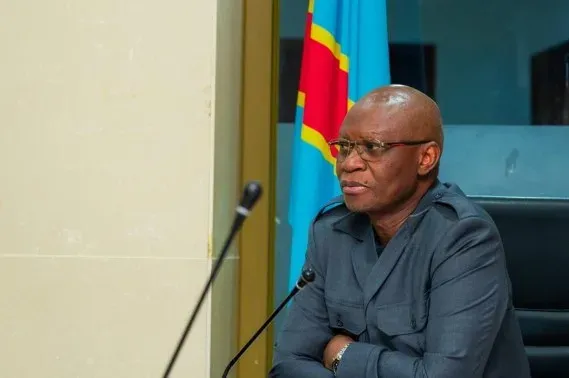
The Ebola outbreak in the Democratic Republic of the Congo (DRC) has expanded into two additional provinces, Tshopo and Haut-Uele. Health Minister Roger Kamba confirmed the expansion on Thursday, 9 July, during a visit to Bunia, the capital of Ituri province and the current epicentre of the epidemic.
Health authorities have tracked patients moving from outbreak zones toward the Wamba area in Haut-Uele and Kisangani, the capital of Tshopo. According to a government report published late Wednesday, two suspected cases were recorded in Kisangani; one was linked to the Nia-Nia health zone in Ituri, while the other had no apparent geographical connection to known outbreaks
.
The disease is caused by the rare Bundibugyo virus, a species that had not been seen for over a decade, with previous outbreaks occurring only in 2007 and 2012. Unlike more common strains, the Bundibugyo virus has no approved vaccine or treatment. The Africa Centre for Disease Control stated on Thursday that this is the fastest-growing Ebola outbreak on the continent.
Rising Toll and System Strain
The scale of the crisis is reflected in the mounting casualties and the pressure on medical infrastructure. While different reports provide varying figures, health authorities released an update on Sunday covering data through Friday, reporting 1,873 confirmed cases and 672 deaths. Other health ministry updates listed 1,759 confirmed cases and 600 deaths.
The healthcare system is facing severe strain. According to a Wednesday update, 750 patients were in isolation or hospitalisation with a bed occupancy rate of 94 per cent. A subsequent report released Sunday indicated 763 patients were receiving care, with occupancy rising to 95.1 per cent.
The virus has also targeted the responders. Africa CDC data shows that at least 112 health workers have been infected, and 35 have died. This includes a US humanitarian worker who recently tested positive, triggering new epidemiological investigations and contact tracing.
Containment Challenges and Conflict
The outbreak was formally declared on 15 May, though the World Health Organization stated the virus had been transmitting for weeks prior. The first known case was a nurse who died in Bunia after developing symptoms on 24 April.
Minister Kamba attributed the rapid spread to high population density, strong inter-regional mobility, and local beliefs that the disease is witchcraft
or a mystical illness
, which leads some to seek help from witchdoctors and prayer centres. Additionally, Africa CDC noted that funerals have been a particular point of concern for transmission.
Efforts to contain the virus are hampered by active conflict in eastern Congo. Trish Newport of Doctors Without Borders told the BBC World Service that territory frequently changes hands between armed groups, making it difficult for teams to reach hotspots. In some areas, infrastructure is lacking; a 90km journey from Bunia to the gold-mining town of Mongbwalu can take more than three hours.
Despite the conflict, the rebel AFC-M23 alliance has created its own Ebola response team. Spokesman Lawrence Kanyuka said the group is working with local medical facilities, and Caitlin Brady of the Danish Refugee Council noted that some health workers remained in place after rebels seized certain cities.
International Response and Medical Trials
The World Health Organization has declared the outbreak a public health emergency of international concern. While the risk outside Central and East Africa is considered minimal, the virus has crossed borders. Uganda has confirmed 20 cases and two deaths, while France confirmed a case on 24 June involving a doctor returning from a humanitarian mission.
Medical researchers are racing to find a treatment:
- The UK's MHRA has permitted human trials for a University of Oxford vaccine developed using technology from the Oxford-AstraZeneca Covid vaccine.
- The US Administration for Strategic Preparedness and Response (ASPR) is sending investigational doses of the monoclonal antibody MBP134 for compassionate use.
- A WHO-sponsored trial in the DRC is testing whether remdesivir and MBP134 can reduce mortality.
Financial mobilization is ongoing. The WHO has dedicated $3.9m, while Africa CDC announced a $319m budget, supported by an initial $5m pledge from South African President Cyril Ramaphosa. Meanwhile, Trump Administration officials plan to request $1.4 billion from Congress, with $800 million for supplies and contact tracing and $500 million to prevent the virus from entering the United States.
Current Status and Next Steps
Mass gatherings have been banned in Ituri, North Kivu, South Kivu, Haut-Uele, Bas-Uele, and Tshopo. As a precaution, the ban extends to the capital, Kinshasa, despite no confirmed cases there.
There is one area of cautious optimism: South Kivu has reported no new cases since 26 May and may soon be declared over. However, Minister Kamba warned that because the epidemic remains in a very active
phase and the peak is undetermined, the coming weeks remain critical for the national response.
How significant is this development?
Participate in our community survey on the trajectory and real-world impact of this news.