
Chinese scientists have challenged a long-standing assumption about early human creativity, revealing that harsh ice age environments may have driven technological innovation among archaic humans 146,000 years ago. A study of stone tools from the Lingjing archaeological site in central China, published in the Journal of Human Evolution, shows that Homo juluensis—an extinct human relative—crafted sophisticated tools during a severe glacial period, contradicting the notion that creativity thrived in warm, stable climates.
The Discovery That Upends Old Assumptions
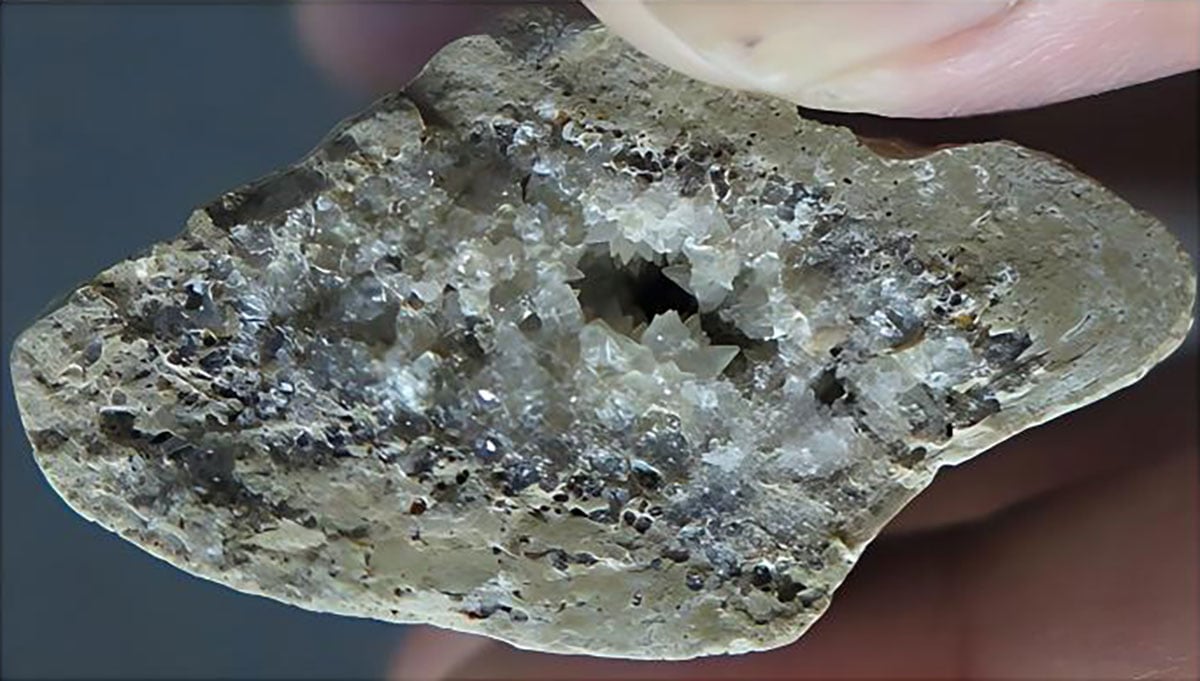
The Lingjing site, located in Henan province, has yielded nearly 15,000 stone artifacts, primarily made from quartz. These tools, once thought to date to a more temperate era, were re-evaluated using crystals embedded in a deer-like animal’s rib bone. The analysis, led by Yuchao Zhao of Shandong University, confirmed the tools are 146,000 years old—placing them squarely in an ice age. “Finding out that these stone tools were made during a harsh ice age tells a different story,” Zhao said. “Hard times can force us to adapt.”
The tools’ complexity defies previous assumptions about East Asia’s technological stagnation during the Middle Pleistocene. Unlike random rock fragments, the artifacts show deliberate shaping, with some cores designed to produce sharp, functional flakes. “This was not casual flake production, but a technology that required planning, precision, and a deep understanding of stone properties,” Zhao explained. The design similarities to Middle Paleolithic tools in Europe and Africa suggest advanced cognitive abilities were not exclusive to Western Eurasia.
Revisiting Homo juluensis: A Mysterious Human Relative
Homo juluensis, a proposed extinct cousin of modern humans, is central to this discovery. While its existence remains debated, the species is believed to have inhabited eastern Asia between 300,000 and 100,000 years ago. The Lingjing tools may represent the work of this enigmatic group, which exhibited a mix of archaic and modern traits, including a large brain. “The underlying logic of this system—and the cognitive abilities it reflects—shows important similarities to Middle Paleolithic technologies often associated with Neanderthals in Europe and with human ancestors in Africa,” Zhao noted.
This challenges the “muddle of the middle,” a term describing the unclear evolutionary transition from Homo erectus to Homo sapiens. By demonstrating advanced tool-making during an ice age, the Lingjing findings suggest that environmental pressures, rather than geographic location, may have been the key driver of innovation.
Implications for Human Evolutionary Narratives
The study reshapes understanding of how early humans adapted to extreme conditions. Previous theories posited that technological progress was tied to climatic stability, but the Lingjing tools show that survival in harsh environments necessitated ingenuity. “People often imagine creativity as something that flourishes in good times,” Zhao said. “Finding out that these stone tools were made during a harsh ice age tells a different story.”
Archaeologists now question why East Asia’s technological record was historically viewed as less advanced. The Lingjing site’s tools, which required “a deep understanding of stone fracture mechanics,” suggest that innovation was not confined to Europe or Africa. “This discovery helps overturn the long-held assumption that populations in this region stagnated in technological advancement for tens of thousands of years,” the SciTechDaily report noted.
The Science Behind the Dating Breakthrough
The critical evidence came from crystals growing inside the rib bone, which allowed researchers to date the site with precision. These crystals, formed in a spring-fed environment, provided a “fingerprint” of the ice age’s climatic conditions. “The site’s strategic access to a spring likely made it a key location for animal processing,” said Zhao, who collaborated with Zhangyang Li, a professor at Shandong University. The tools’ placement alongside butchered bones further supports this theory.

The reevaluation of the site’s age also highlights the importance of re-examining assumptions. “Researchers previously estimated that the tools were made during a balmy era when life was relatively easy,” Zhao said. “But the crystals tell a different story.” This method could now be applied to other sites, potentially rewriting the timeline of human technological development.
The Lingjing discovery underscores a broader theme: adversity as a catalyst for innovation. As Zhao put it, “Hard times can force us to adapt.” For modern scientists, the study serves as a reminder that creativity often emerges not in comfort, but in the face of survival challenges. The implications extend beyond archaeology, offering insights into how humans might navigate future environmental crises.
