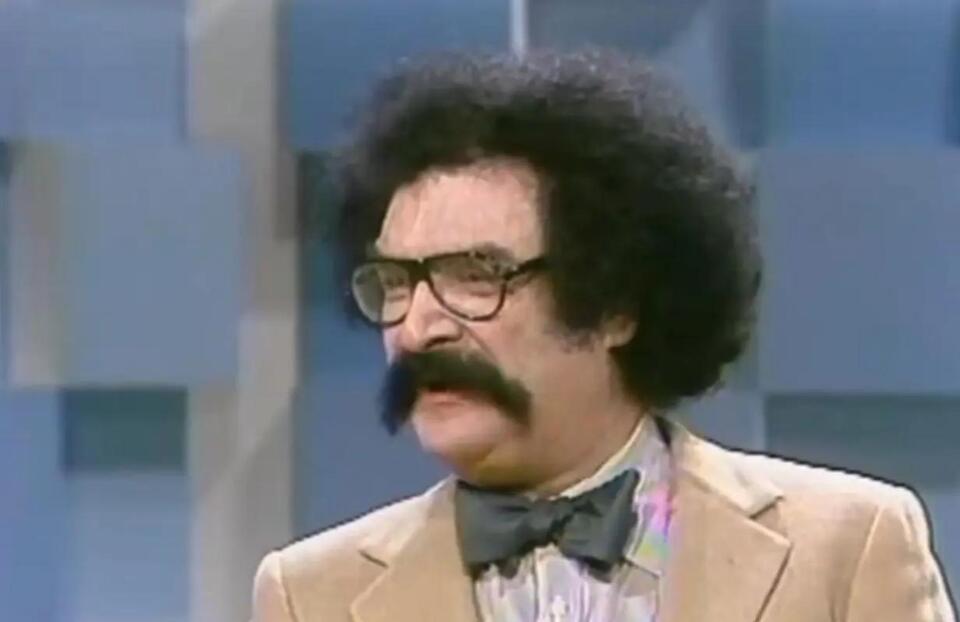
Gene Shalit, the long-tenured television film critic known for his distinctive mustache and prolific use of puns, has died at age 100. His career was defined by decades of commentary on NBC’s The Today Show, where he became a recognizable figure in American pop culture for his unique delivery and film reviews.
A Legacy of Television Film Criticism
Gene Shalit served as a film critic for NBC’s The Today Show for four decades, beginning in 1973 and concluding his tenure in 2010. Throughout his time on the program, Shalit became widely recognized for his flamboyant style, which included a signature bushy mustache, colorful bow ties, and a penchant for elaborate, pun-heavy critiques. His presence on the network was a cornerstone of morning television, anchoring the “Critics’ Corner” segment and providing viewers with a consistent, albeit unconventional, voice in movie reviews.
While his style was often distinct from the more formal critical discourse of the era, his presence on morning television made him a household name. His reviews often focused on the entertainment value of major studio releases, helping to shape public perception of Hollywood cinema for a broad, national audience. During his tenure, Shalit interviewed hundreds of major stars, directors, and screenwriters, turning his segments into essential viewing for those interested in the pulse of the American film industry. His ability to distill complex cinematic experiences into short, lighthearted segments allowed him to bridge the gap between high-brow film criticism and mass-market entertainment.
The Evolution of the Critic’s Role
Shalit’s career spanned a significant period of transition in how film criticism was presented to the public. During the 1970s, when he began his primary role at NBC, television criticism was emerging as a powerful force in the industry. It was an era where the “television critic” held immense sway over box-office success. By the time he retired in 2010, the landscape of film review had shifted toward internet-based commentary, blogs, and eventually social media aggregation.
His approach to criticism often drew comparisons to the more adversarial style of his contemporaries, such as Gene Siskel and Roger Ebert. While Siskel and Ebert were known for a “thumbs up/thumbs down” format that emphasized debate and ideological critique, Shalit’s delivery was characterized by a lighter, more comedic tone. This contrast in styles highlighted the diversity of film criticism in the late 20th century, providing viewers with multiple ways to engage with the medium of film. While Siskel and Ebert were frequently associated with the syndicated programs Sneak Previews and At the Movies, Shalit’s placement on a general-interest morning show like The Today Show meant his audience was often broader and less specialized, cementing his role as a pop-culture ambassador.
Industry Impact and Television History
In the broader context of media history, Shalit’s longevity on The Today Show represents an era of television stability that is rarely seen in the modern digital age. He worked under several generations of hosts and producers at NBC, maintaining his segment’s popularity through changing network leadership and shifting audience demographics. The platform he occupied—a top-rated morning news program—offered a level of reach that few film critics achieved before or since. His reviews were not just evaluations; they were segments of a morning routine for millions of Americans, effectively acting as a bridge between the Hollywood studio marketing machine and the average consumer who was deciding which film to see on a weekend.
For more on this story, see Spielberg’s Disclosure Day Shatters Box Office Records, Becomes Peacock’s All-Time Top Film.
The transition from his start in 1973 to his departure in 2010 mirrors the evolution of the film industry itself, moving from the height of the “New Hollywood” era to the digital age of CGI-heavy blockbusters. Shalit remained a constant, even as the medium he critiqued underwent radical technological and structural changes. His retirement marked the end of a specific archetype of the television personality—the eccentric, specialized expert who had a permanent home on a mainstream news desk.
Understanding the Biological “Gene”
In scientific contexts, the term “gene” carries a different, fundamental definition as the basic unit of heredity. According to Genome.gov, genes are passed from parents to offspring and contain the information necessary to specify physical and biological traits. Humans possess approximately 20,000 protein-coding genes, which provide the instructions to create proteins that form and regulate the body’s functions. The study of these units, known as genetics, is a cornerstone of modern biology, mapping everything from disease susceptibility to physical characteristics.

The Cleveland Clinic notes that genes function as instructions for cellular machinery, determining which amino acids to use to build specific proteins. This biological process is distinct from the cultural contributions of the film critic Gene Shalit, though both share the same name—a common linguistic occurrence where a term holds specific meanings across different fields, such as biology and media studies. The linguistic collision between the name of a prominent television figure and the fundamental building block of life has often been a source of trivia, highlighting the reach of Shalit’s fame into the public consciousness.
Historical Context of the Name
The name “Gene” has long been a staple in American culture, appearing frequently in both public life and technical nomenclature. While the film critic’s name was a professional moniker that became synonymous with his public persona, the biological definition of a gene relates to DNA sequences that are transcribed to produce RNA. The term “gene” was coined in 1909 by Danish botanist Wilhelm Johannsen, derived from the Greek word “genos,” meaning birth or origin.
According to Wikipedia, the term “gene” in biology is divided into two primary categories: the Mendelian gene, which serves as the basic unit of heredity, and the molecular gene, defined as a sequence of nucleotides in DNA. These definitions underscore the importance of the term in understanding human development and evolutionary biology, a stark contrast to the entertainment industry records maintained by television historians. While the critic Gene Shalit documented the history of cinema, the “gene” of biological science documents the history of life itself. The coincidence of the name serves as a reminder of how language functions across disparate disciplines, from the arts and media to the hard sciences.
Find more reporting in our Entertainment section.
