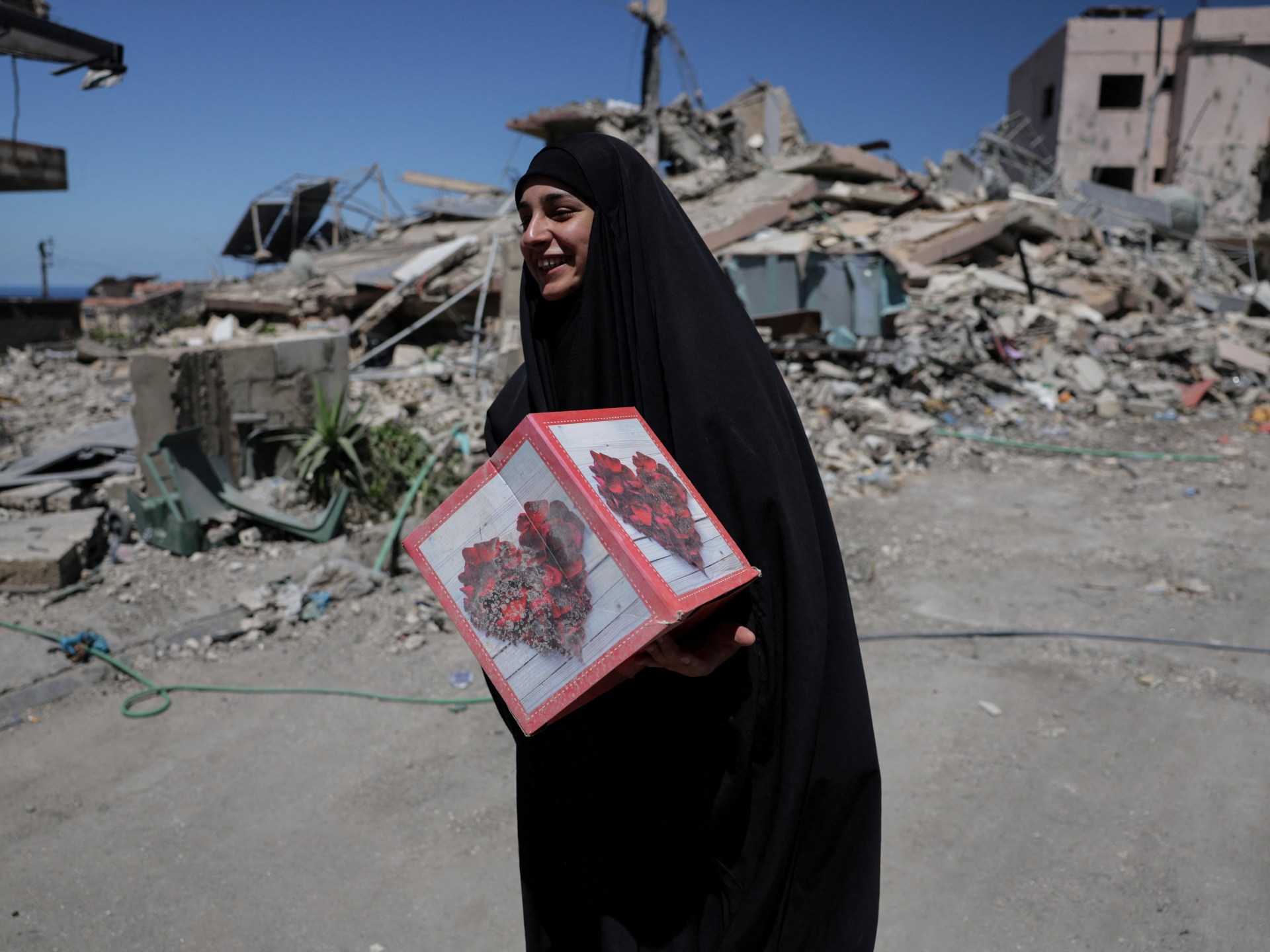
Iran’s diplomatic push for a ceasefire in Lebanon is now the linchpin of its broader nuclear talks with the US—but the fragile truce is cracking under Israeli strikes and Tehran’s hardline demands.
As US-Iran negotiations entered a second day in Switzerland on Monday, June 21, 2026, Iranian officials made clear they would walk away from the table if Israel failed to withdraw from Lebanon. The warning came as mediators from Qatar and Pakistan declared the talks had begun in a “positive and constructive atmosphere,” even as Israeli airstrikes continued in southern Lebanon—undermining the ceasefire agreement that Iran insists must precede any final deal. The stakes are higher than ever: a breakdown could derail the entire diplomatic process, while a breakthrough could reshape the Middle East’s geopolitical landscape.
Lebanon as the Litmus Test
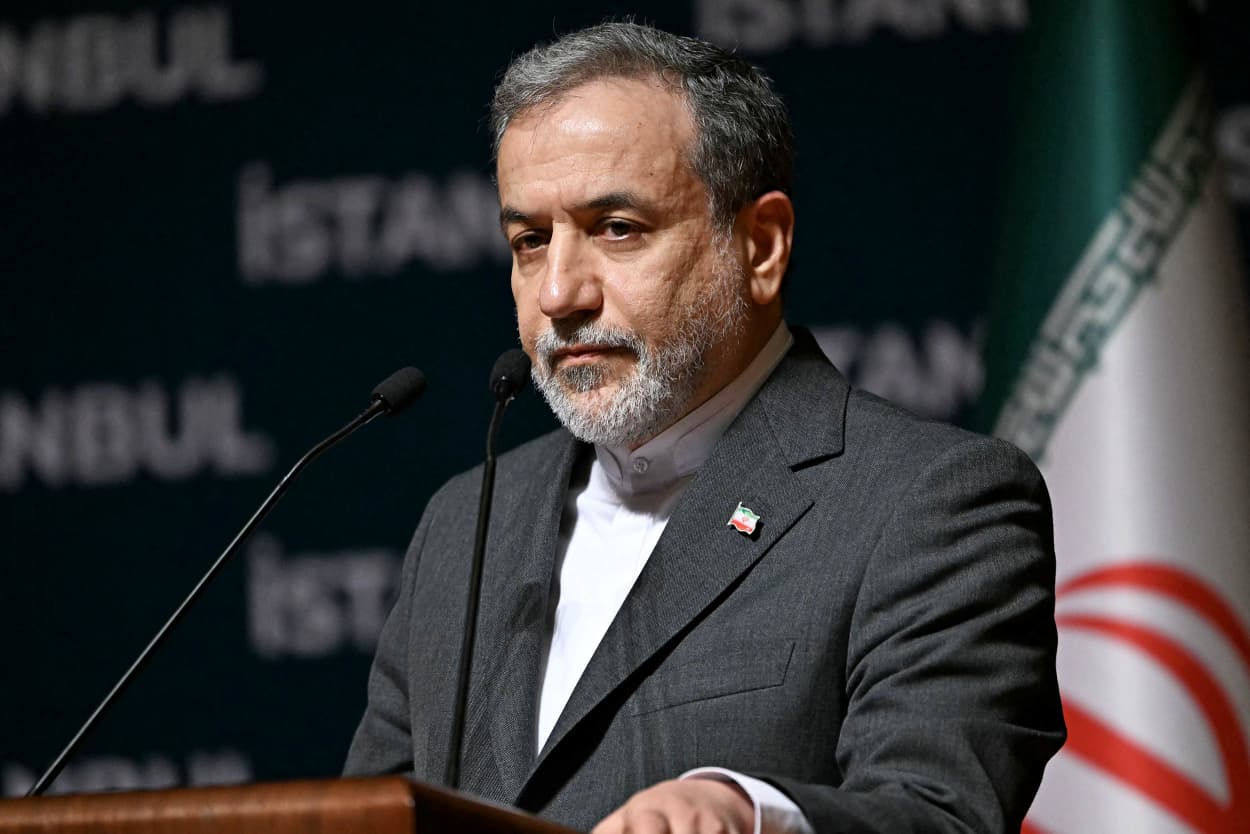
For Iran, the ceasefire in Lebanon is not just a condition—it is a test of US credibility. Iranian Foreign Minister Abbas Araghchi told reporters that Washington has a “commitment and responsibility” to ensure Israel complies with the agreement, framing Lebanon as a proving ground for whether the US can enforce its own terms. “If the United States is not able to stop Israel from attacking Lebanon,” warned Muhanad Seloom of the Doha Institute for Graduate Studies, “who will guarantee that in the future Israel won’t attack Iran itself?” The concern is not abstract: Iranian officials have repeatedly linked Israel’s actions in Lebanon to the broader US-Iran Memorandum of Understanding (MoU), which requires an end to hostilities across the region.
Yet the linkage risks backfiring. Former US official Mark Kimmitt, speaking to Al Jazeera, called Iran’s approach “very, very unwise.” “They can’t control what Hezbollah is going to do, and the United States doesn’t control what Israel is going to do,” he said. The US and Israel share overlapping interests, but not identical ones—and Tehran’s ultimatum may force Washington into an impossible choice: either pressure Israel to comply or abandon the negotiations entirely.
This dynamic has been further complicated by recent statements from Israeli Defense Minister Yoav Gallant, who told reporters on June 19 that Israel would not withdraw from Lebanon “until Hezbollah is dismantled as a military threat.” Gallant’s remarks were echoed by Israeli Prime Minister Benjamin Netanyahu, who stated in a closed-door meeting with the Knesset Foreign Affairs and Defense Committee that “any ceasefire in Lebanon must be conditional on Hezbollah’s disarmament, not just a temporary halt in fighting.” These statements have been met with sharp criticism from Lebanese officials, including Hezbollah Secretary-General Hassan Nasrallah, who warned in a televised address on June 20 that “Israel’s insistence on disarmament is a non-starter and will only prolong the conflict.”
The Lebanese government, led by Prime Minister Najib Mikati, has attempted to mediate between Hezbollah and Israel but has faced significant constraints. In a statement released by the Lebanese Ministry of Foreign Affairs on June 20, Mikati’s office emphasized that “any solution must respect Lebanon’s sovereignty and territorial integrity,” while also acknowledging the need for a “comprehensive and just ceasefire.” The statement did not explicitly condemn Israel’s strikes but called for “all parties to exercise restraint and avoid actions that could escalate the situation.”
Meanwhile, the UN Interim Force in Lebanon (UNIFIL) has reported increased tensions along the Blue Line, the de facto border between Israel and Lebanon. In a statement released on June 21, UNIFIL spokesperson Captain Peter Haworth noted that “the situation remains volatile, with frequent exchanges of fire and violations of the ceasefire agreement.” Haworth’s remarks were supported by a report from the UN Secretary-General’s office, which highlighted that “the current level of hostilities is the highest since the 2006 conflict,” raising concerns about a potential regional spillover.
Iran’s hardline stance on Lebanon is also tied to its broader regional strategy. According to a June 18 statement from the Iranian Supreme National Security Council, led by Chairman Ali Shamkhani, “the stability of Lebanon is a red line for Iran’s national security interests.” Shamkhani’s remarks were reinforced by a joint statement from the Iranian Foreign Ministry and the Islamic Revolutionary Guard Corps (IRGC), which warned that “any attack on Lebanon will be met with a proportional and decisive response from Iran and its allies.” The IRGC’s involvement in this diplomatic push underscores the military dimension of Tehran’s leverage, as the group has been accused by Western officials of supplying advanced missiles and drones to Hezbollah.
Analysts at the International Crisis Group (ICG) have noted that Iran’s linkage of the Lebanon ceasefire to nuclear talks is a calculated move to pressure the US into demonstrating its commitment to the MoU. Ali Vaez, the ICG’s Iran Project Director, told Foreign Policy magazine that “Iran is testing whether the US is serious about enforcing the terms of the agreement or if it will allow Israel to dictate the pace of negotiations.” Vaez added that “this is not just about Lebanon—it’s about whether the US is willing to challenge its closest ally in the Middle East to achieve a broader diplomatic breakthrough.”
The Switzerland Summit: A Fragile Moment
The first formal talks between US and Iranian delegations took place at the Bürgenstock Resort in Switzerland, with mediators from Qatar and Pakistan facilitating the discussions. A joint statement from the four nations described the atmosphere as “positive and constructive,” though tensions flared when the Iranian delegation walked out of negotiations on Sunday night in protest over US President Donald Trump’s threats to resume strikes unless the Strait of Hormuz was reopened.
Trump’s remarks, made during a press conference in Florida on June 19, had been interpreted by Iranian officials as a violation of the MoU’s Article 7, which prohibits “any unilateral action that could undermine the trust-building process.” Iranian President Ebrahim Raisi’s office released a statement condemning Trump’s comments as “a clear breach of the agreed-upon framework,” while Iranian Foreign Minister Abbas Araghchi canceled a scheduled meeting with US Secretary of State Antony Blinken, who was in Geneva for the talks.
Despite the setback, the parties agreed to establish a High-Level Committee for political oversight and a “deconfliction cell” to monitor the termination of Israeli military operations in Lebanon. The committee, co-chaired by US National Security Advisor Jake Sullivan and Iranian Supreme National Security Council Chairman Ali Shamkhani, is tasked with overseeing the implementation of the MoU’s provisions. The deconfliction cell, meanwhile, will include military representatives from Israel, Hezbollah, and UNIFIL to prevent accidental escalations.
“We are witnessing a great day that will lead to world peace.”
— Pakistani Prime Minister Shehbaz Sharif, via JPost
Pakistani Prime Minister Shehbaz Sharif’s optimism was tempered by warnings from regional analysts. In an interview with Dawn newspaper, former Pakistani Foreign Secretary Riaz Mohammad Khan cautioned that “the MoU is a delicate balance of trust and verification, and any misstep could unravel years of diplomatic efforts.” Khan noted that Pakistan’s role as a mediator is particularly sensitive given its historical ties with both Iran and the US, adding that “Islamabad cannot afford to be seen as favoring one side over the other.”
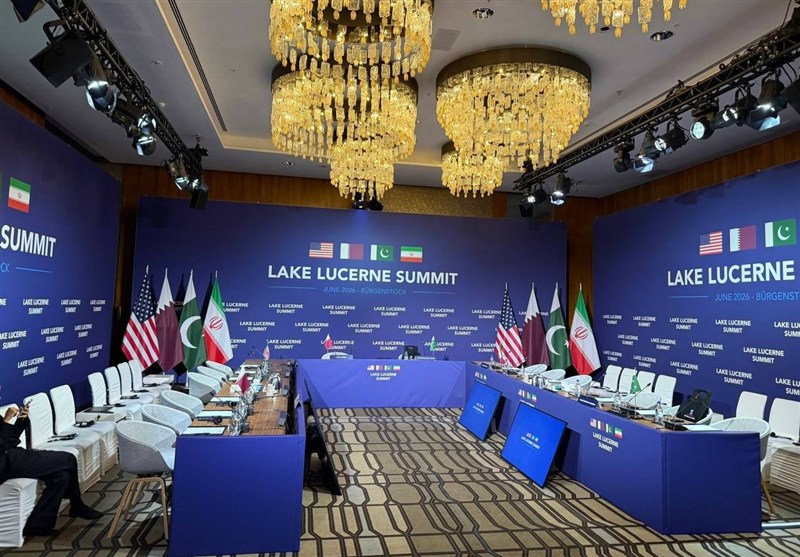
US Vice President JD Vance framed the negotiations as a direct result of Trump’s leadership, praising the president’s “active vision” for transforming the Middle East. “What the president has asked us to do is turn over a new leaf,” Vance said in a speech at the Swiss summit, adding that the talks represented a shift from decades of confrontation to a future where “everyone can work together to promote peace and prosperity.” Vance’s remarks were met with skepticism from some US lawmakers, including Senator Bob Menendez, who stated in a Senate Foreign Relations Committee hearing that “the administration’s approach risks rewarding Iran’s destabilizing behavior without securing meaningful concessions on its nuclear program.”
For more on this story, see Iran Demands Israel’s Lebanon Withdrawal as Key to U.S. Nuclear Deal.
Yet the road ahead remains fraught. The MoU signed by Trump and Iranian President Ebrahim Raisi includes a 60-day timeline to reach a final deal, but analysts like Ali Vaez of the International Crisis Group warn that turning the agreement into a broader framework will be “very difficult and very ambitious.” Vaez pointed to three key challenges: first, the lack of a clear verification mechanism to ensure Iran’s compliance with nuclear restrictions; second, the unresolved status of regional proxies like Hezbollah; and third, the political constraints facing both Trump and Raisi domestically.
In Iran, hardline factions within the Assembly of Experts and the IRGC have criticized Raisi’s engagement with the US, arguing that the MoU does not go far enough in securing sanctions relief or addressing Israel’s regional influence. According to a June 17 report by the Iranian Students News Agency (ISNA), conservative lawmakers in the Iranian Parliament have called for a “review of the negotiations’ terms” and threatened to block any final agreement that does not include the lifting of all sanctions. Meanwhile, in the US, Trump’s Republican allies have expressed concerns about the MoU’s potential impact on Israel, with former UN Ambassador Nikki Haley stating that “any deal that doesn’t include Israel’s security as a top priority is a deal that will fail.”
The MoU’s Nuclear Trigger: Article 1 and the Lebanon Gambit
The Iran-US MoU hinges on Article 1, which mandates the “immediate and permanent termination of military operations on all fronts, including in Lebanon.” According to Tasnim News Agency, Iran has made clear that any further negotiations on other subjects—including nuclear restrictions—will halt if Israel does not withdraw. The agency cited Article 13 of the MoU, which requires the implementation of specific provisions before talks on the final deal can proceed. This creates a Catch-22: Iran demands compliance with the ceasefire as a precondition for further dialogue, but Israel’s continued strikes in Lebanon risk derailing the entire process before it begins.
Some analysts suggest the US may be deliberately stalling to buy time, allowing Israel to weaken Hezbollah’s position before Iran can leverage its influence. But Iran’s patience appears to be wearing thin. If Israel’s actions in Lebanon are seen as a violation of the MoU, Tehran could respond by halting all negotiations—a move that would not only scuttle the current talks but also undermine the fragile trust being built between Washington and Tehran.
This dynamic has been further complicated by recent developments in the International Atomic Energy Agency (IAEA) inspections. According to a confidential IAEA report obtained by Reuters on June 20, Iran has continued to enrich uranium at levels above those permitted under the 2015 Joint Comprehensive Plan of Action (JCPOA), though it has not yet reached the thresholds that would trigger a full nuclear weapons capability. The report noted that Iran’s enrichment activities have increased in response to US sanctions, with Iranian officials arguing that the MoU’s nuclear provisions must be finalized before any rollback of enrichment can be considered.
In a statement to the IAEA Board of Governors on June 18, Iranian Atomic Energy Organization (AEOI) spokesperson Behrouz Kamalvandi stated that “Iran’s nuclear program is a sovereign right, and any attempt to impose restrictions without addressing the root causes—such as sanctions and regional threats—will be met with firm resistance.” Kamalvandi’s remarks were echoed by Iranian President Ebrahim Raisi, who told a gathering of nuclear scientists in Tehran on June 19 that “the MoU is not a substitute for the JCPOA, and Iran will not accept any deal that leaves its nuclear capabilities vulnerable to future US administrations.”
Meanwhile, the US State Department has sought to downplay concerns about Iran’s nuclear activities, with Deputy Secretary of State Wendy Sherman stating in a press briefing on June 20 that “the MoU provides a clear path for Iran to return to compliance with the JCPOA, and we are confident that the verification mechanisms will ensure transparency.” Sherman’s comments were met with skepticism from European diplomats, who have privately expressed concerns that the MoU lacks the robust inspection protocols of the original JCPOA. A senior EU diplomat, speaking on condition of anonymity, told Politico that “the US and Iran have not agreed on a final inspection regime, and without that, any deal on nuclear restrictions is meaningless.”
This follows our earlier report, US and Iran Exchange Fire as Middle East Ceasefire Faces New Escalation.
The MoU’s Article 1 also includes provisions for the withdrawal of US forces from Syria and Iraq, a demand that has been met with resistance from both the Pentagon and the Kurdish-led Syrian Democratic Forces (SDF). In a June 19 statement, US Central Command spokesperson Colonel Myles Caggins noted that “the US military presence in Syria and Iraq is focused on counterterrorism operations, and any withdrawal would risk creating a power vacuum that could benefit Iran and its proxies.” Caggins’ remarks were supported by a June 20 report from the Institute for the Study of War (ISW), which warned that “a hasty US withdrawal from Syria could lead to a resurgence of ISIS and other extremist groups, further destabilizing the region.”
Iran’s demand for a US troop withdrawal is also tied to its broader strategy in Syria, where it has established a network of military bases and proxy forces. According to a June 15 report by the Syrian Observatory for Human Rights (SOHR), Iranian-backed militias have increased their presence along the Syria-Iraq border, raising concerns about a potential offensive against US-backed forces in the region. The SOHR report noted that “Iranian forces are consolidating their control over key supply routes, which could enable them to project power into Iraq and Lebanon more effectively.”
What Happens Next: Three Possible Outcomes
The next 60 days will determine whether the MoU survives as more than a symbolic gesture.
- Ceasefire Holds, Talks Proceed: If Israel halts its strikes in Lebanon and the US enforces the terms of the MoU, negotiations could move forward toward a final deal. This would mark a historic shift in US-Iran relations, potentially leading to sanctions relief and a broader regional détente. According to a June 20 analysis by the Atlantic Council, this scenario would require three key developments: first, a clear US commitment to pressure Israel into compliance; second, Iranian concessions on its nuclear program and regional proxies; and third, international support for a reconstruction plan for Lebanon. The Atlantic Council’s Iran Digital Forecasting Project Director, Barbara Slavin, told The Washington Post that “this outcome is possible but fragile, as both sides have domestic political constraints that could derail progress.”
- Escalation in Lebanon: If Israeli attacks continue, Iran may withdraw from the talks, accusing the US of failing to rein in its ally. This could trigger a cycle of retaliation, with Iran escalating its support for Hezbollah and other proxies in the region. A June 19 report by the Crisis Group warned that “a breakdown in Lebanon could lead to a wider regional conflict, with Saudi Arabia and the UAE potentially siding with Iran to avoid appearing weak in the face of Israeli aggression.” The report noted that “Gulf states have already signaled their willingness to engage with Iran if the US fails to deliver on its commitments under the MoU.”
- Stalemate in “MoU-land”: As Ali Vaez predicted, both sides may remain in a prolonged state of negotiation without reaching a final agreement. The MoU could become a permanent framework for dialogue, but without concrete results, it may fail to address the core issues—particularly Iran’s nuclear program and regional influence. A June 20 opinion piece in The New York Times by former US Ambassador to Iran Robert Malley argued that “the MoU is a necessary first step, but it is not sufficient to resolve the underlying tensions between the US and Iran. Without a clear endgame, the talks risk becoming a endless process of incremental concessions without real change.”
The most immediate test will come on June 23 and 25, when the US hosts a new round of Israel-Lebanon peace talks in Washington. The Trump administration has framed these discussions as essential to Lebanon’s reconstruction and economic recovery, but Hezbollah’s rejection of the talks and ongoing disagreements over its disarmament make progress unlikely without Iranian concessions—or Israeli compliance.

In a June 21 statement, Lebanese Foreign Minister Abdallah Bou Habib expressed skepticism about the US-led talks, stating that “any solution must be led by Lebanon and its regional partners, not imposed by external powers.” Bou Habib’s remarks were supported by a joint statement from the Arab League, which called for “a comprehensive and just ceasefire that respects Lebanon’s sovereignty and territorial integrity.” The Arab League’s position reflects broader concerns in the region about US and Israeli influence in Lebanon, particularly given the country’s fragile political situation and economic crisis.
Meanwhile, Israeli officials have signaled that they are preparing for a prolonged conflict in Lebanon. In a June 20 interview with Haaretz, Israeli Defense Minister Yoav Gallant stated that “Israel is not seeking a prolonged war, but we will not accept a ceasefire that leaves Hezbollah as a standing army.” Gallant’s comments were echoed by Israeli Chief of Staff Herzi Halevi, who told reporters that “the IDF is conducting a precise and measured campaign to degrade Hezbollah’s capabilities, and we will not be rushed into a ceasefire that does not serve our security interests.”
Read also: US Launches Fresh Strikes on Iran Amid Doha Nuclear Talks.
Hezbollah’s response has been equally firm. In a June 22 speech, Secretary-General Hassan Nasrallah warned that “any attempt to disarm Hezbollah will be met with resistance until the last soldier and the last missile.” Nasrallah’s remarks were supported by a June 21 report from the Long War Journal, which noted that Hezbollah has increased its missile production and storage in southern Lebanon, raising concerns about a potential escalation in the event of a ceasefire breakdown.
The Bigger Picture: What a Deal—or Failure—Could Mean
A successful US-Iran agreement would reshape the Middle East in ways not seen since the 1979 revolution. For Iran, it could mean the lifting of sanctions, reintegration into the global economy, and a reduction in its isolation. According to a June 18 report by the IMF, sanctions have cost Iran an estimated $200 billion in lost economic output since 2018, and their lifting could unlock significant investment in energy, infrastructure, and technology. The IMF report noted that “Iran’s economy has the potential to grow by 5-7% annually if sanctions are fully lifted and regional tensions are reduced.”
For the US, a deal would signal a major diplomatic victory—one that could weaken Iran’s regional proxies and reduce tensions with Gulf states like Saudi Arabia and the UAE. A June 20 analysis by the Rand Corporation suggested that a US-Iran détente could lead to a “new regional security architecture,” with Saudi Arabia and the UAE potentially normalizing relations with Iran in exchange for economic and security guarantees. The Rand report noted that “Gulf states have already begun private discussions with Iran about a potential rapprochement, and a US-Iran deal could accelerate this process.”
However, the risks are equally high. If the talks collapse, Iran may accelerate its nuclear program, while regional conflicts could intensify. A June 19 report by the Bulletin of the Atomic Scientists warned that “Iran’s nuclear advances under the MoU could bring it closer to a weapons capability within 12-18 months if negotiations fail.” The report noted that “the current enrichment levels in Iran are the highest since 2018, and without a deal, Tehran may decide to cross the threshold that would trigger a full nuclear weapons breakout.”
What makes this moment unique is the role of Donald Trump. His administration has positioned itself as the architect of the breakthrough, contrasting with the Obama-era nuclear deal that collapsed under its predecessor. Vance’s remarks in Switzerland underscored this shift: “What brought us to this moment is the president’s leadership and the president’s willingness to see a Middle East that is much different 10 years from now than it was 10 years ago.” Yet the success of the negotiations will depend not just on Trump’s vision, but on whether Israel, Hezbollah, and Iran can all be persuaded to compromise.
Trump’s approach has also faced criticism from within his own party. In a June 20 op-ed for The Wall Street Journal, former UN Ambassador Nikki Haley argued that “the MoU is a mistake that will embolden Iran and weaken Israel,” while former Vice President Mike Pence stated in a Fox News interview that “this deal is a surrender to Iranian aggression and will only lead to more war.” These criticisms reflect deeper divisions within the Republican Party over how to handle Iran, with some lawmakers calling for a harder line and others supporting Trump’s diplomatic efforts.
In Iran, the MoU has also sparked internal debates. Hardline factions, including the IRGC and conservative lawmakers, have criticized Raisi’s engagement with the US, arguing that the deal does not go far enough in securing Iranian interests. According to a June 17 report by the Iranian Labor News Agency (ILNA), conservative members of the Iranian Parliament have called for a “review of the negotiations’ terms” and threatened to block any final agreement that does not include the lifting of all sanctions and an end to US military support for Israel. The report noted that “the IRGC has also expressed concerns about the MoU’s lack of clear timelines for sanctions relief and the potential for future US administrations to renegotiate the deal.”
The coming weeks will reveal whether diplomacy can outpace the cycle of violence—or whether Lebanon will remain the graveyard of another peace effort. The MoU’s success hinges on sustained implementation and trust-building among all parties amid lingering regional uncertainties. As Ali Vaez of the International Crisis Group noted, “this is a moment of both opportunity and danger. The window for a breakthrough is narrow, but if it closes, the consequences could be catastrophic.”
Find more reporting in our World section.
