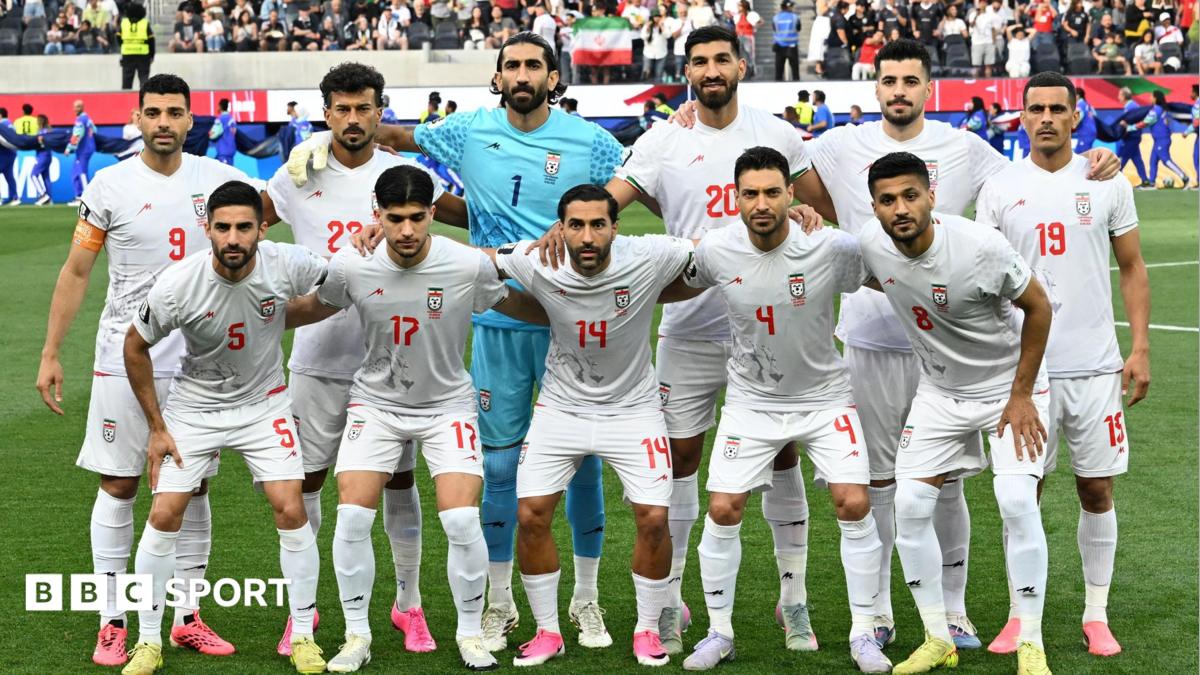
The Football Federation of the Islamic Republic of Iran (FFIRI) announced Thursday, June 18, 2026, that it will lodge a formal complaint with FIFA over recurring travel restrictions imposed on its national team. The federation claims these measures, including denied requests for early arrival in host cities, hinder player preparation for the ongoing World Cup.
Iran’s Formal Complaint and Technical Grievances
The Iranian federation’s decision to escalate the matter to football’s global governing body follows a series of rejected requests regarding the team’s travel logistics within North America. According to reports from Al Jazeera, the federation argues that these restrictions create an uneven playing field and directly interfere with the technical staff’s ability to prepare for critical matches.

The specific point of contention involves travel from the team’s base camp in Tijuana, Mexico, to U.S. host cities. Iran officials state they required a 48-hour window before matches to allow players to adapt to local conditions and complete final training sessions. This request was denied ahead of their opening match against New Zealand and again for their upcoming game against Belgium in Los Angeles.
“Despite having submitted its preparation schedule for the tournament well in advance, Iran’s national football team has once again encountered restrictions imposed by the organisers, affecting the implementation of its technical staff’s plans.”
FFIRI Spokesperson, via Goal.com
White House FIFA Task Force Policy
While the Iranian federation characterizes the restrictions as an unfair impediment, U.S. officials maintain that the team’s travel schedule was communicated well in advance. Andrew Giuliani, executive director of the White House FIFA Task Force, stated that the team is permitted to enter the U.S. only one day prior to a match, a policy known as “match day minus one.”

As the BBC reports, Giuliani confirmed that the team must depart the host city on the evening of the match day. This rigid “in-and-out” requirement has been applied to matches in Los Angeles and is expected to remain in effect for Iran’s final group stage game against Egypt in Seattle on June 27.
“The team will be allowed to come in, match day minus one, so the day before the match. They’ll be asked to leave the day that the match wraps up, so the evening of the match. And they’ll be able to do that again in Los Angeles.”
Andrew Giuliani, executive director of the White House FIFA Task Force, via the BBC
Operational Impacts and Tournament Context
The logistical friction highlights the complex political and security landscape surrounding Iran’s participation in the 2026 tournament. Following their 2-2 draw with New Zealand in Los Angeles, the Iranian delegation was required to leave the country immediately, missing what the federation described as essential recovery time at their hotel. In the context of a World Cup tournament, where recovery protocols—including cryotherapy, specialized nutrition, and sleep management—are standard practice for elite athletes, the inability to remain in a host city for post-match recovery sessions presents a significant challenge to the team’s physical readiness.
The Hindu notes that these restrictions have been a point of tension throughout the team’s campaign, which has been marked by uncertainty since the tournament’s inception. While the U.S. Department of Homeland Security has maintained that the Iranian team agreed to the terms of their entry, the FFIRI contends that these measures are fundamentally inconsistent with the principle of providing equal conditions for all participating nations. FIFA’s standard tournament regulations typically emphasize the importance of “team integrity” and “operational consistency,” which are meant to ensure that every squad participating in the group stages has access to similar amenities and preparation windows.

For the Iranian squad, the stakes are elevated by their position in the group standings. With a 2-2 draw against New Zealand, every point is vital as they head into the June 21 showdown with Belgium. In the modern World Cup format, depth-chart management is critical; players who are forced to endure long-haul travel between their Tijuana base camp and U.S. venues face increased fatigue, which can influence coaching decisions regarding starting lineups and substitutions. The technical staff is now forced to balance the need for tactical drilling with the reality of a compressed travel schedule that precludes standard pre-match warm-ups at the actual stadium venues.
With the match against Belgium scheduled for June 21 at 12:00 p.m. local time, the federation remains focused on whether FIFA will intervene to grant the requested travel flexibility. As of Friday, June 19, the status of these logistics for the remainder of the group stage remains unchanged, leaving the team to navigate an accelerated travel schedule while attempting to maintain technical preparation standards. The outcome of the complaint will likely hinge on FIFA’s interpretation of host country sovereignty versus the governing body’s commitment to standardized tournament conditions for all 48 participating nations.
Find more reporting in our Sports section.
